
The One-in-Five Problem: 80% of Small Businesses Use AI Every Week — So Why Do Fewer Than 20% Call It Core?
On September 4, 2026, a new platform called SmallBiz.ai launched on an uncomfortable piece of research: roughly 80% of small businesses now use AI regularly, but fewer than one in five call it core to their operations. About a third of owners point to the same culprit — their digital tools don't talk to each other — and fewer than 10% of AI-using employees automate actual workflows end to end. Here is what that gap means, why the "one tool per problem" habit is the reason, and a 4-step checklist to close it.
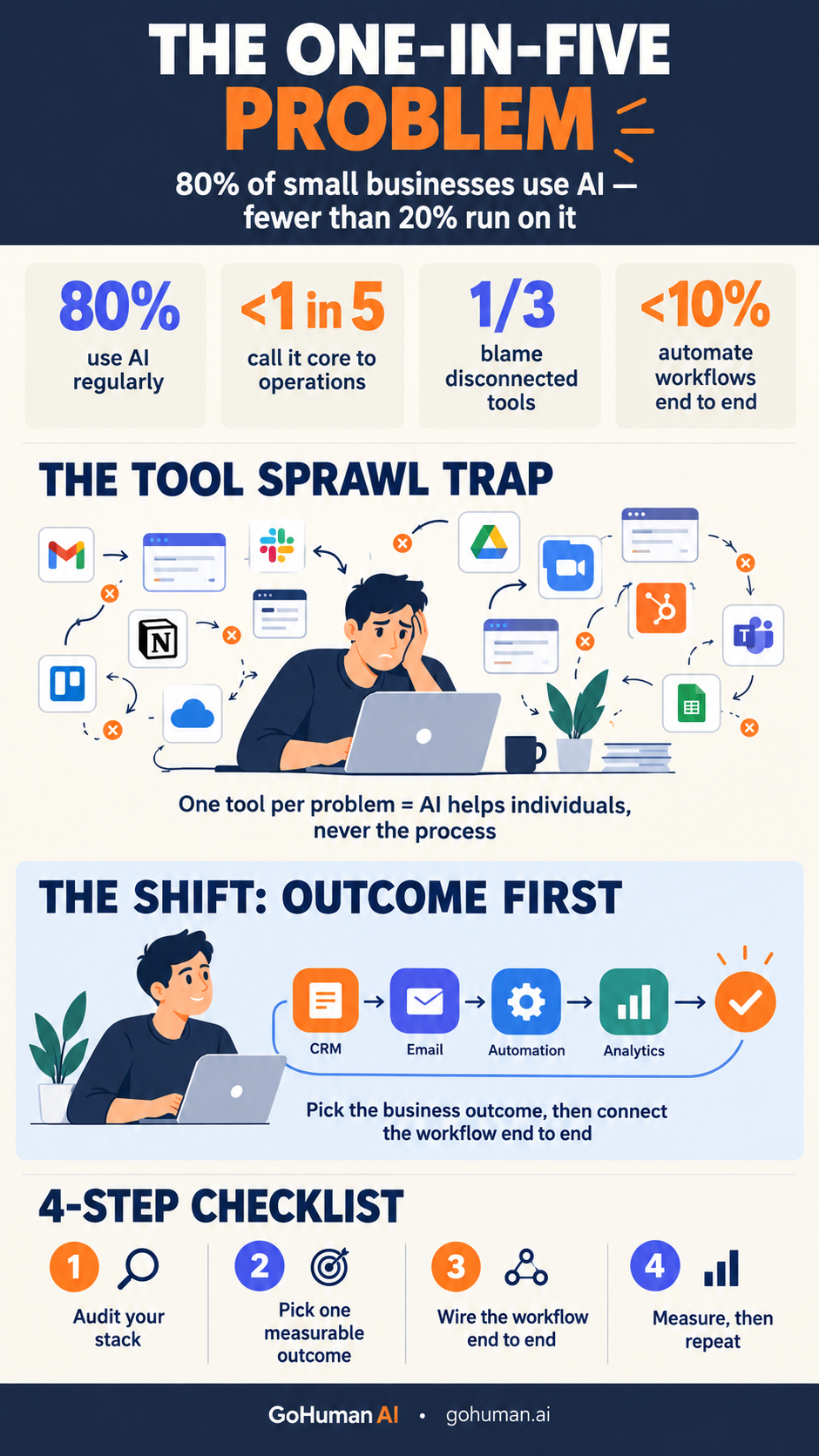
Here is the strange state of small business AI in 2026: virtually everyone is using it, almost no one is running on it. Industry research cited at the September 4, 2026 launch of SmallBiz.ai — a new platform from Irvine-based CloudIntelligence.ai — puts numbers on the contradiction. Roughly 80% of small businesses use AI regularly. Yet fewer than one in five call it core to operations, about a third cite lack of integration between their digital tools as the blocker, and fewer than 10% of AI-using workers automate workflows with minimal human involvement. Adoption is nearly universal. Transformation is rare. And the gap between the two is not a technology problem — it is a sprawl problem.
What Actually Happened
SmallBiz.ai launched on September 4 with a thesis aimed squarely at this gap: AI adoption for small business has become an integration problem, not an access problem. The platform — built on the technology intelligence of ToolsInfo.com and the cost and governance data of AICost.ai — starts with a business outcome rather than a tool, then works out the most cost-effective combination of software the business already owns, integrations, open-source components, and AI automation to deliver it, with data privacy and governance handled from the start. Its stated goals are telling: reuse existing software, connect workflows, and reduce tool clutter — the opposite of the "add another subscription" reflex that got most businesses into the 80%-use-19%-core situation in the first place.
The question its founder built the company to answer is the one every owner eventually asks: what should I automate, with what, and how do I make it work safely?
80%
of Small Businesses Use AI Regularly
2026 SMB research, via SmallBiz.ai
<1 in 5
Call AI Core to Their Operations
2026 SMB research, via SmallBiz.ai
1/3
Blame Disconnected Tools as the Blocker
2026 SMB research, via SmallBiz.ai
<10%
of AI-Using Staff Automate Real Workflows End to End
2026 SMB research, via SmallBiz.ai
Why the Tool-Sprawl Approach Stalls
Most businesses adopted AI the way they adopted every previous software category: one problem, one tool, one subscription. An AI writer for marketing. A chatbot for the website. A scheduling assistant for the calendar. Each purchase made sense. Together, they produced a stack where AI helps individuals write faster but never touches the process. The proposal still gets copied from a quote template into a contract by hand. The lead from the web form still waits for someone to notice it. The invoice still gets chased manually, even though the money back office is where AI agents pay first.
That is exactly the pattern the research captures. Using AI as a personal productivity aid — better emails, faster drafts — explains how 80% of businesses became "AI users" while fewer than 19% became "AI-run." The jump from one to the other requires the tool to hand work to another tool, and a sprawl of disconnected subscriptions makes that impossible. The data backs this up: businesses with AI embedded in connected core workflows report a 55-point productivity advantage over those using the same tools as bolt-on helpers. And the cost of not connecting is real — manual copy-paste work between disconnected systems costs roughly $28,500 per employee per year.
There is a second, quieter cost: every disconnected AI tool adds decisions, logins, and review points without removing any work. Owners end up managing their AI instead of delegating to it — the opposite of the 7.2 hours a week managers reclaim when AI is properly embedded. The most disciplined businesses respond by cancelling tools outright and replacing whole systems with AI-built workflows, saving $40,000–$200,000 a year in the process.
The Shift: Outcome First, Tool Second
The SmallBiz.ai launch is less important as a product than as a signal of where the market is heading: away from "which AI tool should I buy?" and toward "which business outcome should I automate first?" That reframing changes everything. Instead of a marketing writer that makes one person faster, you pick a measurable outcome — proposals out the door same-day, every web lead answered in five minutes, invoices chased without anyone remembering to chase them — and then assemble whatever combination of existing software, connectors, and AI agents gets you there, often using tools you already pay for.
This is also the natural home for the agent layer. A chatbot answers; an AI agent completes a multi-step process — reading the lead, checking the CRM, drafting the reply, updating the record, and flagging a human when judgment is needed. Agents are what turn a stack of disconnected tools into a workflow, and the strongest ROI numbers come precisely from these multi-step handoffs — one employee saving 6.5 hours a week, an 11× first-year return. Governance matters here too: with multiple agents touching real systems, a few simple coordination rules prevent them from working against each other, and every customer-facing action should keep a human in the loop.
A 4-Step Checklist to Go From AI User to AI-Run
- 1 Audit the stack you already have. List every AI tool you pay for, who uses it, and whether it passes work to anything else. Most owners find 3–5 disconnected subscriptions doing personal-productivity work that one connected workflow could absorb.
- 2 Pick one business outcome, not one tool. Choose something measurable with a clear start and finish — quote turnaround, lead response time, invoice collection. Write the number it hits today; that is your baseline.
- 3 Wire the workflow end to end. Map the steps from trigger to finished result and connect them — integrations, an agent layer, and human approval where money or customers are involved. The goal is that no step waits for someone to remember it.
- 4 Measure against the outcome, then repeat. In two weeks, compare the number to your baseline. If it moved, point the same approach at the next outcome and cancel whatever the workflow replaced. If it didn't, the workflow — not the AI — was wired wrong.
At GoHuman AI, this outcome-first approach is exactly how we work: we start with the result you want — faster quotes, answered leads, collected invoices — and build the connected agent layer that delivers it across the tools you already own, with human review on everything customer-facing. The research is unambiguous: 80% of businesses already use AI, and the one in five who make it core are pulling away. The gap between them isn't talent or budget. It's whether the tools were ever connected — and that's a fixable problem.
Related Reading
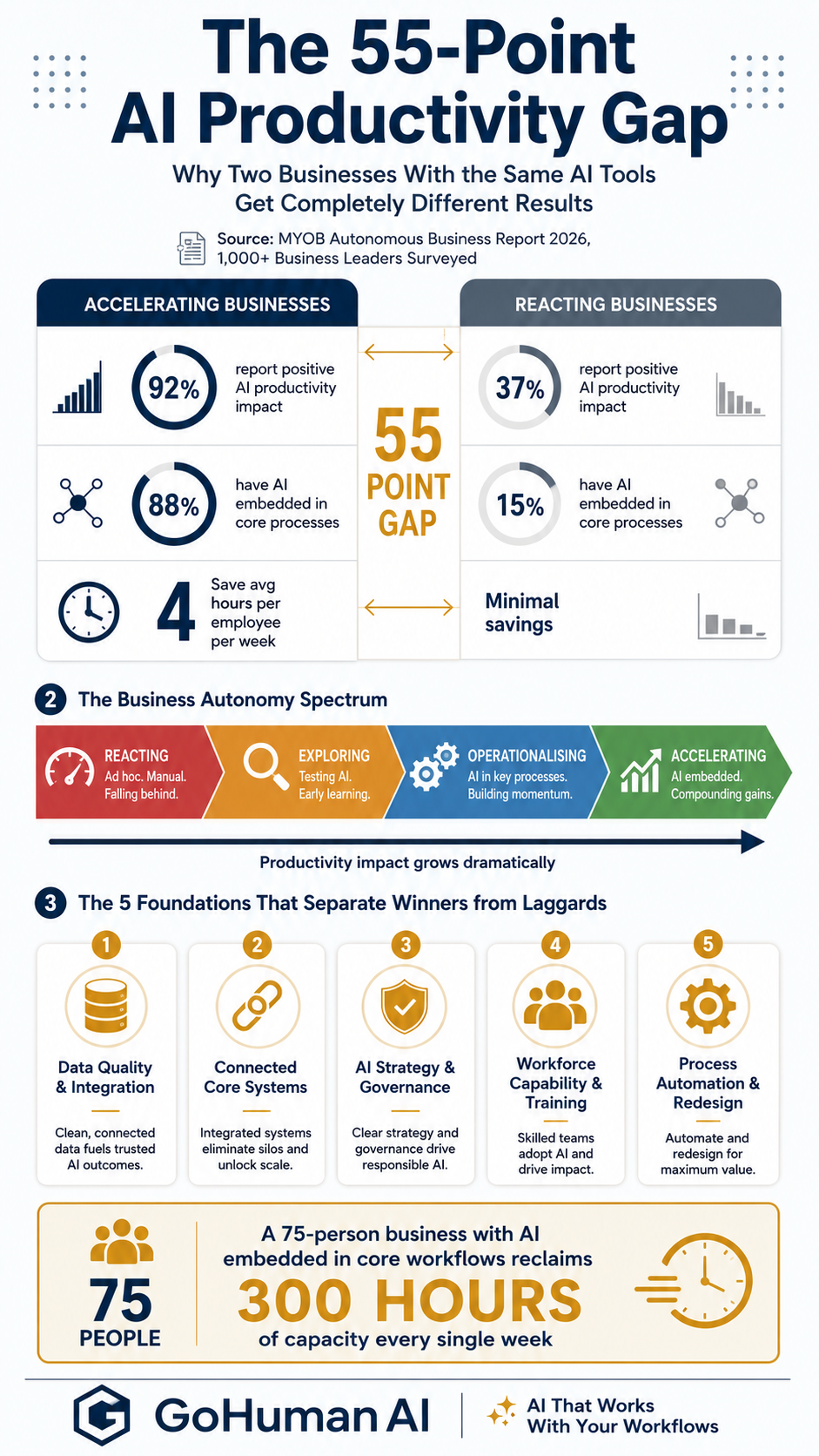
The 55-Point Productivity Gap: Why Two Businesses With the Same AI Tools Get Completely Different Results
The productivity evidence behind why integration beats tool count.
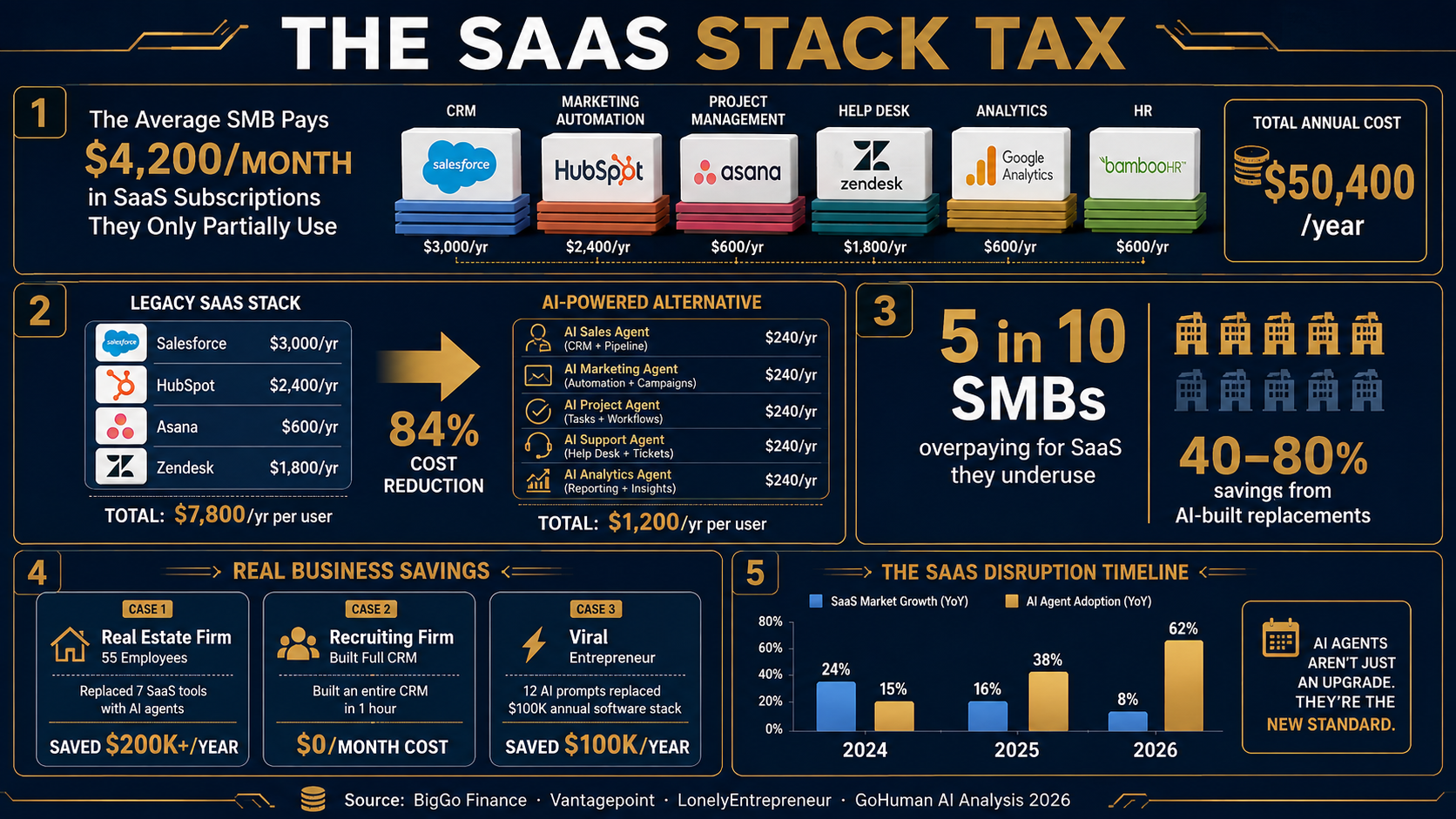
The SaaS Stack Tax: Cutting $50,000–$200,000 a Year by Replacing Legacy Software With AI
What the most disciplined businesses do with the clutter they find.
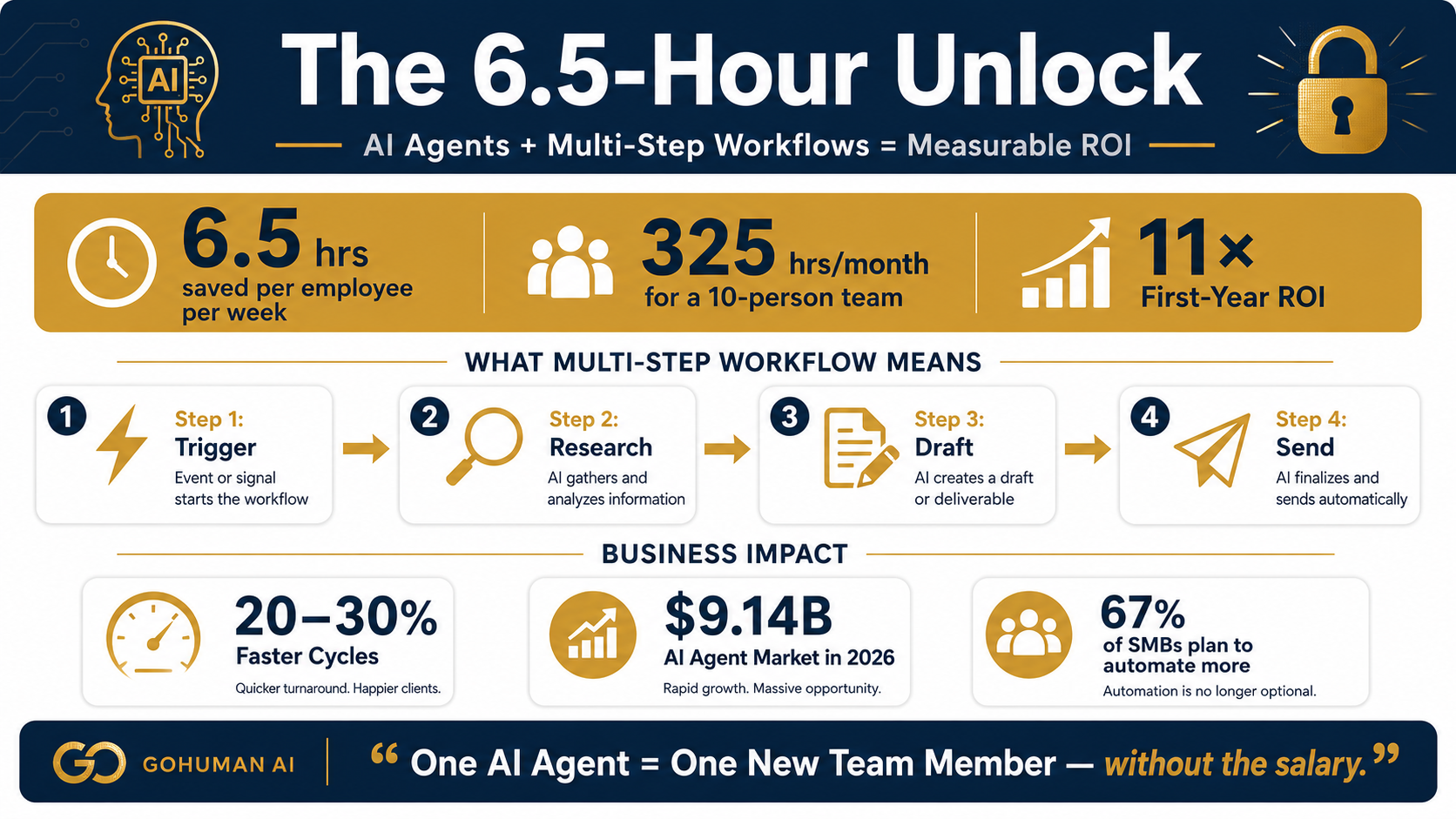
The 6.5-Hour Unlock: AI Agents for Multi-Step Workflows — And Why ROI Starts Here
The agent layer that turns disconnected tools into one workflow.
Using AI everywhere but running on it nowhere? Book a free automation audit and we'll map one business outcome end to end — using the tools you already pay for.