
The AI Bill Surprise: 39% of Small Businesses Got an Unexpectedly High AI Bill — Here Is How to Get Spend Under Control
Most owners can tell you what AI saves them. Far fewer can tell you what it costs. A new survey shows why that gap bites.
A few $20 subscriptions, an automation that quietly runs all night, a team member who signed up for "just one more" tool. Individually small. Together, a bill nobody expected. New research suggests this is happening to a lot of small businesses.
The News: Building Faster Than Anyone Is Watching
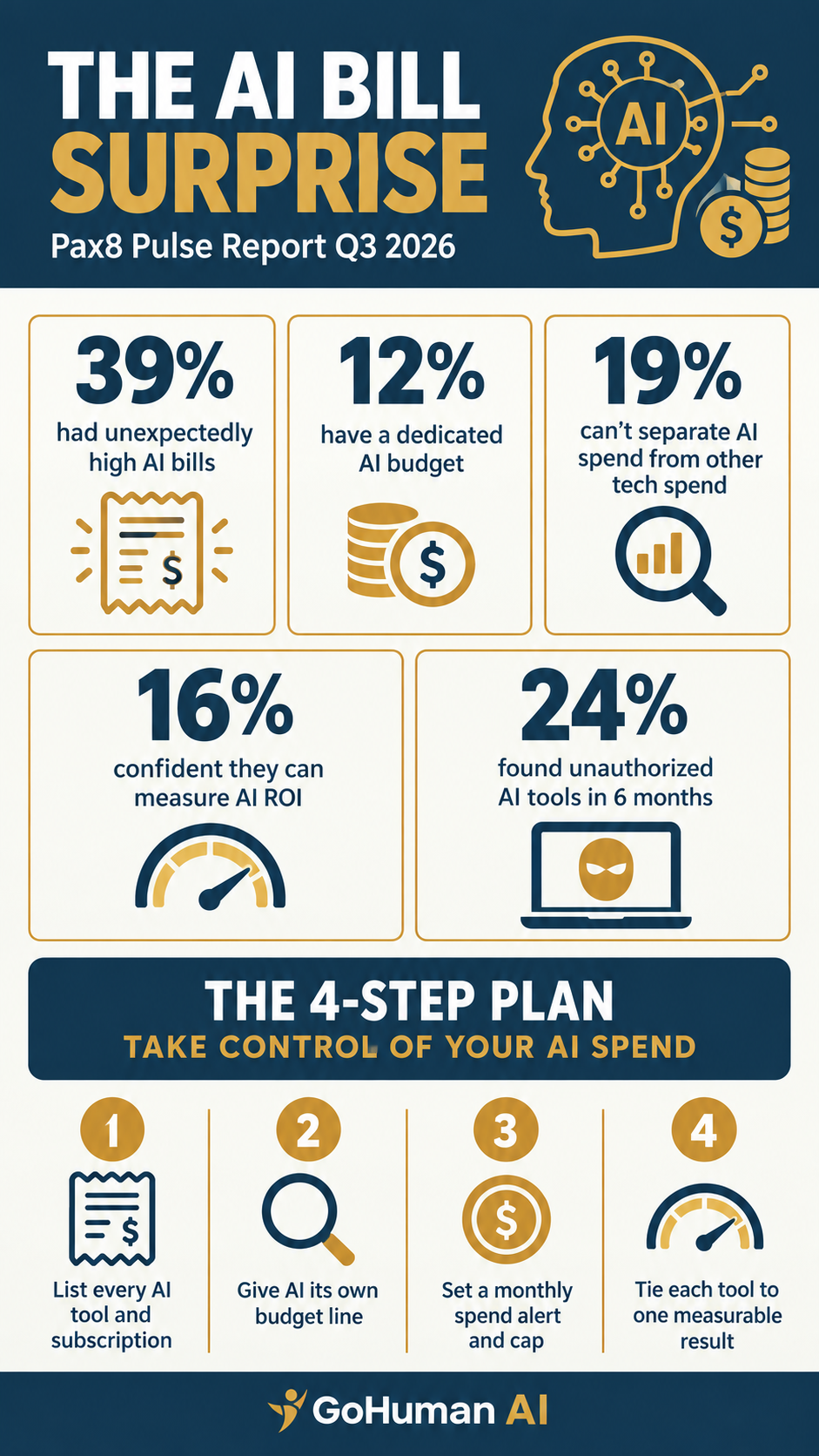
Pax8's Q3 2026 Pulse Report, covered by TechRadar, looked at how small and mid-sized businesses manage AI. The UK results are striking: 39% had experienced unexpectedly high AI bills, and 24% discovered unauthorized AI tools running in their business in the past six months. Only 12% have a dedicated AI budget, another 19% cannot separate AI spend from other tech spend, and just 16% feel confident they can measure AI's return. In Sweden, that confidence figure is 45%.
39%
hit by an unexpectedly high AI bill
12%
have a dedicated AI budget
16%
are confident they can prove AI's ROI
These are UK numbers, so treat them as a signal rather than a universal rule. But the pattern is easy to recognize anywhere: adoption is racing ahead of oversight.
Why Bills Surprise Owners
AI costs rarely arrive as one invoice. They scatter across several places:
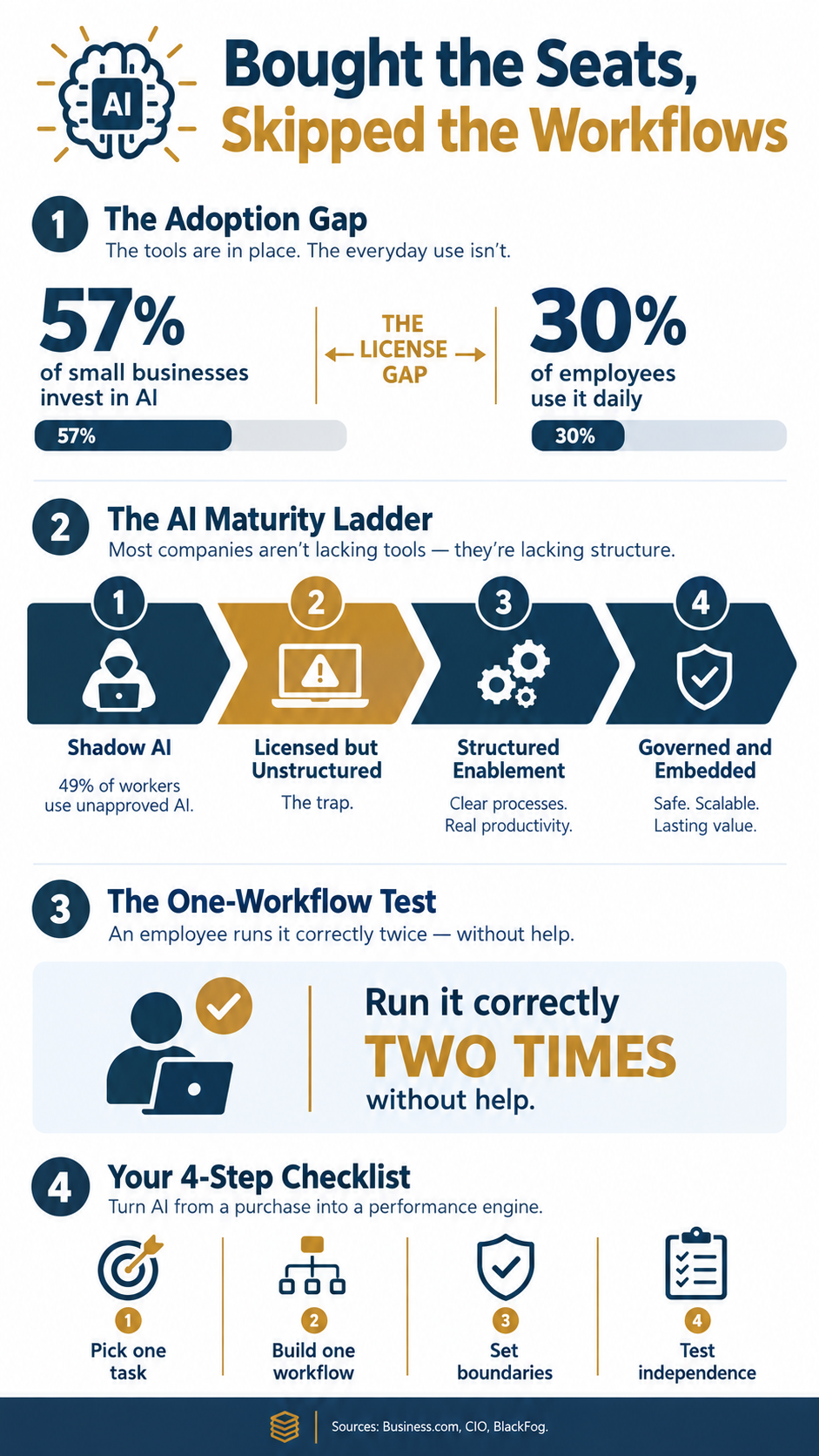
- Seats nobody uses. Per-user plans bought for the whole team while a handful actually log in. We covered this in the AI license gap.
- Usage-based charges. Pay-per-use models and long-running agents can climb quickly when a workflow loops or volume spikes. See AI agent running costs.
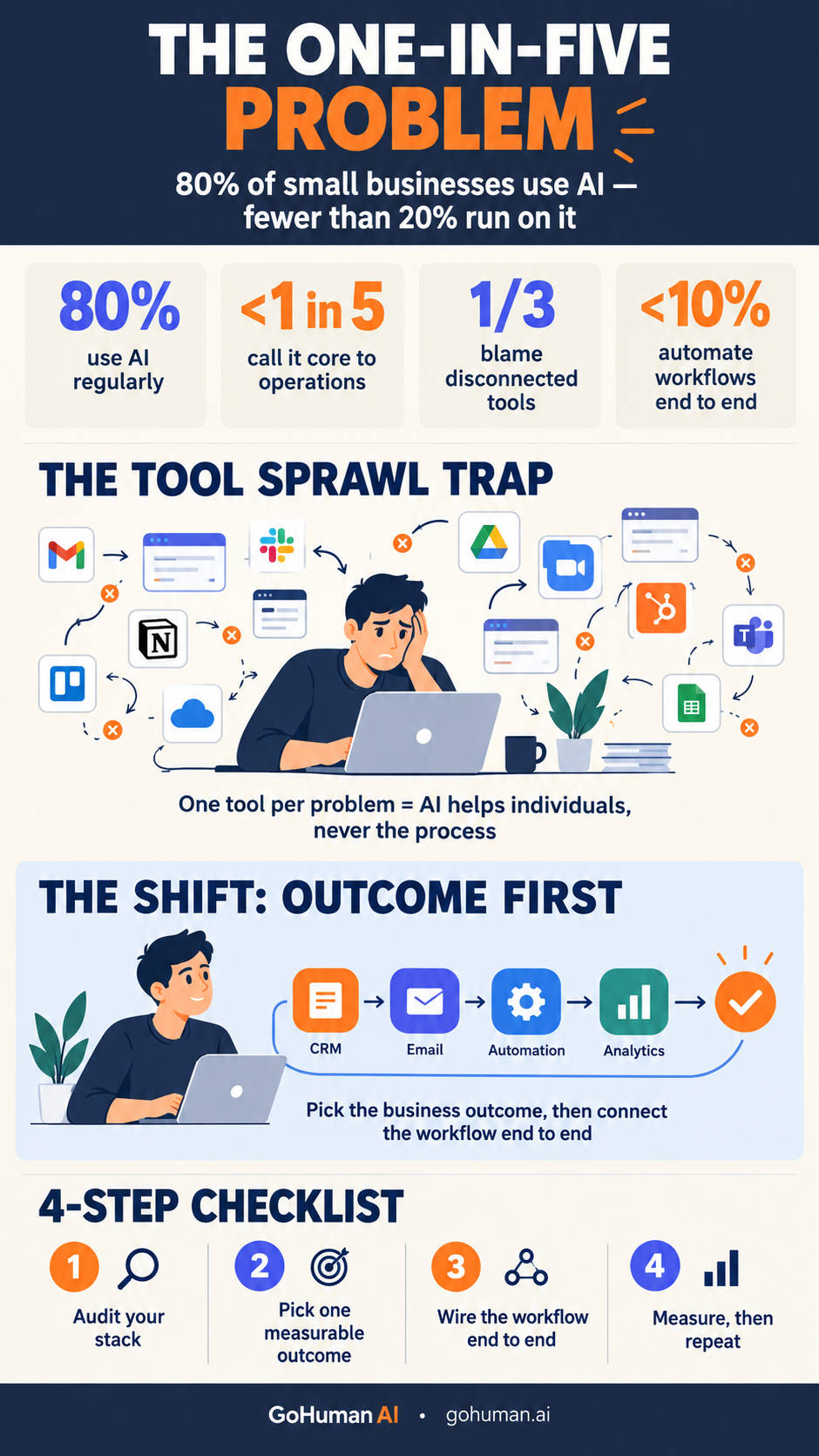
- Overlapping tools. Three apps that each do "AI writing." That is tool sprawl.
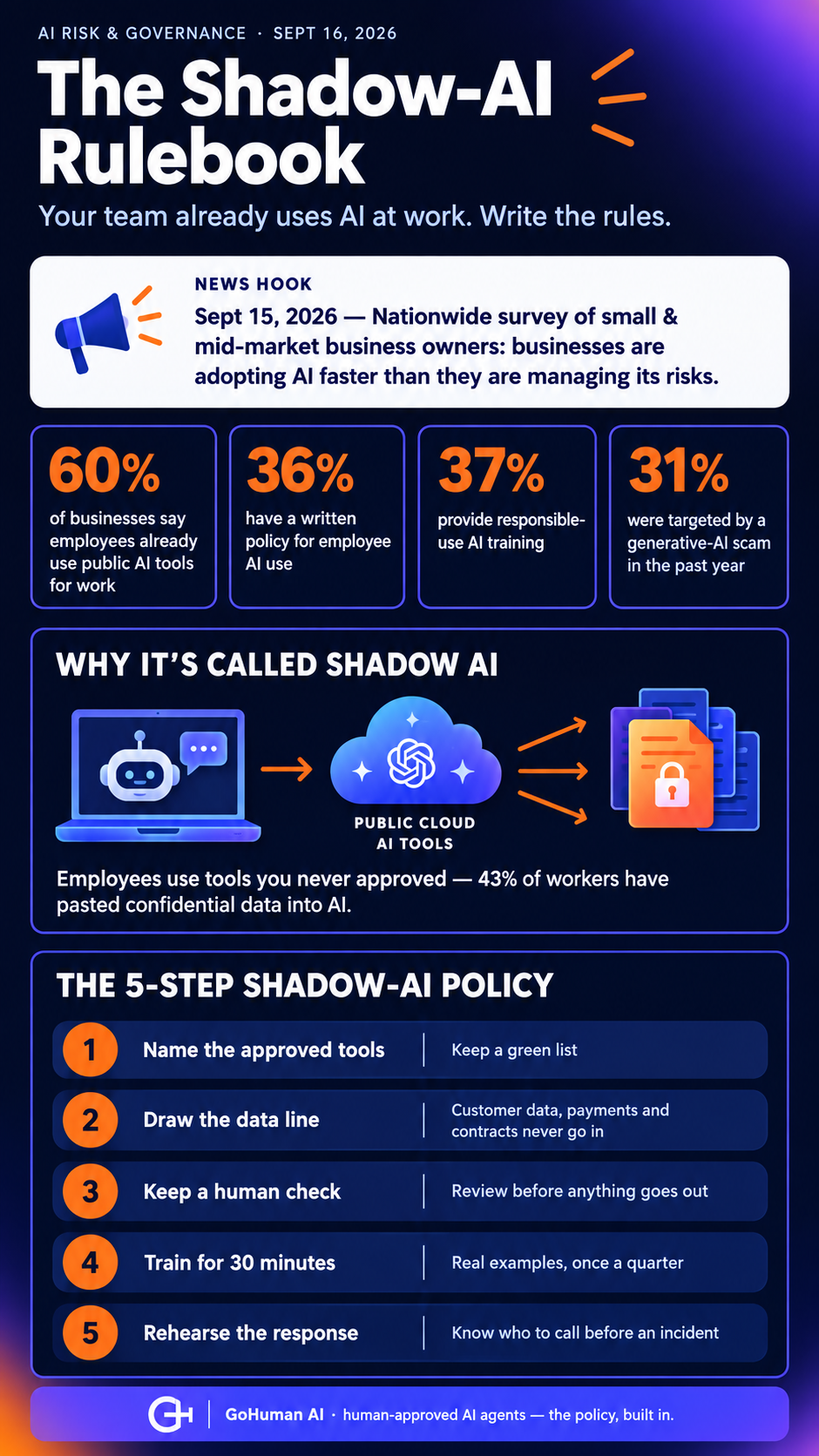
- Unapproved sign-ups. A staff member's card, an expense line, a free trial that converts. Our shadow AI guide explains how those start.
The hidden risk
If you cannot see the cost, you cannot judge the return. And if you cannot show a return, the first tight month makes every AI tool look like a luxury, including the ones that were quietly paying for themselves.
The 4-Step Spend Control Plan
- 1List every AI tool. Check card statements, expense reports and software logins from the last 90 days. Write down the tool, its owner, the monthly cost and the number of active users.
- 2Give AI its own budget line. Even a rough monthly figure separates AI from general software and makes surprises visible. Ask your bookkeeper to tag these expenses.
- 3Set alerts and caps. For anything usage-based, turn on spending limits and email alerts. Require one named approver for new AI subscriptions.
- 4Tie each tool to one result. Hours saved, leads answered, invoices collected faster. If a tool has no number attached after 60 days, cancel it or fix how it is used.
What a Good Monthly AI Review Looks Like
You do not need a finance team. Block thirty minutes at the start of each month and answer four questions: What did we pay for AI last month? Did anything cost more than expected, and why? Which tools did people actually use? What did each one produce? Keep the answers in a single shared sheet. After three months you will see which tools are earning their place, which are shelfware, and where usage-based charges tend to spike.
Two quick wins show up almost every time. First, unused seats: if a plan has ten licenses and three active users, downgrade it. Second, duplicate tools: pick the one your team prefers and retire the rest. Savings from these two steps alone often cover the cost of the AI that is genuinely driving results.
Questions to Ask Before You Sign Up for Any New AI Tool
- Is the price per seat, per use, or flat, and what is the worst-case monthly bill?
- Can I set a spending cap or an alert?
- Does it connect to the tools we already use, or will it create another silo?
- Who owns the account, and what happens to our data if we leave?
Cheaper Is Not the Goal. Visible Is.
The aim is not to spend less on AI. Prices keep falling, as we noted in the AI cost drop, and the right tools often pay for themselves many times over. The aim is to know what you spend, why, and what you get back, so you can add more of what works with confidence. Review the list monthly for the first quarter, then quarterly.
Where GoHuman AI Fits In
Scattered tools are what make costs hard to see. GoHuman AI brings your automations, agents and connected apps into one managed ecosystem with clear plans, so you know what you pay for and what each piece does. We keep the tools that already work, replace the ones that do not, and keep a person approving anything important, in line with human in the loop. Book a free automation audit and we will map your current AI tools and show where the money is going.
Related Reading
See it. Cap it. Prove it.