
Bought the Seats, Skipped the Workflows: Why AI Licenses Alone Don't Change a Small Business — A 4-Step Fix
Owners are buying AI seats faster than their teams change how they work. The gap between the two is where the savings disappear.
You signed up for the AI plan. Maybe you bought a few seats for the team. Six weeks later, two people use it, one tried it once, and the rest are back to doing things the old way. If that sounds familiar, you are not alone, and a new analysis explains why.
What the New Analysis Says
On October 2, 2026, CIO published an opinion piece by Shree Amujala, a managed-services CIO with 30 years in IT, titled "Small businesses are having their AI moment, and it's exposing a services gap." The author reports that client questions have shifted from "should we look at AI?" to "our employees already opened ChatGPT or Claude, and now we need to do this properly."
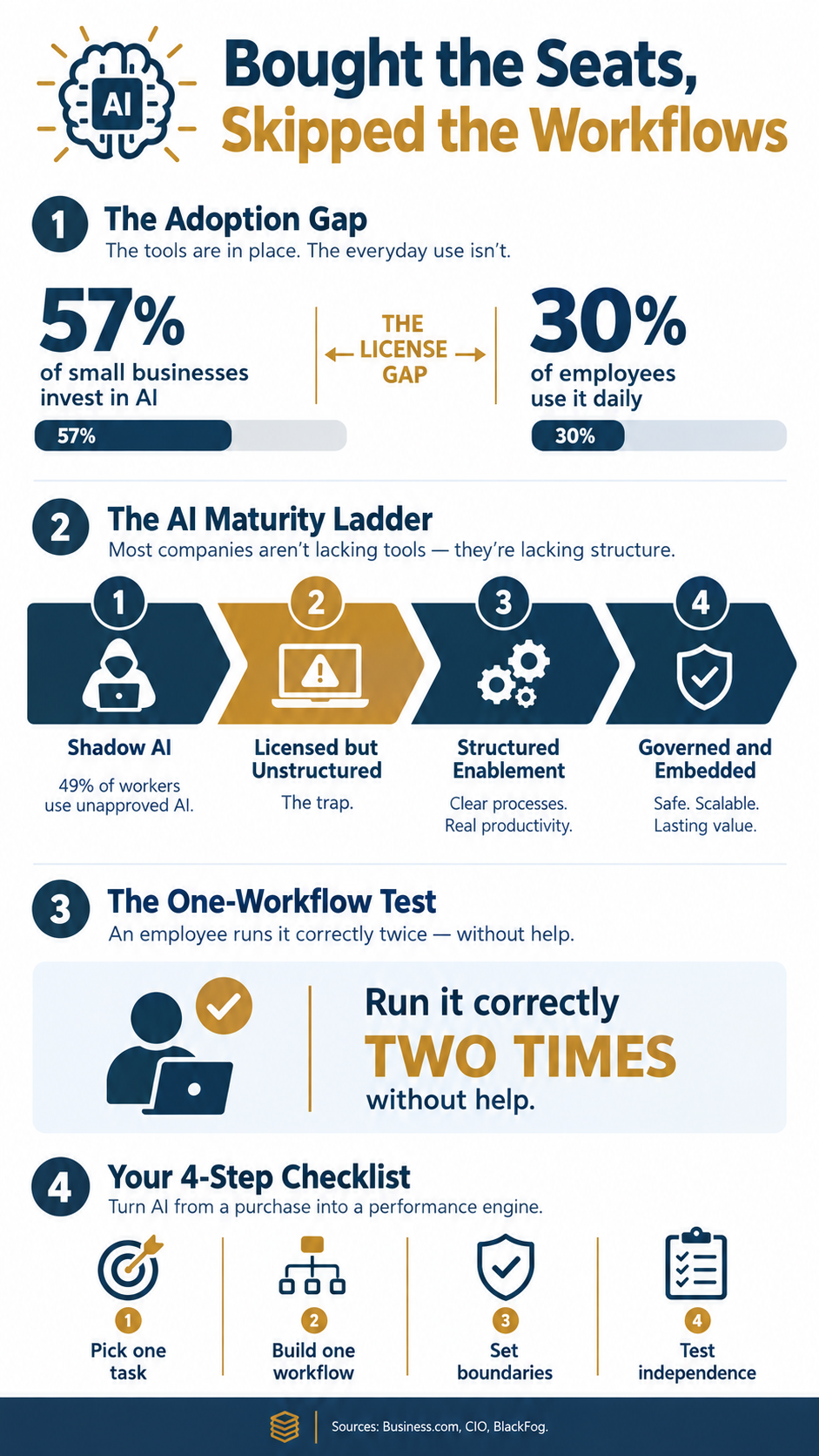
The data behind it is blunt. A Business.com study found 57% of U.S. small businesses are investing in AI, up from 36% in 2023, yet only 30% of employees use it daily. Bluevine's 2026 report puts the share of owners using or testing AI at 74%. Separately, BlackFog research reports 49% of workers use AI in ways their employers have not approved.
57%
of small businesses are investing in AI
30%
of their employees use it every day
49%
of workers use AI their employer hasn't approved
The Trap: Licensed but Unstructured
The author describes four stages of small business AI maturity. Stage one is shadow AI: staff use personal accounts and nobody sees what gets pasted in. Stage two is licensed but unstructured: the owner buys seats, shares a getting-started guide and assumes adoption will follow.
Stage two is where most good intentions die. Some employees experiment, others avoid the tool, and the business concludes that AI "didn't deliver." In truth, access existed, but repeatable work did not. A license is a purchase. A workflow is a change in how Tuesday afternoon gets done. Only the second one shows up on your P&L.
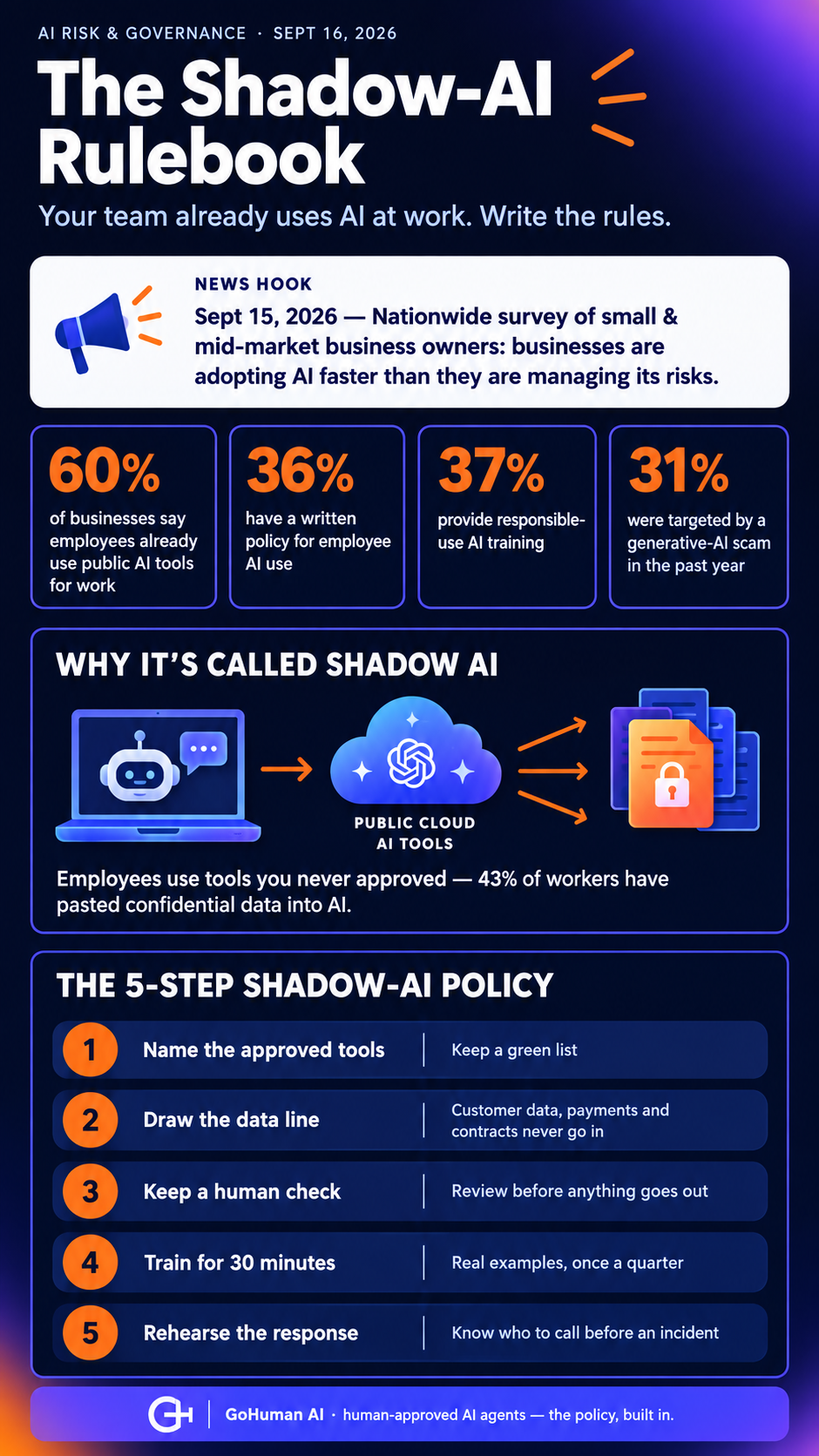
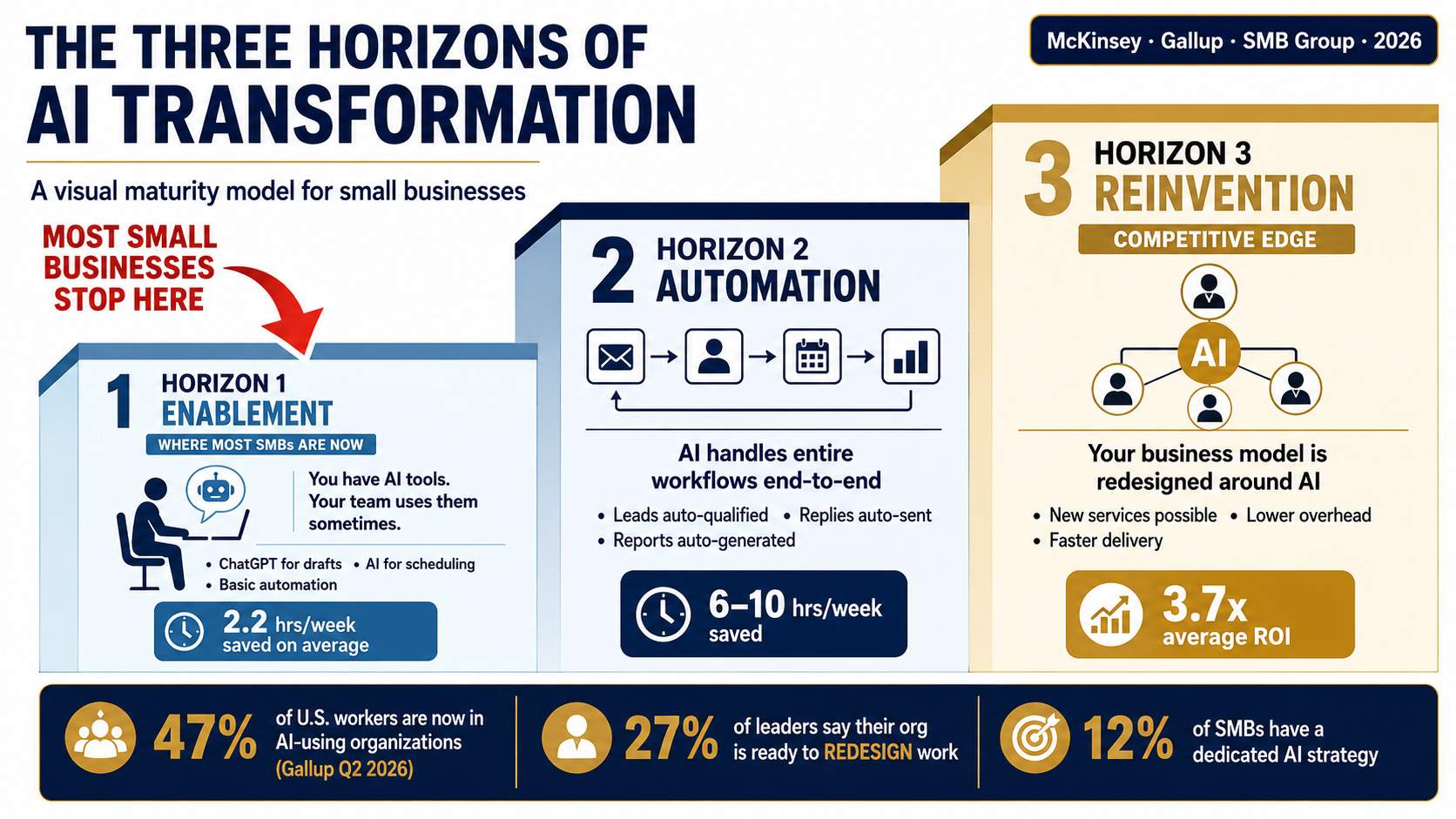
If you are still at stage one, start with a rulebook; our shadow AI policy guide covers it. For a wider self-check, see the AI maturity model.
What Stage Three Actually Looks Like
The jump that matters is from stage two to stage three, structured enablement. The CIO piece gives an example from a commercial real estate lender. Instead of teaching loan officers to "chat with an assistant," the team built one specific workflow: review an unread email, compare the deal terms to the current rate sheet, draft a reply and prepare a calendar hold. One workflow proved the value before anything else was added.
Other examples are equally unglamorous: a first-pass review of leases that flags unusual clauses, and one deal summary turned into a blog post, social copy and an email blurb, each reviewed by a person before it goes out. They save time because the tool is fitted to the job, rather than forcing the employee to become a prompt expert.
The One-Workflow Test
The article offers a simple measure worth borrowing. Ignore login counts and workshop attendance. Ask instead: can an employee run the workflow correctly twice without help, and explain it well enough to hand it to a colleague? If yes, the process will survive. If not, you have bought a very expensive demo.
A 4-Step Fix for the License Gap
- 1Pick one recurring task that someone dislikes. Not a generic demo. Think "answer the same quote request," "summarize Monday's orders," or "draft the weekly update."
- 2Build it as a repeatable workflow. Define the input, the steps and the output so anyone gets the same result. Our post on connecting AI to your existing tools shows where to start.
- 3Set boundaries before you expand. No payroll or HR data, human review for anything client-facing, approved business accounts only. The guardrails playbook has a ready list.
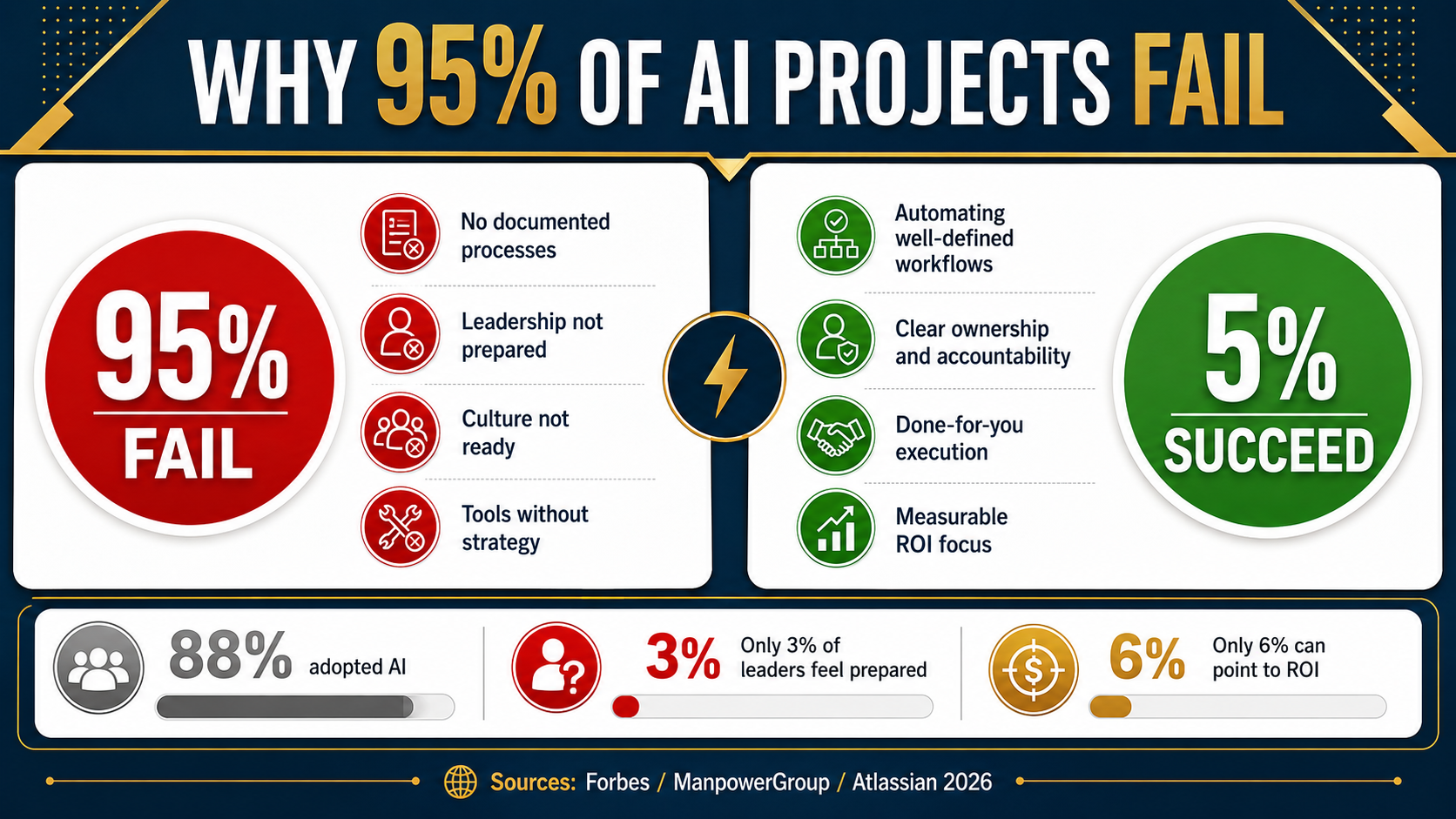
- 4Test for independence, then add the next one. Run the one-workflow test. Once it passes, repeat. It is also why most AI projects fail: they skip straight to scale.
A Fair Caution
The author runs a managed-services firm that sells exactly this kind of help, and the stage model reflects client experience rather than a controlled study. The survey figures are directional too. Still, the pattern matches what many owners tell us: the tool is rarely the problem. Budget with eyes open, since usage costs also grow as workflows get busier.
Where GoHuman AI Fits In
Moving from stage two to stage three is a services problem: picking the right first workflow, wiring it to your real systems, setting the approval points, and training your team to own it. That is the work GoHuman AI does, with people kept in the loop on anything that matters. Book a free automation audit and we'll help you choose the first workflow to build.
Related Reading
Turn AI seats into real workflows. Book a free automation audit and we'll show you where to start.