
The End of Hire-to-Grow: New Data Shows AI-Using SMBs Generate 24% More Revenue Per Employee
Pax8 surveyed 402 small business leaders and found something that changes the fundamental math of growing a business: AI is decoupling revenue from headcount. Small businesses using AI are generating significantly more per person — without adding staff. Here is what is driving it, and what the 1-in-3 businesses stuck in experimentation are getting wrong.
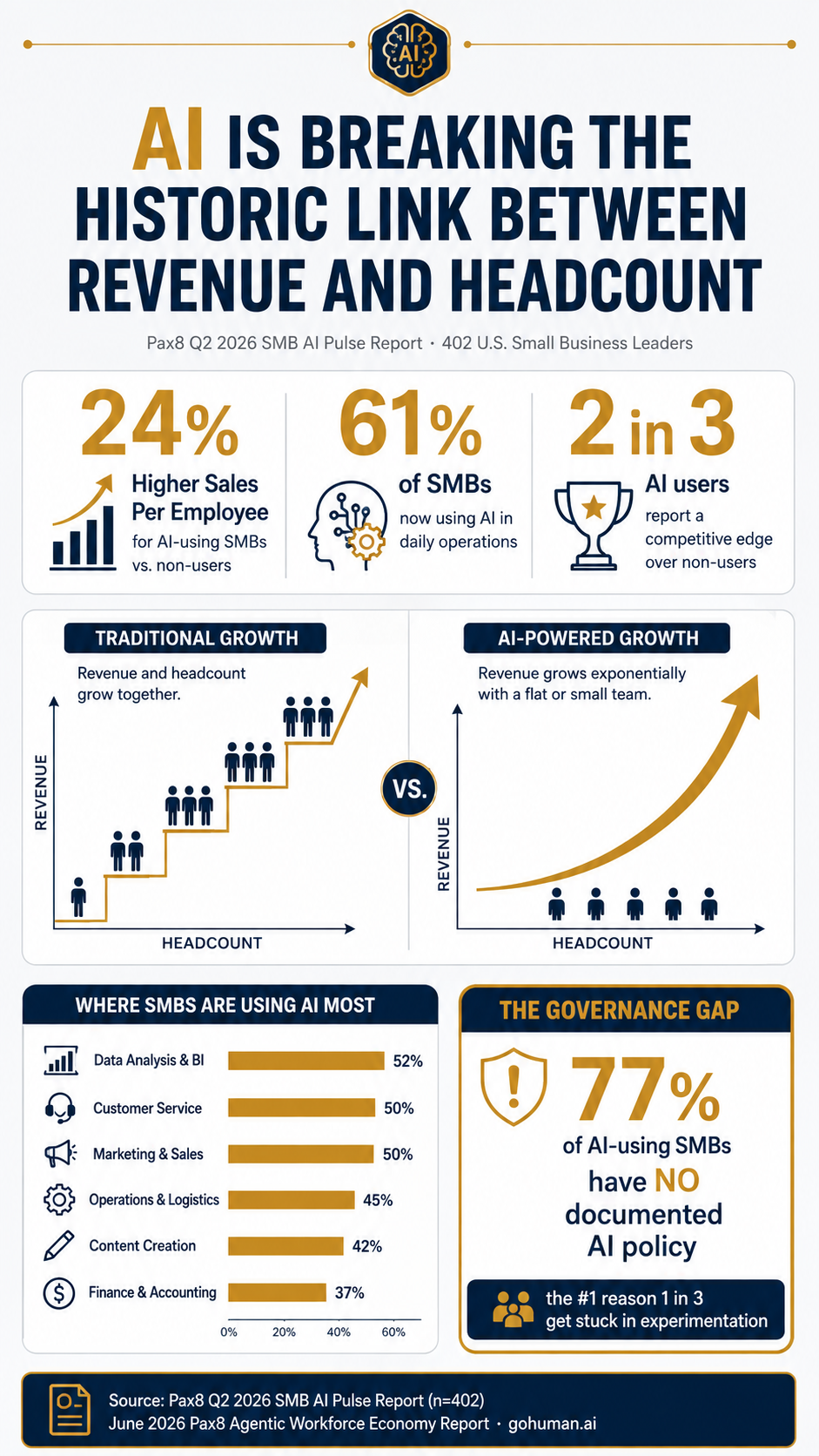
For as long as small businesses have existed, one rule has held: if you want to grow revenue, you hire more people. More customers means more calls, more deliveries, more invoices, more service hours. And more of all that means a bigger payroll. That relationship — revenue and headcount rising together, step by step — has been the defining constraint of small business growth for generations.
On July 13, 2026, Pax8 published its Q2 2026 SMB AI Pulse Report — a survey of 402 U.S. small business leaders across industries — and buried inside the findings was a data point that changes that equation. Small businesses actively using AI are generating, on average, 24% higher sales per employee than their non-AI peers. Not marginally more. Not statistically rounding-error more. Twenty-four percent more revenue per person, from the same size team.
This is not a technology story. It is a business model story. AI is giving small businesses their first real alternative to the hire-to-grow model — and the window to take advantage of it is narrowing fast.
What the Numbers Actually Say
The Pax8 report surveyed business owners, executives, and department leaders at companies with 5 to 499 employees. The picture it paints is one of AI adoption that has moved well past the experimental stage: 61% of SMBs are now using AI in daily operations, with another 29% experimenting. That puts 90% of small businesses somewhere on the AI adoption curve — a figure the Federal Reserve described as the fastest technology adoption gap closure ever recorded for any tool of this scale.
But adoption is only part of the story. What separates the businesses that are winning from those still circling the runway is what happens after the first AI tool gets deployed. Two-thirds of SMBs currently using AI report a measurable competitive edge over businesses that are not. Among that group, 68% say AI is delivering clear, measurable value — not theoretical potential, but actual business outcomes they can point to.
24%
higher sales per employee at AI-using SMBs vs. non-users — Pax8 / Federal Reserve 2026
2 in 3
SMBs using AI report a competitive edge — Pax8 Q2 2026 Pulse Report, n=402
50%
of small business leaders now say AI will be necessary just to remain competitive
Where AI Is Actually Replacing the Need to Hire
The Pax8 data also shows exactly which business functions are driving the headcount-revenue split. This is not abstract — small business owners are deploying AI across very specific workflows, and the top use cases map almost perfectly to the areas that traditionally required the most staff time:
-
Data analysis and business intelligence (52%). The reporting, trend analysis, and performance review work that used to require a part-time analyst or hours of owner time every week is now handled continuously and automatically. Businesses are making better decisions faster — without needing to hire someone to pull the numbers.
-
Customer service and support (50%). AI handles routine inquiries, booking requests, follow-ups, and FAQs 24 hours a day without a team member on shift. This is the direct driver of the revenue-per-employee gap: you can serve more customers with the same headcount. This is also where AI voice agents are recovering tens of thousands in missed-call revenue for service businesses.
-
Marketing and sales (50%). Lead qualification, follow-up sequences, proposal drafts, social content, and email campaigns — work that previously required a dedicated coordinator — is now largely automated. Sales cycles shorten. Conversion rates improve. The output of one person expands significantly.
-
Operations and logistics (45%). Scheduling, inventory alerts, supplier follow-ups, and process documentation — the administrative backbone of a small business — runs more smoothly with less manual coordination. Owners and managers spend less time on operational glue and more on the work that actually grows the business.
-
Finance and accounting (37%). Invoice processing, expense categorization, payroll prep, and cash-flow reporting — tedious but critical tasks — are handled with far less staff time. For businesses that previously relied on a bookkeeper for 20 hours a month, AI is compressing that to a fraction of the time.
What these use cases have in common is that they are all high-volume, repeatable knowledge tasks — exactly the work that consumes the most time per week without directly generating revenue. AI absorbs that operational load. The team's time shifts toward the work that actually moves the needle: relationships, complex decisions, creative problem-solving, and execution. This is the same dynamic the Pax8 data describes as "digital labor" — AI handling the operational baseline so human labor is freed for the strategic.
"The businesses getting the most from AI are the ones with the strongest support, not necessarily those with the biggest budgets. Almost one in three small businesses is stuck in experimentation right now. That's not a technology problem — that's exactly what a trusted technology partner is built to solve."
— Chance Weaver, VP of AI Adoption, Pax8
The Problem That Is Holding Back 1 in 3 Businesses
The Pax8 report is not all good news. For every two small businesses successfully pulling ahead with AI, there is one that is stuck — experimenting with tools, generating occasional value, but unable to make the leap to a workflow that compounds. The survey found 31% of AI-using SMBs describe themselves as stuck in experimentation, unable to advance from testing to deployment at scale.
The data reveals a stark reason why: 77% of small businesses using AI have no documented AI use policies. That means more than three-quarters are running AI tools across their operations with no formal rules about data handling, output review, or employee training. Individual team members are making their own decisions about what AI gets used for, what it gets access to, and whether its outputs get checked before they go to customers.
This governance gap is the single most reliable predictor of the stuck-in-experimentation problem. Without a clear framework for how AI should be used — and which outcomes it is supposed to drive — businesses end up with a collection of subscriptions that generate occasional wins but never compound into the kind of structural productivity gain that shows up in the revenue-per-employee number. This connects directly to why most AI projects fail to produce measurable ROI — the problem is almost never the technology itself.
Why the 24% Gap Will Widen
The Federal Reserve's characterization of this as the "fastest technology adoption gap closure ever recorded" matters more than it might initially appear. It means the businesses that are ahead right now are not just ahead in capability — they are ahead in learning. Every month they run AI across customer service, sales, and operations, they accumulate data about what works, what needs tuning, and where the next opportunity sits. The businesses that are not yet deploying are not merely behind on tools. They are behind on organizational knowledge that compounds over time.
The Pax8 data also captures a separate trend that accelerates this dynamic: SMBs are consolidating their technology spend. Overall technology spending growth slowed in Q2 2026 — but only because businesses are cutting generic SaaS subscriptions and concentrating spend on AI tools that demonstrably move the needle. This is mature behavior: not spending more on technology, but spending smarter. Businesses that understand how dramatically AI costs have dropped can now access genuine enterprise-grade capability at a fraction of the price that would have been required just two years ago.
The compounding advantage — combined with falling prices and a growing base of proven use cases — is why the revenue-per-employee gap between AI-using and non-AI SMBs is likely to widen, not stabilize. The 24% figure is a snapshot of where the gap stood in mid-2026. By the time businesses that are currently experimenting reach full deployment, the businesses already at scale will have had another year of compounding behind them.
The Three Decisions That Separate Scaling from Stuck
Based on what the Pax8 data shows separates the winning two-thirds from the stuck one-third, the practical difference comes down to three decisions every small business owner needs to make explicitly:
-
1
Pick one workflow and measure it to the dollar. The businesses generating measurable value from AI are not the ones with the most tools. They are the ones that picked a specific process — a customer inquiry queue, a lead follow-up sequence, a weekly reporting task — automated it, and measured the time and money saved. One proven workflow builds internal confidence and creates a template for the next one. The businesses stuck in experimentation typically have tools deployed across five functions with no clear metric attached to any of them.
-
2
Write down the rules before you deploy. Even a one-page AI use policy — covering which data AI can access, which outputs require human review before going to customers, and which tasks are off-limits — closes the governance gap that is trapping 77% of small businesses. You do not need a legal team for this. You need a decision about what AI should and should not do in your business, written down and shared with your team. Understanding how AI agents actually work before deploying them makes this significantly easier.
-
3
Connect the AI tools you already use. The biggest productivity gains in the Pax8 data came from businesses where AI works across functions — not in silos. Customer service AI that feeds the CRM. Sales automation that triggers based on data analysis outputs. Communication AI that handles the same message thread regardless of whether it arrived by email, phone, or WhatsApp. Connected, cross-channel AI workflows are what transform isolated efficiency gains into structural business leverage.
The Question Every Small Business Owner Should Answer Today
The Pax8 data makes the strategic question simple, even if the answer requires work: where is your business spending the most time on high-volume, repeatable knowledge work? Inbox management? Scheduling and follow-up? Lead qualification? Reporting and reconciliation? That is where the 24% productivity gap is being opened — and closed — right now.
For the businesses that are two-thirds of the way through this transition, the compounding is already visible in their revenue numbers. For the one-third still stuck, the gap between experimentation and deployment is not a technology problem. It is a focus problem — and the cost of staying unfocused is now measurable in precise dollar terms: 24 cents of revenue per employee, per dollar, left on the table.
At GoHuman AI, this is the transition we help small business owners make: from scattered AI experiments to integrated workflows with measurable outcomes. We identify the workflows with the highest leverage for your specific business, handle the setup and integration, and put the governance guardrails in place that keep the AI working the way it should. If the 24% gap is a conversation worth having, the link below is the right place to start.
The practical question to ask before next week:
"If my team spent zero time this week on scheduling, follow-up, reporting, and routine customer inquiries — what would they do instead? And how much more revenue would that create?" If you have a clear answer, you know exactly where to start. If you do not have a clear answer, that gap is the first thing worth addressing.
Related Reading
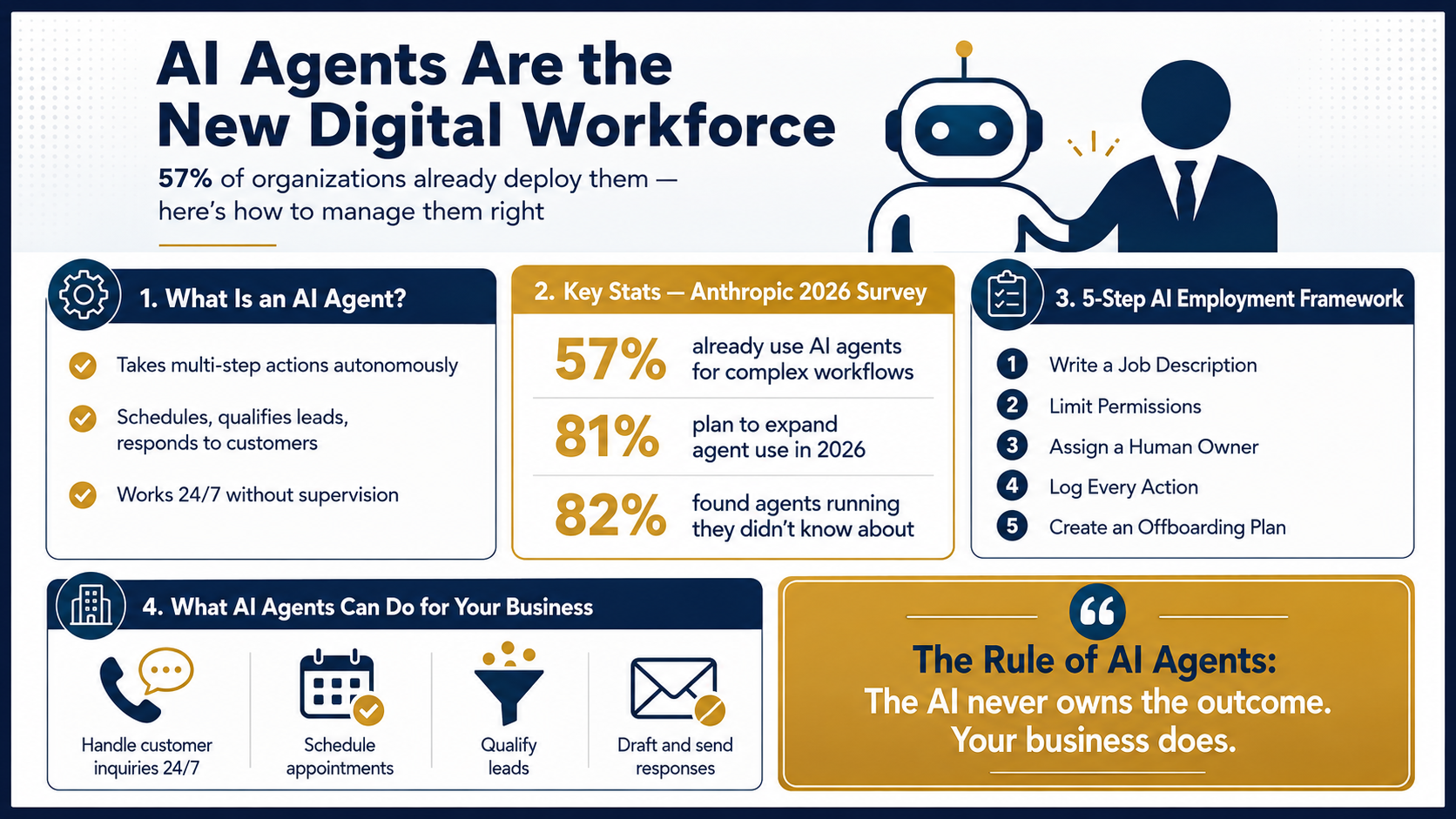
Your First AI Employee: What Small Business Owners Need to Know About AI Agents
A practical framework for deploying the AI agents that do the heavy lifting in the Pax8 productivity data.
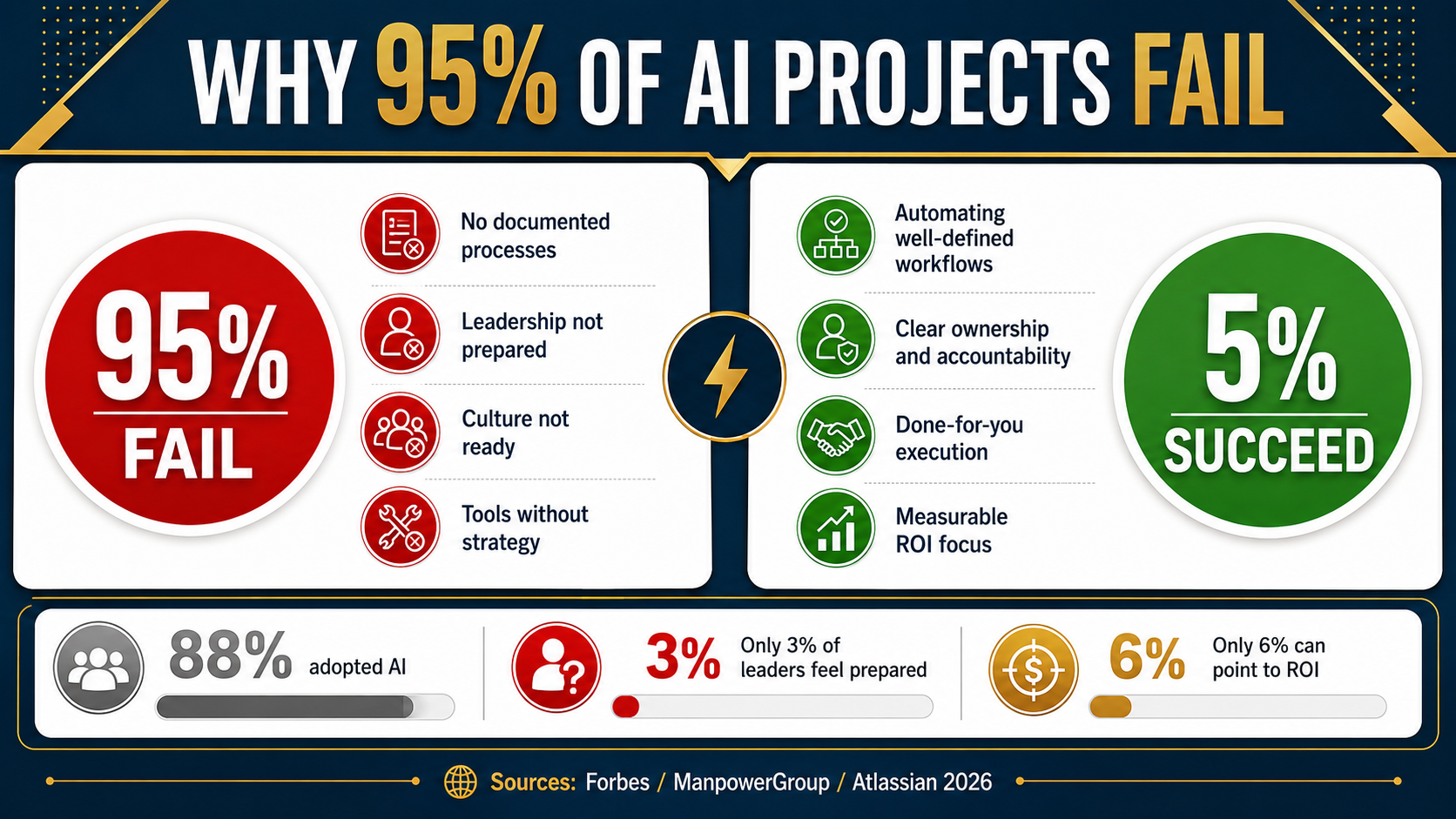
Why 95% of AI Projects Fail — And What the Successful 5% Do Differently
The governance gap that traps 77% of SMBs is also why most AI projects never produce real ROI.
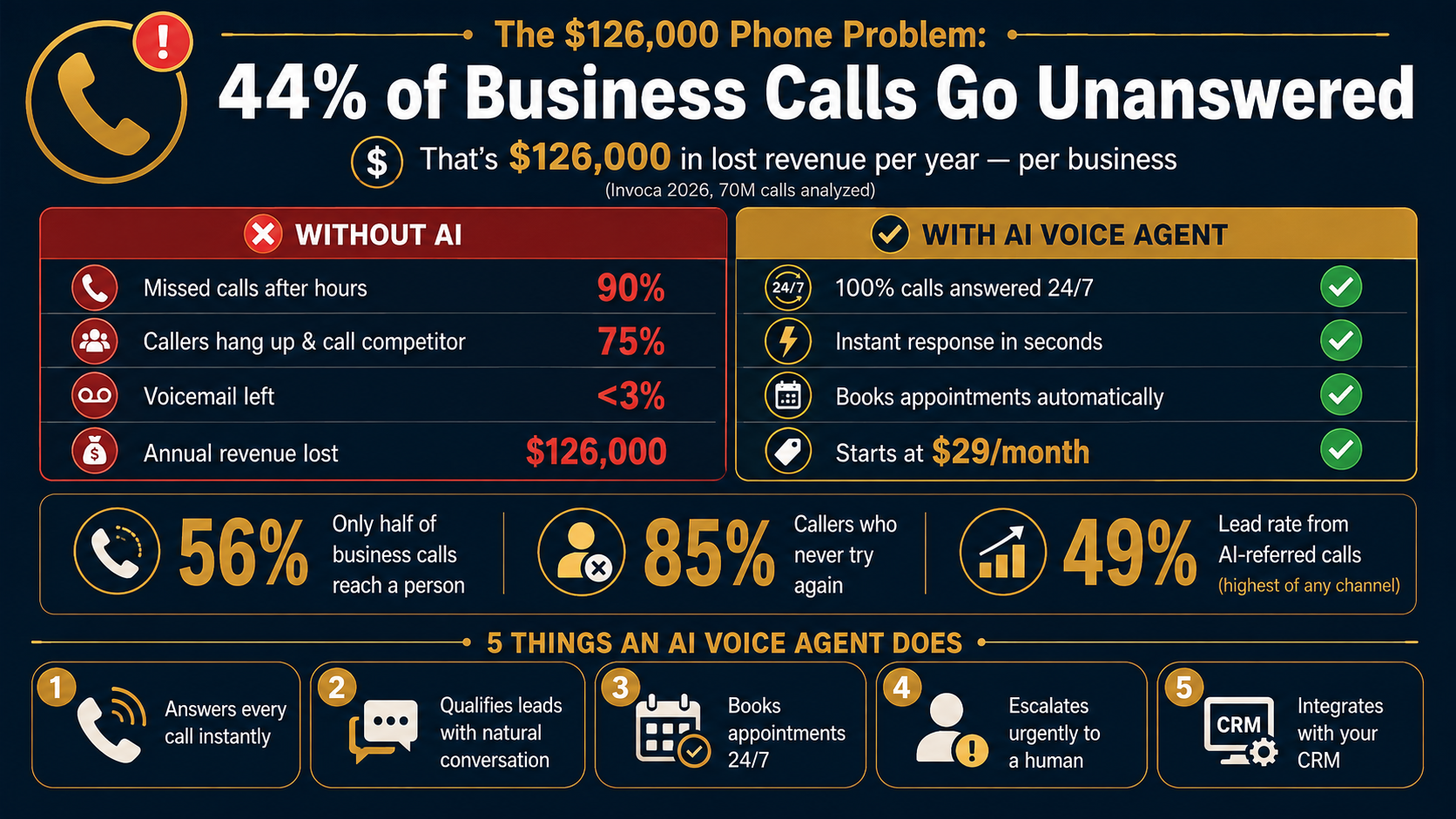
The $126,000 Phone Problem: What New Data on 70 Million Calls Reveals About Your Biggest AI Opportunity
Customer service AI is the #1 use case driving the revenue-per-employee gap — phone is where it pays off fastest.
Want to identify the highest-leverage AI workflows for your specific business — and deploy them in a way that actually moves your revenue-per-employee number?