
The $126,000 Phone Problem: What New Data on 70 Million Calls Reveals About Your Biggest AI Opportunity
Invoca just analyzed 70 million phone calls across ten industries. The finding that should stop every small business owner cold: 44% of inbound calls never reach a person. Here is what that gap actually costs — and the AI fix that is already paying for itself hundreds of times over.
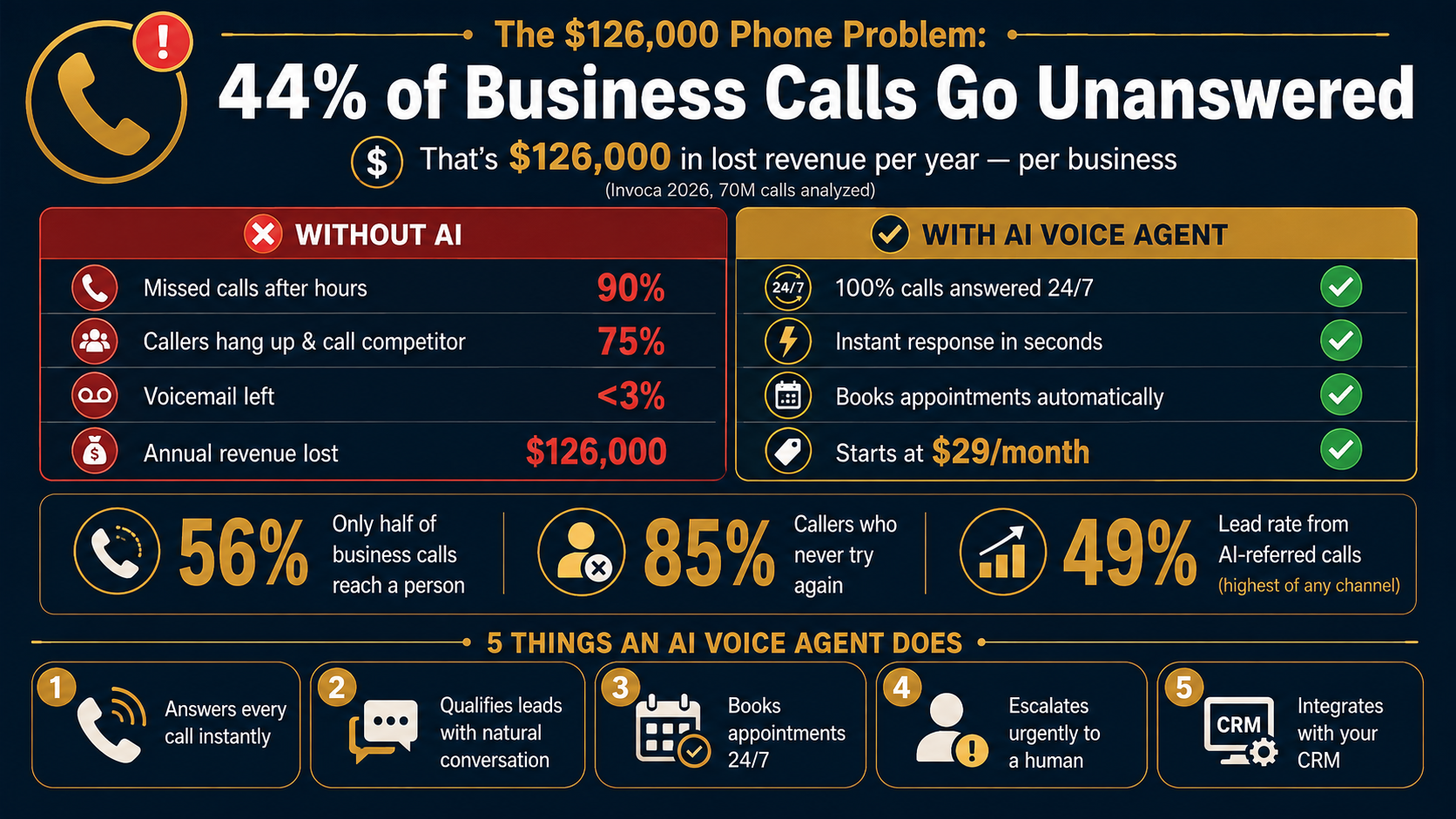
On July 13, 2026, Invoca released the most comprehensive analysis of business phone calls ever published. The Lead Conversion Benchmarks Report 2026 drew on 70 million phone calls and 600 million minutes of conversation across ten industries — healthcare, home services, automotive, financial services, and more. The headline finding was not about AI. It was about a gap that has existed for decades and is bleeding small businesses dry right now.
Only 56% of calls to businesses are answered by a person. After hours, the figure collapses to near zero. And when callers hit voicemail? Fewer than 3% leave a message. The other 97% hang up — and 75% of them call a competitor within minutes.
Run those numbers for a typical service business and you arrive at an industry estimate that should make any owner uncomfortable: the average small business loses approximately $126,000 per year to missed calls alone. Not to bad marketing. Not to a broken website. To a phone that rang and nobody picked up.
Why This Is the Easiest AI Win Most Small Businesses Are Ignoring
Much of the AI conversation for small businesses focuses on complex workflow automation, content generation, or data analysis. Those are real opportunities — but they require time to map, implement, and measure. The phone problem is different. It is immediate, it is measurable to the dollar, and the solution is already mature enough to deploy in a weekend.
AI voice agents — software that answers your business phone, holds a natural conversation, qualifies leads, books appointments, and escalates only when necessary — are now available for $29 to $500 per month depending on call volume and complexity. For businesses where a single booked job is worth $500 or more, the math barely needs explaining.
44%
of inbound calls to businesses go unanswered — Invoca 2026, 70M calls analyzed
$126K
estimated annual revenue lost per small business from missed calls
89%
of calls handled entirely by AI agents without human escalation
What AI Voice Agents Actually Do in 2026
The voice AI of 2022 — press 1 for sales, press 2 for service — is not what we are talking about. That generation of phone automation drove call abandonment rates above 40% because it was script-bound and brittle. The current generation is built on the same large language models behind tools like ChatGPT, trained to hold fluid, context-aware conversations in natural speech.
A modern AI voice agent for a small business typically handles five things end-to-end:
-
Answers every call instantly, 24/7. No hold music. No voicemail. The caller hears a natural voice within one ring, at any hour, on any day.
-
Qualifies the lead with real conversation. It asks the right questions for your business — service area, job type, budget range, timeline — and captures the answers in structured form for your CRM.
-
Books appointments directly. Integrated with your calendar, it schedules the job while the caller is still on the line — no callback, no email thread, no dropped lead.
-
Handles routine questions without you. Service areas, pricing ranges, hours, availability, FAQs — the agent answers from a knowledge base you configure once.
-
Escalates to a human when it matters. Emergencies, complex negotiations, unhappy customers — the agent recognises when a human needs to take over and routes accordingly.
Across a survey of 500+ small business deployments, 97% of owners reported increased revenue after deploying an AI voice agent, and 80% saved five or more hours per week — time previously spent on phone tag, missed callbacks, and manually entering lead details. This is precisely the kind of measurable, workflow-level outcome that separates AI that produces ROI from AI that just adds to your subscription bill.
"79% of consumers say they will switch to a competitor that responds faster. That is not a marketing problem. It is a phone problem — and it has a direct, affordable fix."
— Invoca 2026 B2C Buyer Experience Report
One Finding That Changes the Math Even Further
The Invoca report contained a second finding that is easy to overlook but important for small businesses thinking about where to focus first. Calls that originate from AI platforms like ChatGPT — meaning a consumer researched your business using AI before calling — converted at a 49% lead rate. That is the highest conversion rate of any marketing channel measured, roughly ten percentage points above the cross-channel average.
What this tells you: the quality of inbound calls is increasing as more consumers use AI to research before they dial. They have already vetted you before they pick up the phone. They are not browsing — they are ready to book. Letting those calls hit voicemail is no longer a mild inefficiency. It is a compounding error, because the callers you are missing are disproportionately your highest-intent prospects.
The Hidden Problem Invoca Also Found: Answering Is Not Enough
Here is where the Invoca data gets uncomfortable for businesses that do answer the phone. Of all the calls that reach a human, 64% end without the business ever asking for the sale or the appointment. The caller was qualified. The conversation was happening. And then it simply ended — no close, no next step, no booked job.
AI voice agents do not have this problem. They are programmed to always ask for the booking, always offer the next step, always capture the lead before ending the call. The combination — answering every call AND always asking for the business — is why the revenue impact of AI voice agents tends to surprise first-time deployers. They expected to recover missed-call revenue. They did not expect to also improve their conversion rate on calls they were already taking.
This is also why phone AI pairs naturally with AI-assisted messaging across email and WhatsApp — consistent follow-through across every channel, not just the ones you happen to be monitoring at the moment.
What to Look for Before You Deploy One
Not every AI voice agent is built equally, and the wrong choice creates the very problem it is meant to solve — callers who feel trapped in an automated system and hang up. Before deploying, evaluate any solution on these four criteria:
-
1
Natural language, not scripts. Test it with five off-script questions a real customer would ask. If it fails or loops, move on. The technology to handle natural conversation exists — there is no reason to accept a script-bound system.
-
2
CRM and calendar integration. An AI that takes a message but does not push it into your booking system has only solved half the problem. The booked appointment needs to land somewhere your team sees it automatically.
-
3
Clear human escalation rules. Every deployment needs a defined list of triggers — keywords, sentiments, or situations — that immediately hand the call to a real person. Emergencies, complaints, and large custom quotes should never be handled by AI alone.
-
4
Call analytics and transcripts. The best AI voice systems give you full transcripts of every call, flagging what went well and what the agent struggled with. This is how you tune the knowledge base and catch edge cases before they become customer complaints.
The good news: the cost barrier for this kind of capability has effectively disappeared. Entry-level AI voice agents start at $29 per month. Even mid-tier managed solutions — fully configured, monitored, and tuned — run $300 to $1,500 per month. Against a $126,000 annual lost-revenue figure, the ROI calculation takes about thirty seconds. And unlike the AI projects that routinely fail, this one has a clear, measurable outcome attached from day one: calls answered, appointments booked, revenue recovered.
The Practical Question to Ask Yourself Today
Pull up last month's call log — or estimate it. How many calls came in after hours? How many went to voicemail during the day because your team was on a job, on another call, or simply missed it? If your business relies on phone calls for any portion of its revenue, you are almost certainly sitting on a recoverable loss that dwarfs whatever you are currently spending on AI tools.
The Invoca data is not a warning about a future problem. It is a measurement of a current one — 70 million calls worth of evidence that the gap between the phone ringing and a person answering is where more small business revenue disappears than almost anywhere else. The question is not whether AI voice agents work. The data on that is clear. The question is how much longer it makes sense to leave that revenue on the table.
At GoHuman AI, configuring and managing AI voice agents for small businesses is one of the first things we do with new clients — because it is the fastest path to a measurable return. We handle the setup, the integration with your calendar and CRM, the knowledge base, and the escalation rules — so the first call your AI agent answers is already tuned to sound and behave like your best team member. If that is a conversation worth having, the link below is the right next step.
The single question worth answering before this week ends:
"How many calls did my business miss last month — and what was each one worth?" If you do not know the answer, that is the first problem to solve. If you do know, the next step is obvious.
Related Reading
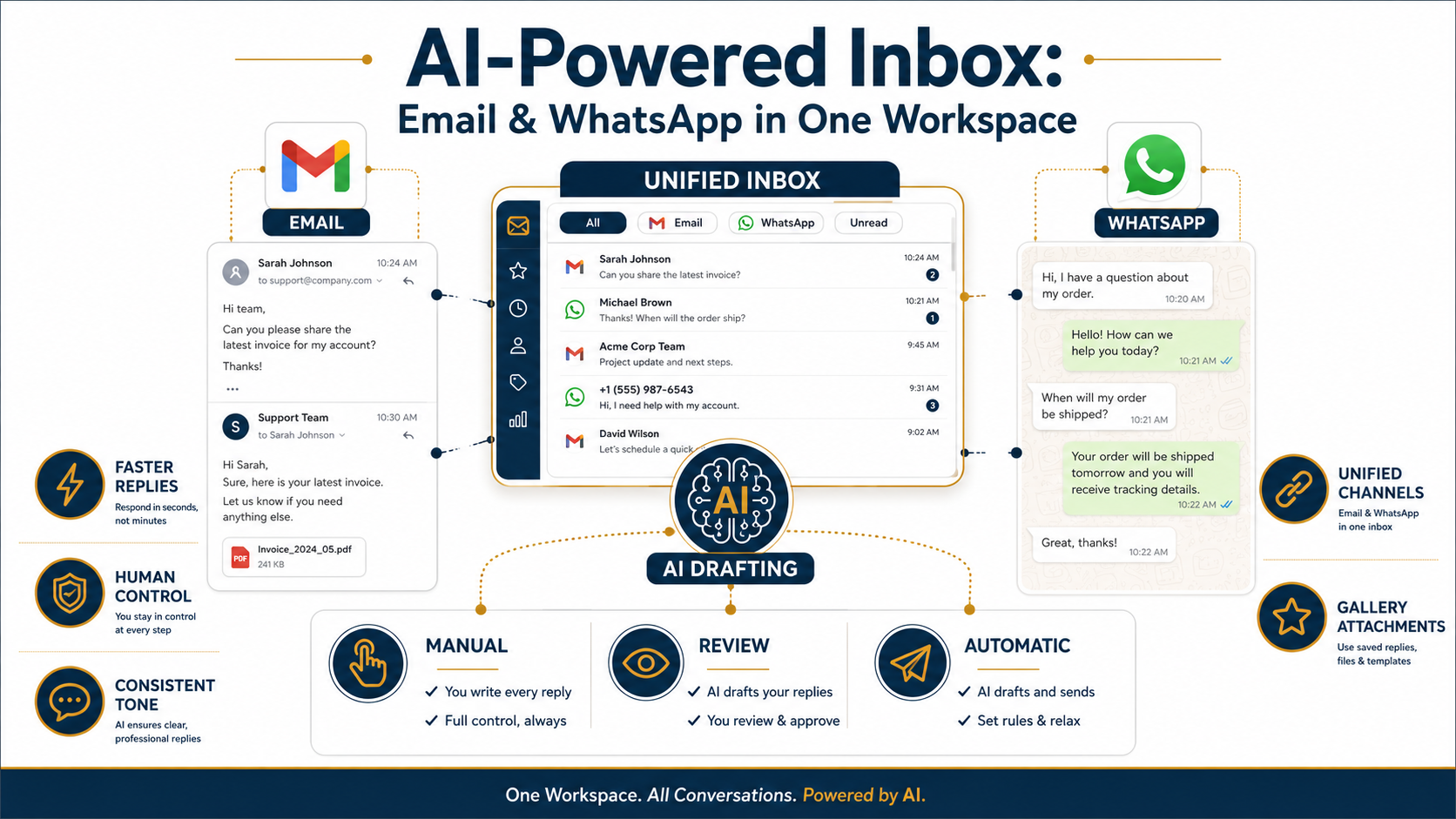
From Scattered to Streamlined: How AI-Powered Inbox Is Changing Business Communication
Phone is one channel. Here is how AI handles email and WhatsApp with the same consistency.
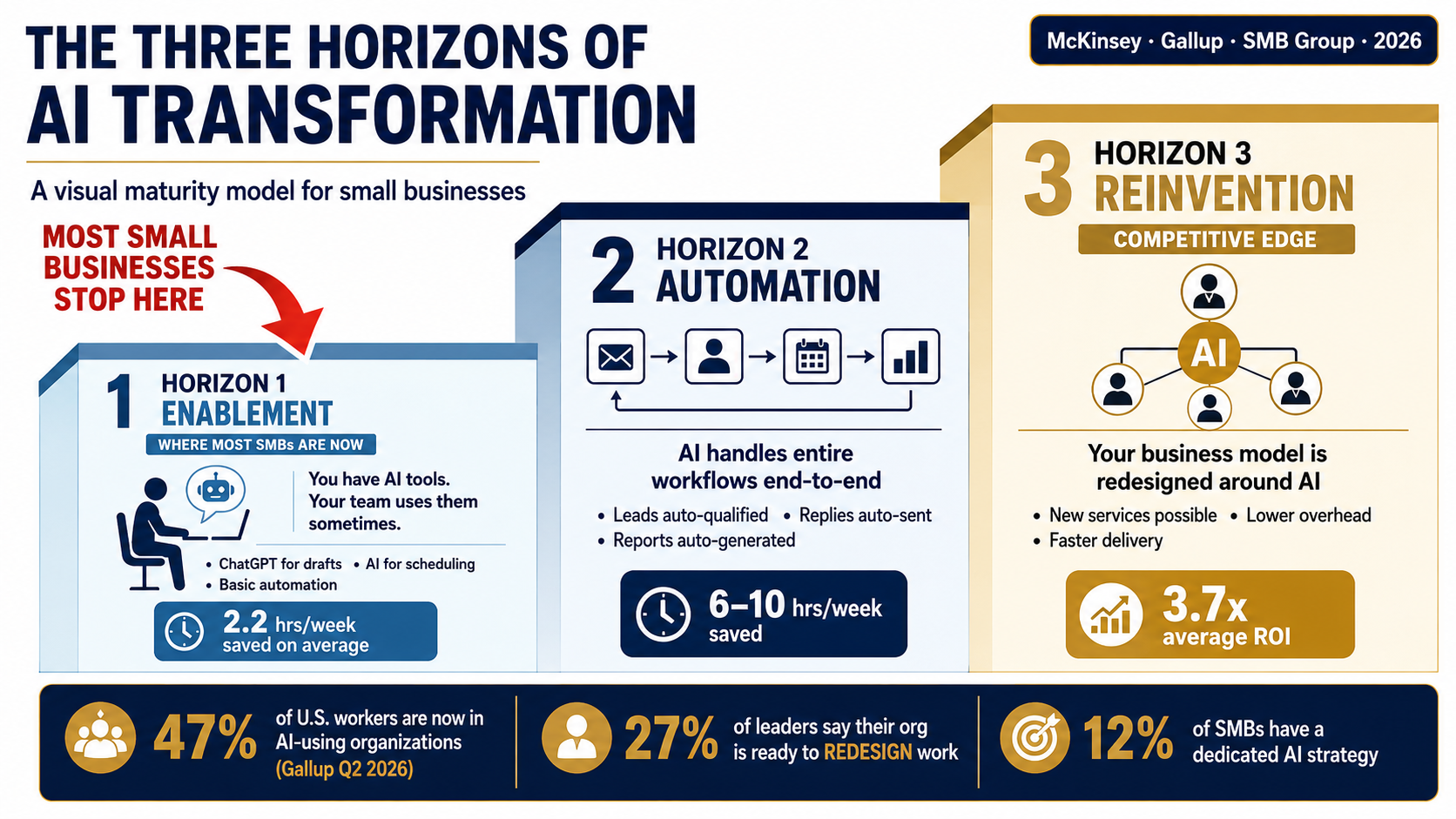
The AI Maturity Gap: Why Most Small Businesses Are Stuck at Horizon 1
Once your phone is handled, here is the framework for turning AI into a business-wide ROI driver.
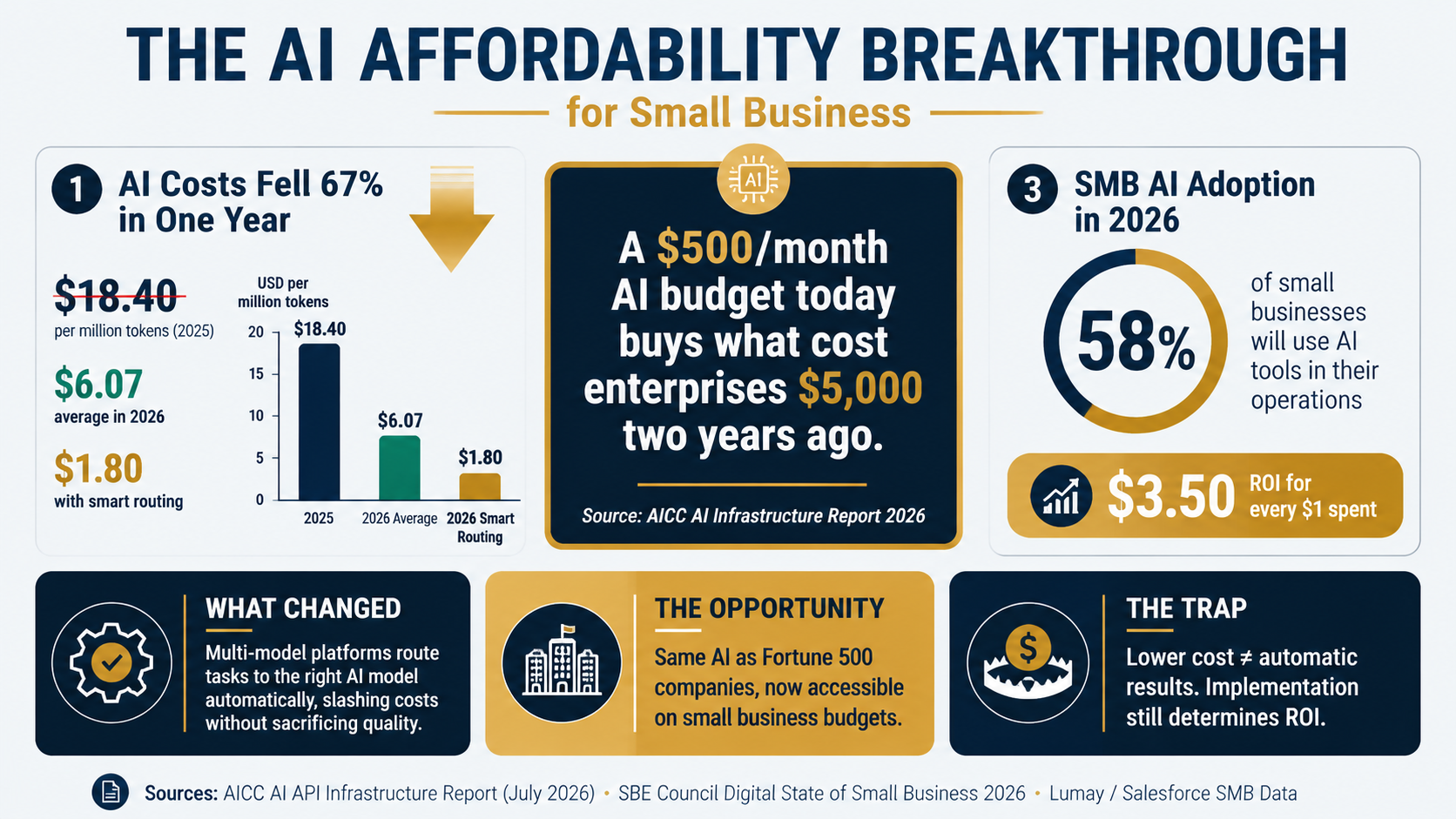
The Great AI Equalizer: Enterprise-Grade AI Is Now Affordable for Small Business
AI voice agents starting at $29/month are part of a broader cost collapse — here is the full picture.
Want to see how many calls your business is currently missing — and what it would take to fix it?