
The Half-Price Switch: OpenAI Just Cut Its Newest AI Models by 50% — Here's How Small Businesses Match the Right Model to the Right Job
On September 29, 2026, OpenAI cut prices on its new GPT-6 Sol and Luna models by half. Luna now costs $0.10 per million input tokens, and repeat prompts get a 90% discount. Anthropic launched a cheaper model the same afternoon. Here is what the price war means for your budget, and how to choose the right model for each job.
Most small businesses do not buy AI by the token, but the tools they use do. When the raw price of AI halves, the software built on top of it gets cheaper, faster, or both. This week, the price of good-enough AI dropped again.
What Just Happened
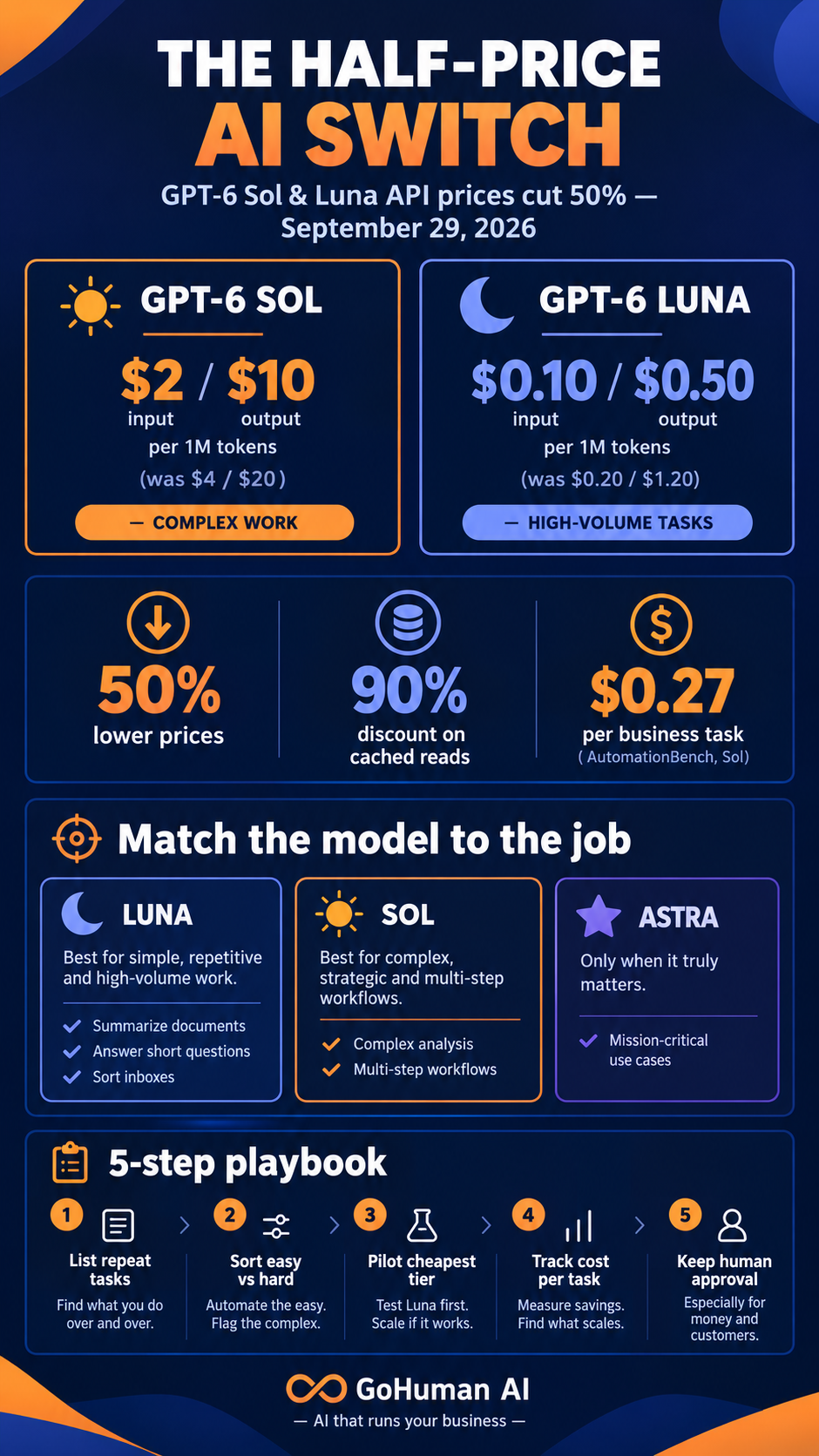
OpenAI released GPT-6 Sol and GPT-6 Luna, two models that sit below its flagship GPT-6 Astra. Sol is built for complex work and costs $2 per million input tokens and $10 per million output tokens, down from $4 and $20 on the previous generation's promotional pricing. Luna is the small, fast model for high-volume jobs with a clear goal, such as summarizing documents or answering short questions. It costs just $0.10 and $0.50.
Two other details matter. Repeat prompt content, like your standing instructions or product catalog, now gets a 90% discount on cached reads. And Anthropic launched Claude Opus 5.5 about 90 minutes earlier, at roughly 40% lower running cost than its predecessor. An economist quoted by Fortune describes a genuine price war between the two labs.
Why It Matters for a Small Business
Two reasons. First, routine work is now nearly free to run. A task like sorting 500 emails or summarizing a week of customer chats can cost pennies on a small model. That changes the math on jobs you previously judged "not worth automating," a trend we tracked in the AI cost drop post.
Second, the bottleneck has moved. When the model costs almost nothing, the expensive part is deciding which jobs to hand over, wiring them into your real systems, and checking the results. This is the same gap described in the workflow integration post.
The Trap: Paying for Power You Don't Need
Many owners default to the biggest model for everything, like hiring a senior consultant to file receipts. A useful rule of thumb from this launch: small models for clear, repetitive jobs; mid-tier for analysis and multi-step work; the top model only when the result truly justifies it. OpenAI says Luna at higher effort matches its previous Sol on its own factuality test at roughly a hundredth of the cost. That is the company's own measure on a hand-picked, error-prone set, so test on your own examples before trusting it.
The 5-Step Model-Matching Playbook
-
ai-gpt6-price-cut-small-businessTEPS
One Caution
Cheaper tokens do not mean cheaper mistakes. A wrong refund or a bad customer reply costs the same whatever the model price. Pair low-cost automation with approval gates and clear rules, as outlined in the guardrails post.
Where GoHuman AI Fits In
Model prices will keep moving. What lasts is a setup where each task runs on the right tier, connected to your tools, with humans approving what matters. GoHuman AI builds that for you and swaps models as prices and quality change, so you keep the savings without the tinkering. Book a free automation audit and we will map your repeat tasks to the cheapest tier that does the job well.
Related Reading
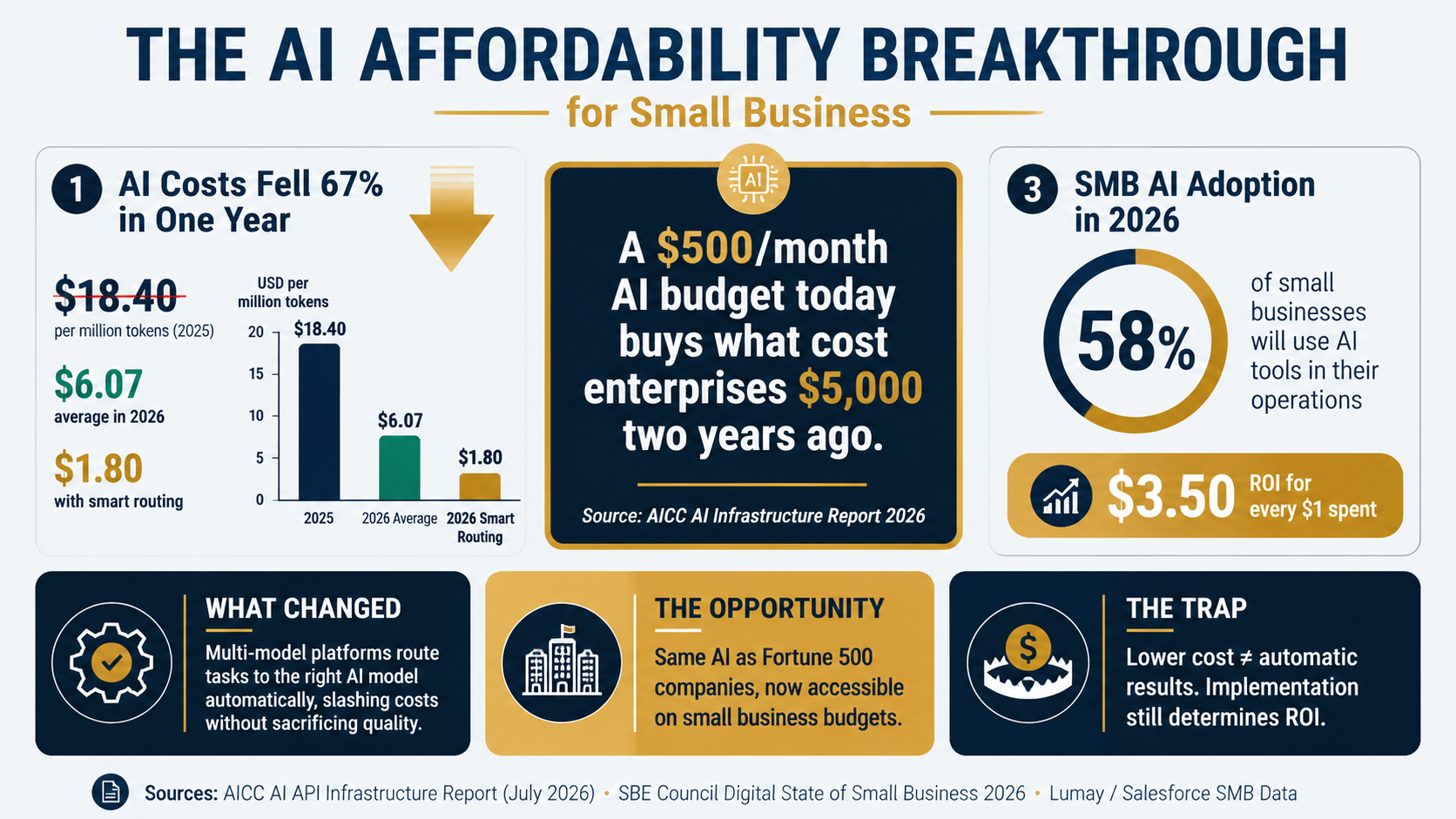
The AI cost drop and what it means for small businesses
The bigger trend behind this week's price cut.
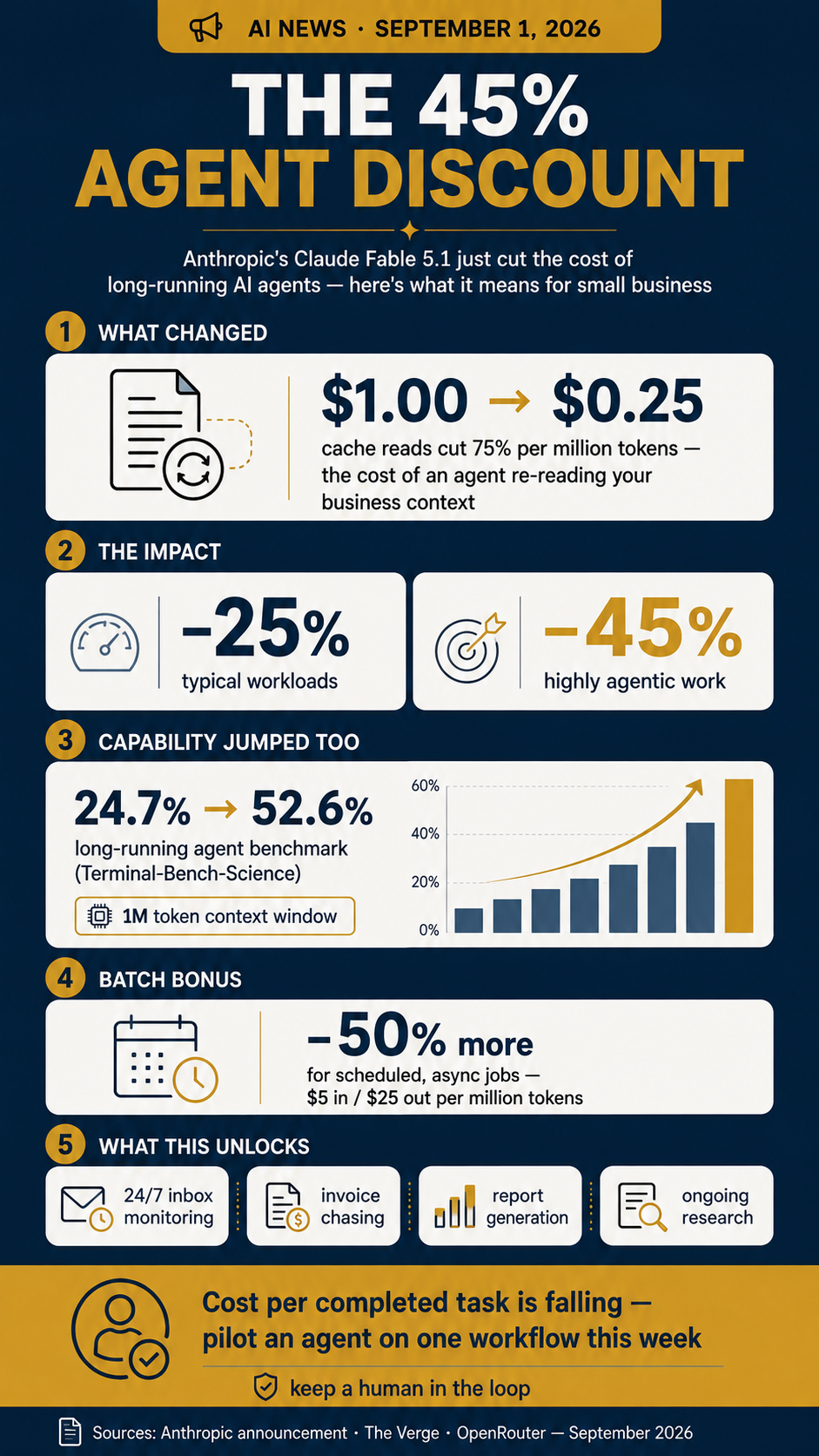
The 45% Agent Discount: Anthropic Just Made Long-Running AI Employees Affordable
How to count what an always-on agent really costs.
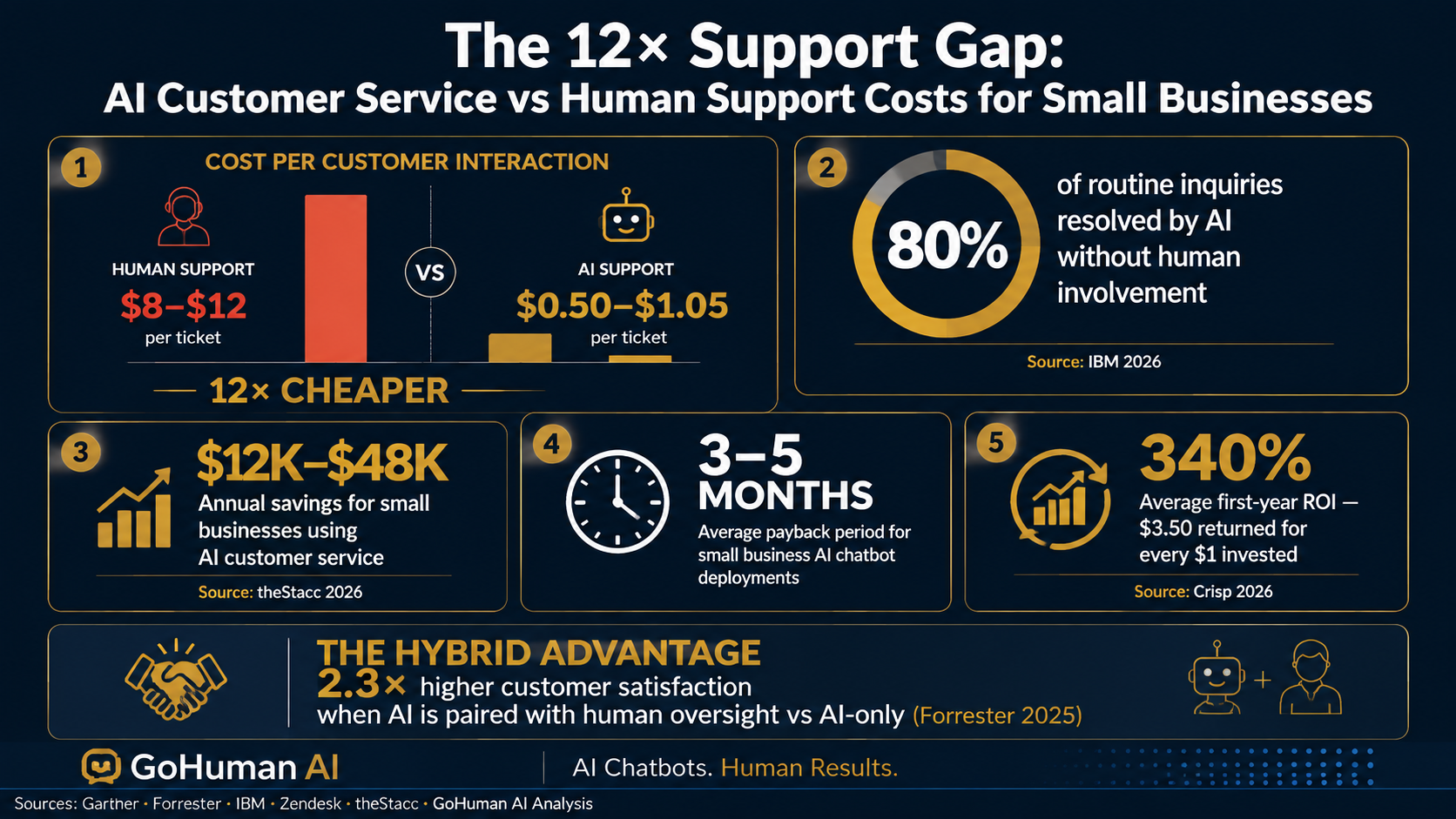
The 12× Support Gap: AI Resolves 80% of Customer Inquiries for Under $1 Each
A high-volume task that cheap models handle well.
Cheaper AI only pays off when it is pointed at the right jobs. Book a free automation audit and we will show you which ones.