
The 12× Support Gap: New Data Shows AI Resolves 80% of Customer Inquiries for Under $1 Each — While Human Support Still Costs $10
Most small business owners think of customer service as a fixed cost — the price of keeping customers happy. New 2026 data from Gartner and Forrester reveals it is actually a variable with a 12× spread depending on who — or what — is handling the ticket. Here is what that gap costs you every month, and what small businesses with AI customer service already know.
Customer service is where many small businesses quietly hemorrhage money without realizing it. Not because their teams are inefficient — but because the cost model for human-handled support has never changed, and most owners have never had a reason to question it. You hire someone, they answer questions, customers get help, the cost is what it is. Until now, that was simply the price of being in business.
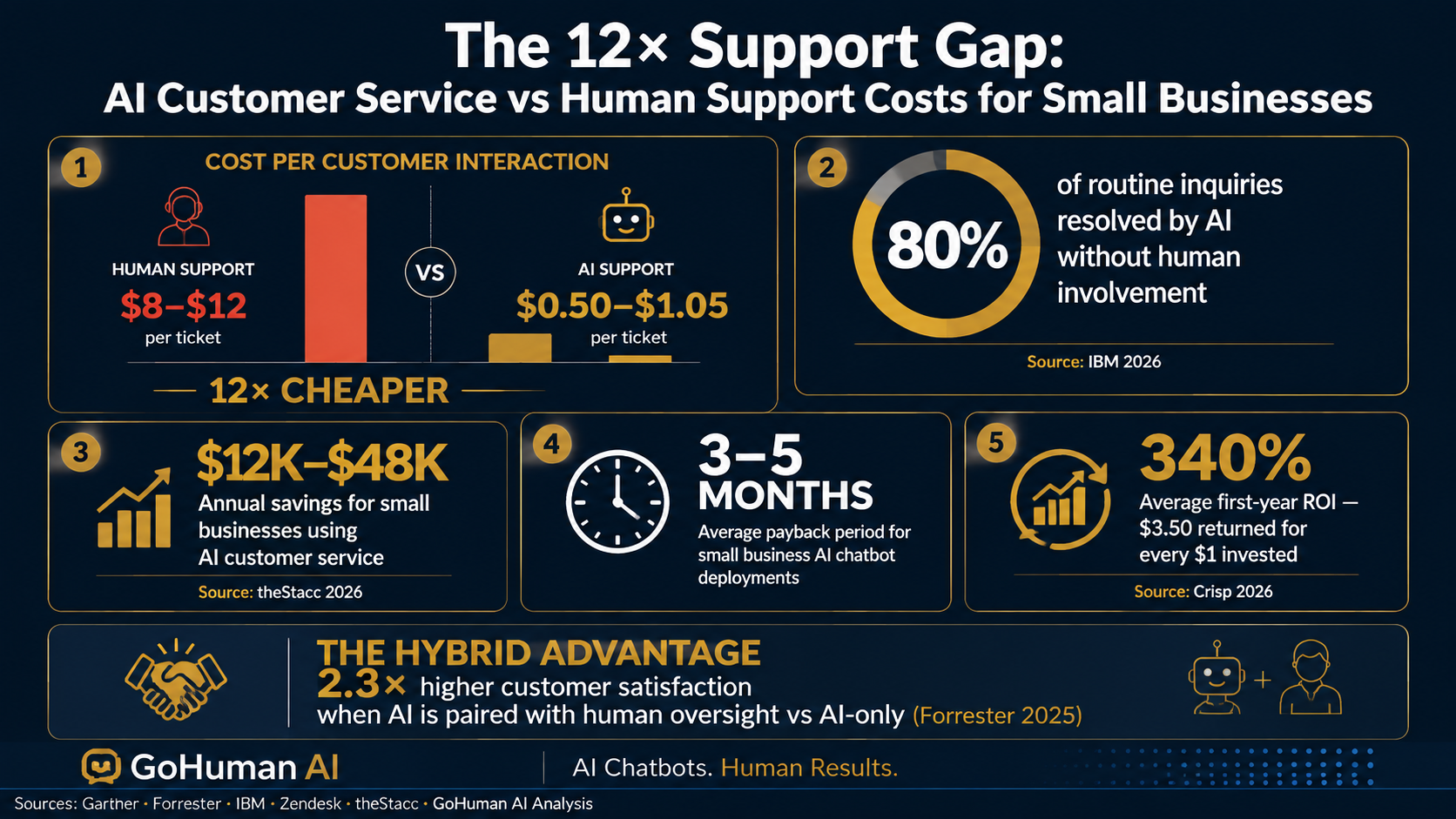
New 2026 data changes that framing entirely. According to benchmarks from Gartner and Forrester Research, AI handles customer support tickets at $0.50 to $1.05 each. Human agents handle the same tickets at $8.00 to $12.00 each. That is a 12× to 24× cost differential — on every single interaction. For a business handling 500 customer inquiries per month, the gap between those two numbers is $3,750 to $5,475 — every month, or up to $65,700 per year.
What AI Customer Service Actually Handles
The immediate objection most business owners raise is the obvious one: can AI really handle real customer questions, or does it deflect everything and frustrate people? The data is more encouraging than most expect. IBM's 2026 analysis found that 80% of routine customer inquiries can be fully resolved by AI without any human involvement. Zendesk's research on mature deployments shows an 89% first-contact resolution rate — meaning nearly nine out of ten customers get their issue resolved on the first interaction.
What falls into that 80%? Hours and availability questions. Order status and tracking. Return policies and refund procedures. Appointment scheduling and rescheduling. FAQ-style product questions. Pricing and service tier information. Password resets and account access. These are the inquiries that fill most small business support queues — questions that have definitive answers, asked by customers who simply need those answers quickly. AI handles this category more consistently and faster than any human team can.
The remaining 20% — complex complaints, nuanced situations, emotionally charged interactions, decisions requiring judgment or policy exceptions — routes to a human. This is not a limitation of AI; it is good system design. The customers who need a human get one. The customers who just need an answer get it instantly, at any hour, without waiting.
12×
Cost Differential
AI tickets ($0.50–$1.05) vs human tickets ($8–$12)
80%
Routine Resolution Rate
Of inquiries handled without human involvement (IBM)
340%
First-Year ROI
$3.50 returned for every $1 invested in AI support
Why AI-Only Is Not the Answer — and Hybrid Is
Here is where the data makes an important distinction that matters especially for small businesses. Fully automated AI-only support — no human fallback, no escalation path, no oversight — underperforms on one metric that is crucial to long-term business health: customer satisfaction. Forrester Research's 2025 data found that hybrid AI-human models deliver 2.3× higher customer satisfaction than AI-only deployments. Meanwhile, 75% of customers across segments still prefer a human for complex or emotionally sensitive issues.
This distinction matters because the risk most small business owners fear — that AI customer service will feel cold or frustrating — is real, but it is a risk associated with removing humans from the equation entirely. Hybrid deployment resolves it. AI handles the high-volume, low-complexity interactions at a fraction of the cost. Humans handle the high-stakes conversations that shape how customers feel about your brand long-term. The result is better coverage, lower cost, and higher satisfaction than either approach delivers on its own. This is the same principle behind GoHuman AI's Human in the Loop philosophy — AI does the work at scale, and human judgment applies exactly where it counts.
The loyalty connection:
Customers are 2.4× more likely to remain loyal to a brand when their problems are resolved quickly. AI customer service addresses speed first — and speed, it turns out, is the #1 driver of whether a customer service interaction builds loyalty or destroys it.
What This Means in Real Dollars for Your Business
theStacc's 2026 benchmarks for small businesses show typical annual savings of $12,000 to $48,000 from AI customer service deployment. The spread reflects business size, ticket volume, and current cost-per-ticket — but both ends of that range are meaningful for a business of 5 to 50 employees. Payback periods for small businesses come in at 3 to 5 months — faster than almost any other technology investment, and significantly faster than the 12 to 18 months typical for enterprise deployments. This tracks directly with the 11× ROI data seen across AI agent deployments generally — support automation is one of the highest-return entry points available.
The cost savings compound in a less obvious direction too. Every routine inquiry handled by AI is time your team is not spending on it. A business with two part-time customer service staff can redirect 60–80% of their hours toward work that actually grows revenue — outbound follow-ups, retention calls, upsell conversations. This is the same pattern described in the data on AI and customer retention: the businesses that outperform on retention are not the ones with the largest support teams — they are the ones whose human teams are doing the high-value work that AI cannot do.
4 Questions to Gauge Your Support Cost Gap
- 1How many customer inquiries do you handle per month — and do you know your cost per ticket right now?
- 2What percentage of your support volume is the same 10 to 20 questions, asked over and over?
- 3How much time does your team spend on customer inquiries that could be answered with information you already publish somewhere on your website?
- 4Are customers reaching you outside business hours — and what happens to those inquiries? Do you know how many you're losing?
The Timing Question
Seventy-three percent of small businesses using AI customer service report positive ROI within the first year, according to Salesforce SMB Trends data. The 27% that don't typically have the same profile: low ticket volume, poor knowledge base quality going into the implementation, or AI-only deployments without human escalation paths. These are implementation choices, not technology limitations — and all three are avoidable.
What is not avoidable is the competitive gap that widens for every month a business continues handling 100% of its customer inquiries at $8 to $12 each while competitors handle 80% of theirs at under $1. This mirrors the broader pattern visible in AI adoption data generally: the gap between early movers and late adopters is not closing — it is compounding with each passing quarter.
At GoHuman AI, AI customer service setup is one of the fastest paths to measurable ROI we implement for clients — typically live within two to four weeks and in positive return territory within the first quarter. If you are still handling every customer inquiry manually, the most expensive decision you can make right now is to keep doing so. Let us run the numbers on what your current support operation is actually costing you.
Related Reading
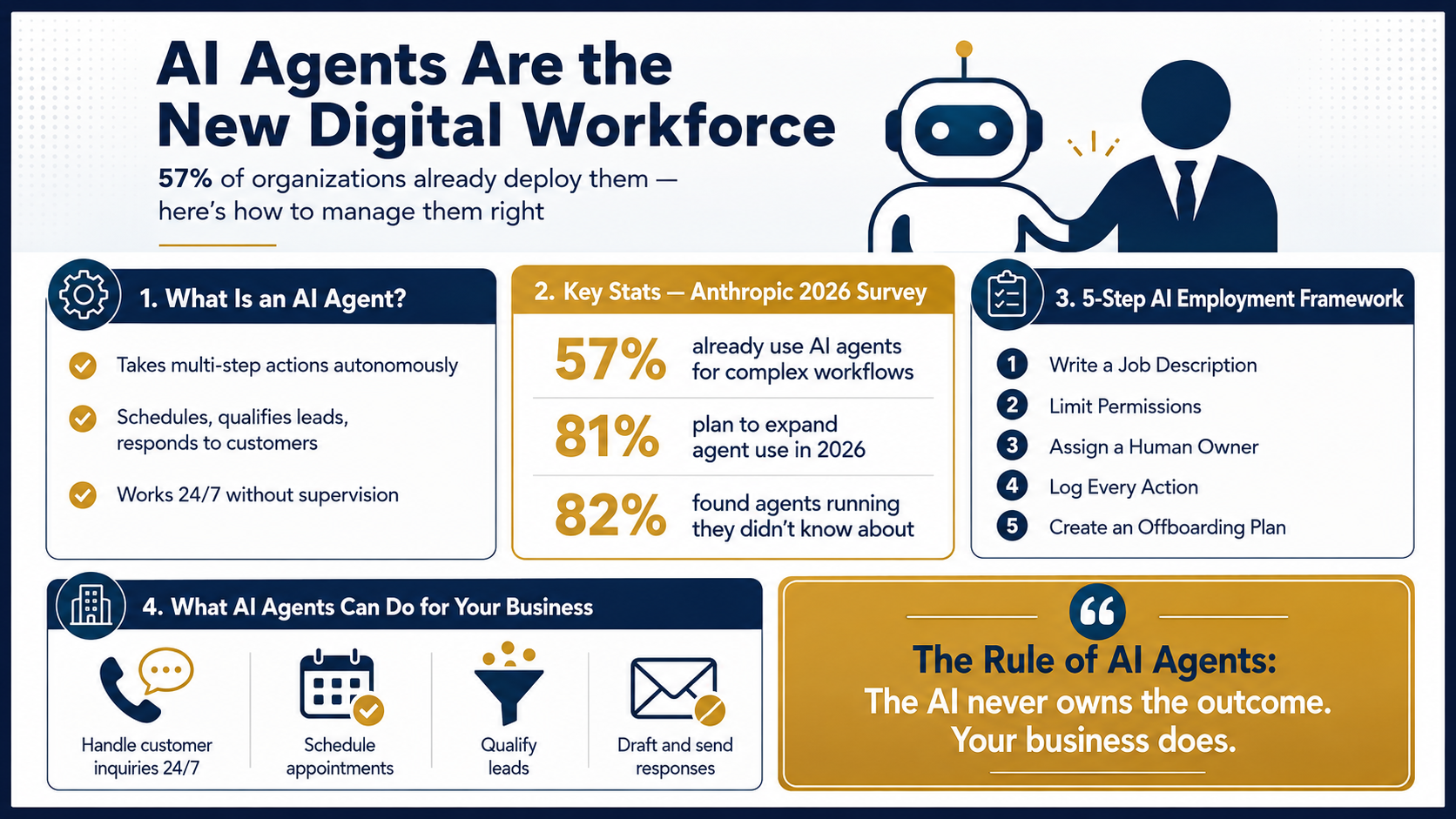
Why Every AI Agent Needs a Human in the Loop
The hybrid model that delivers 2.3× higher satisfaction — and why GoHuman AI builds it into every deployment.
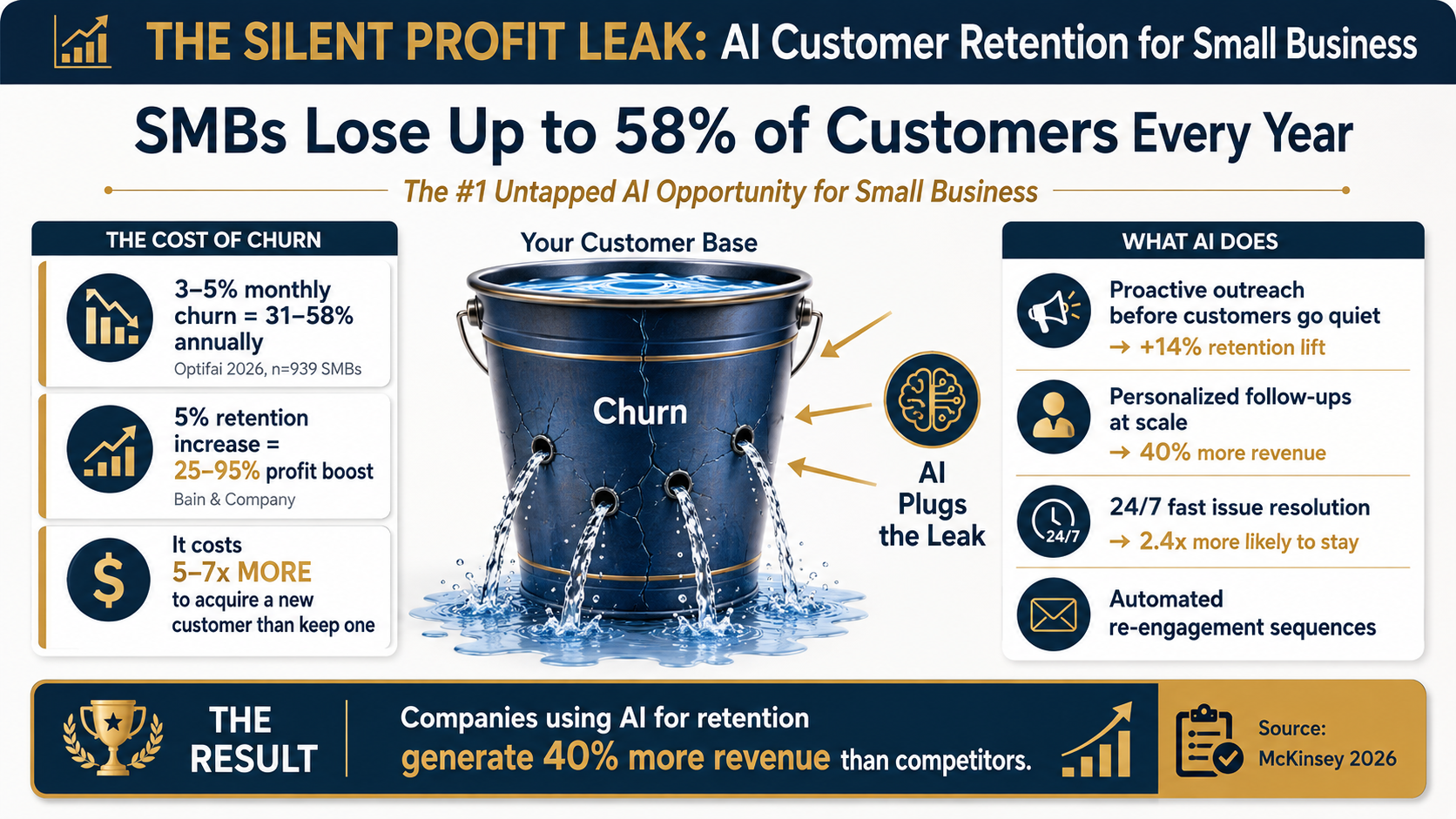
The Silent Profit Leak: How AI Is Helping Small Businesses Stop Losing the Customers They Already Have
Fast resolution is the #1 driver of loyalty — and loyalty is the highest-ROI metric in any small business.
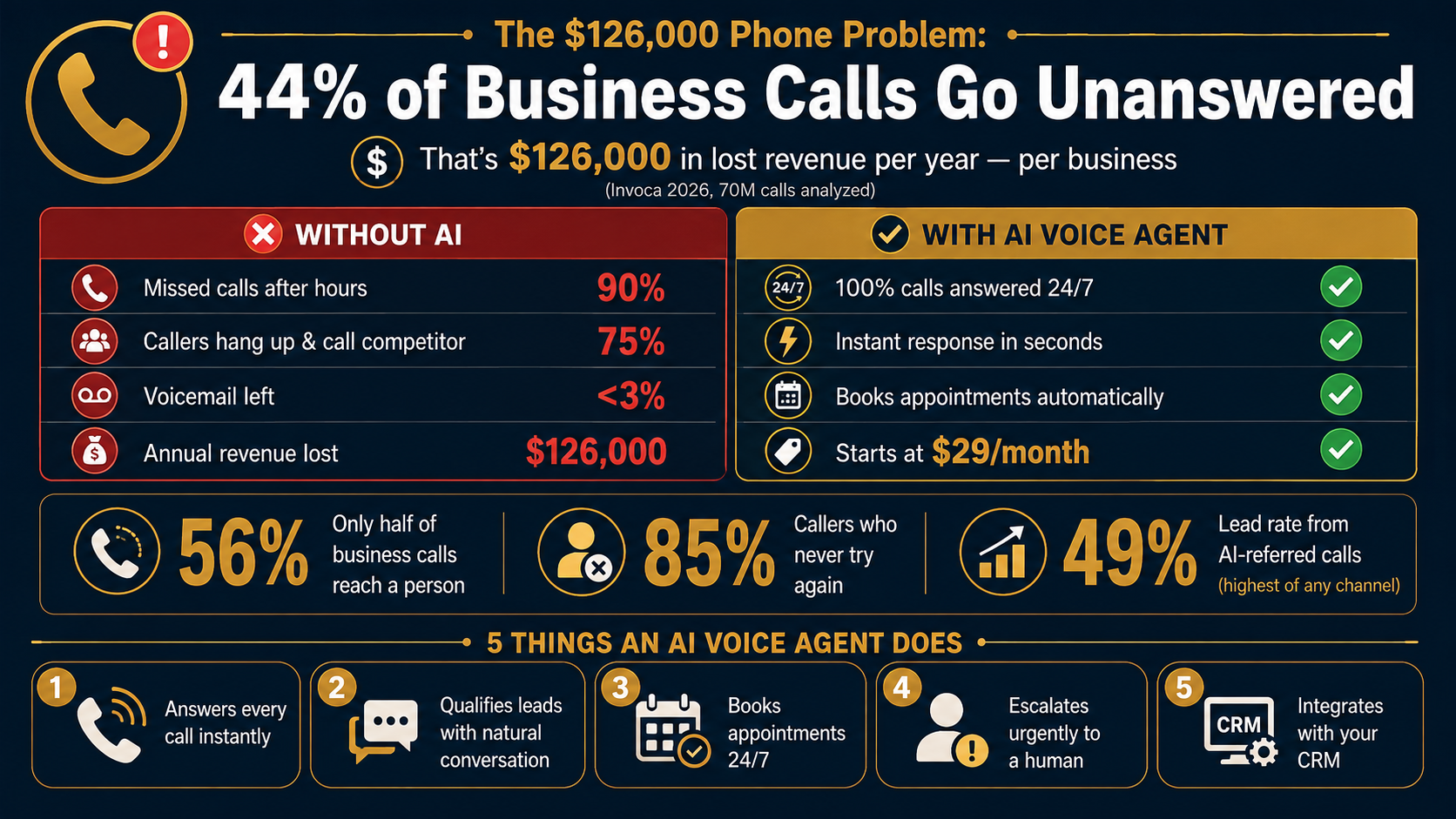
The $126,000 Phone Problem: What New Data on 70 Million Calls Reveals About Your Biggest AI Opportunity
AI customer service doesn't stop at chat — voice is where the biggest missed-inquiry problem lives.
If your team is still answering the same 15 questions manually, day after day, you are paying $8–$12 per interaction for work that AI handles for under $1. A single conversation with us will show you exactly what that is costing — and what a hybrid AI-human support setup would look like for your business.