
The Silent Profit Leak: How AI Is Helping Small Businesses Stop Losing the Customers They Already Have
Most small businesses spend 80% of their growth budget chasing new customers while quietly losing 31 to 58 percent of existing ones every year. New 2026 data shows the single biggest lever to fix that — proactive personalized outreach — is exactly what AI does best. Here is what it looks like in practice, and why it pays more than almost any other investment you can make.
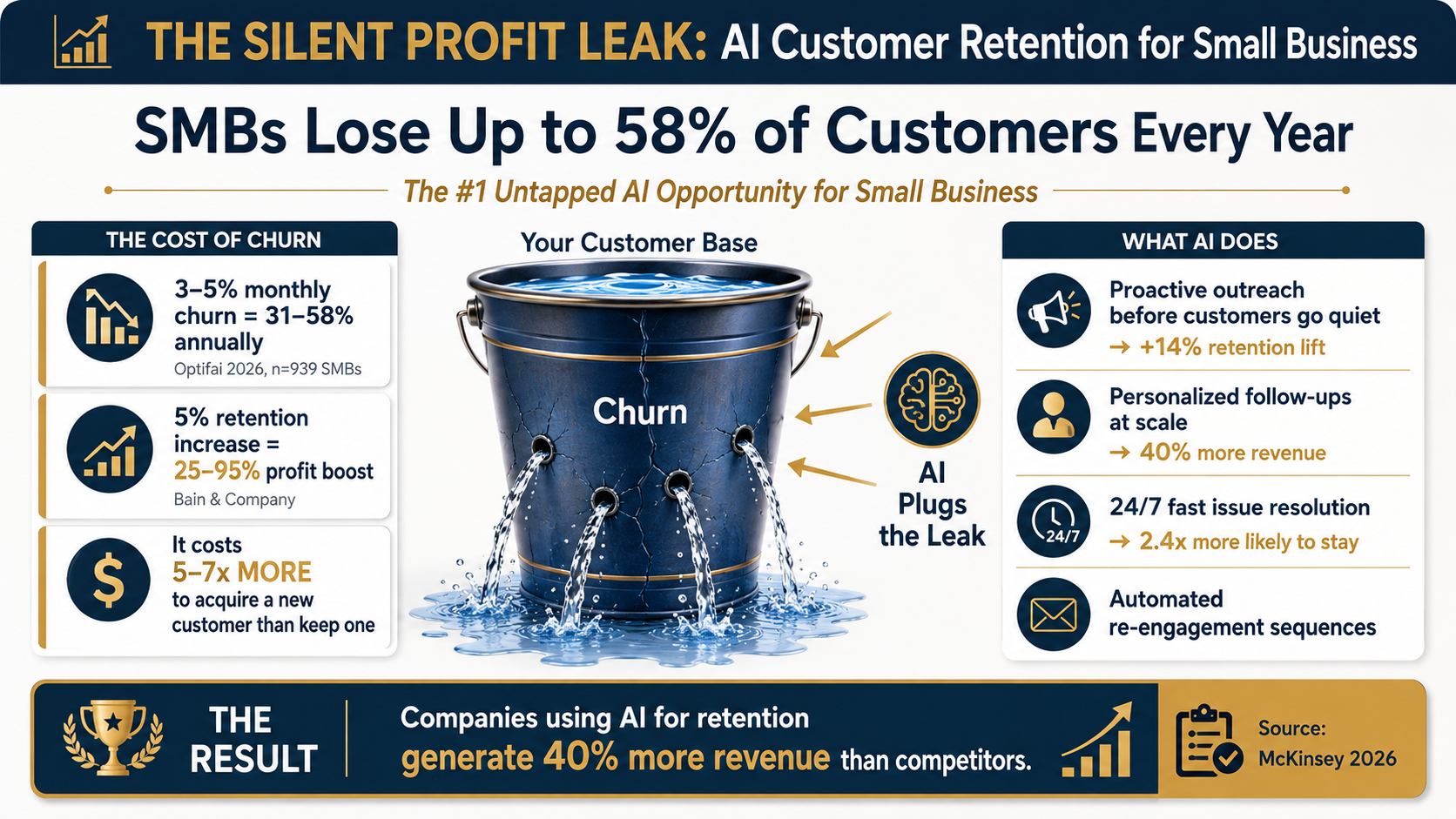
There is a number every small business owner should know, and almost none of them do. According to Optifai's 2026 Pipeline Study of 939 small and medium-sized businesses, the average SMB loses between 3 and 5 percent of its customers every single month. Run that out to a year and you get annual customer loss of 31 to 58 percent. More than half your customer base — gone in twelve months. And the worst part? Most businesses are barely aware it is happening, because they are so focused on the new customers coming in the front door that they never look at how many are slipping out the back.
This is what researchers call the silent profit leak. Unlike a dropped sale or a failed product launch, customer churn is invisible. It does not announce itself. It shows up slowly — in flattening revenue despite growing marketing spend, in acquisition costs that never seem to improve, in the gnawing feeling that you are running hard to stay in place. For most small businesses, that leak has been impossible to fix without a dedicated customer success team they cannot afford.
That is changing — fast. AI has quietly become the retention tool that small businesses could not previously access, and the numbers behind what it does are hard to ignore.
The Math That Makes Retention the Best Investment You Can Make
Before getting into what AI specifically does, it is worth grounding the case in economics — because this is not a feel-good story about keeping customers happy. It is a hard-dollar story about where your growth budget actually produces the most return.
Bain & Company's research on customer retention — some of the most cited business data of the last three decades — found that a 5% increase in customer retention produces a profit increase of 25% to 95%. The range is wide because it depends on your industry, margin, and customer lifetime value, but even at the low end of that range, retention dwarfs almost every other investment available to a small business. A 5-point retention improvement has the profit impact of acquiring a quarter of your existing customer base at zero cost.
This works because of compounding. A customer who stays buys again. They refer others. They are already trained on your processes and products, so the cost of serving them is lower than the cost of onboarding someone new. The math is unambiguous: it costs five to seven times more to acquire a new customer than to keep an existing one. Most small businesses have this ratio exactly backwards in their growth budget — spending the vast majority on acquisition while investing little or nothing in the systematic retention of customers they fought hard to win.
31–58%
of SMB customers are lost annually — 3–5% every month (Optifai 2026, n=939 SMBs)
25–95%
profit increase from just a 5% improvement in customer retention — Bain & Company
40%
more revenue generated by companies that excel at personalization — McKinsey 2026
The #1 Retention Lever — And Why Small Businesses Almost Never Use It
In 2026, Focus Digital analyzed 312 companies that had improved their customer retention rates by 10 percentage points or more. They studied every retention lever those companies used: loyalty programs, onboarding improvements, multichannel support, price adjustments, product changes. One approach produced significantly more lift than anything else.
Proactive customer outreach — contacting customers before they go quiet, before they complain, before they have already decided to leave — produced a 14% retention lift. The critical word is "proactive." Not reactive support. Not a follow-up after a complaint. Outreach that catches customers while they are still engaged, but showing early signals that their engagement is cooling.
This is exactly the thing that is impossible for most small businesses to do at scale without AI. Think about what proactive outreach requires: you need to know which customers are showing early warning signs of disengagement. You need to reach them with a message that feels personal and relevant — not a generic "we miss you" blast. You need to time the outreach correctly, which varies by customer segment and purchase pattern. And you need to do all of this continuously, for every customer in your database, every week.
A human team cannot do this for a database of more than a few hundred customers without dedicated resources. AI can. It monitors every customer's behavior patterns, identifies the signals that precede disengagement, and triggers personalized outreach — an email, a WhatsApp message, a phone call — before the customer has mentally moved on. The timing and personalization that make proactive outreach work are exactly what AI does better than manual processes.
"The best retention strategy starts before customers complain. Of every retention lever studied — loyalty programs, onboarding improvements, and multichannel support — proactive outreach delivered the strongest results."
— Focus Digital, 2026 Retention Analysis of 312 companies
What AI-Powered Retention Actually Looks Like for a Small Business
It is worth being concrete about this, because "AI retention" can sound abstract. Here is what it looks like across four specific retention scenarios that small businesses face constantly:
-
The customer who hasn't been back in 45 days. In a traditional setup, this customer silently moves on while you remain unaware. With AI, their absence triggers a personalized message — referencing their last purchase, asking how it went, offering something relevant to what they bought. The message goes out automatically, at the right moment, without a team member checking a spreadsheet. AmplifAI's 2026 customer service data confirms that fast, relevant response makes customers 2.4 times more likely to stay — and the same dynamic applies to re-engagement outreach.
-
The customer who had a bad experience. A complaint that gets resolved quickly does not typically cost you the customer — it sometimes strengthens loyalty. The problem is that most negative experiences never surface as explicit complaints. Customers simply leave. AI can identify post-complaint drop-off patterns and trigger proactive follow-up: "We want to make sure your recent experience was resolved to your satisfaction." That message — sent before the customer has decided to leave — changes the outcome far more often than a reactive win-back campaign sent after they are already gone.
-
The customer who is due for their next purchase. Repeat purchasing is the foundation of customer lifetime value. For any business with predictable purchase cycles — a salon, a vehicle service provider, a supplier — AI identifies when each customer is approaching their typical repurchase window and sends a timely, personal prompt. Not a mass promotion. A specific nudge based on their actual behavior. This is what McKinsey means when they report that companies excelling at personalization generate 40% more revenue: the personalization is not in fancy design, it is in the timing and specificity of the message.
-
The high-value customer who is showing signs of cooling. Not every customer is equal. AI identifies your highest-value customers and monitors them more closely for engagement signals. When a high-value customer's purchase frequency drops, engagement with emails declines, or service interactions shift in tone, AI can flag them for a personal check-in — a call or a direct message — before the relationship deteriorates. AI voice agents can handle that outreach call automatically, leaving you a recording and a summary if the conversation warrants a human follow-up.
The Gap Most Small Businesses Don't Know They Have
Iterable's 2026 customer journey research found something that explains why retention is such a persistent problem: only 30% of marketing teams own the end-to-end customer journey. For the other 70%, no single person or system is accountable for the customer's experience from first purchase through ongoing relationship. Acquisition is tracked obsessively. Retention falls into the gap between sales, operations, and marketing — everyone's responsibility in theory, no one's in practice.
This is particularly acute for small businesses, where teams are lean and bandwidth for relationship maintenance is genuinely limited. Owners know they should be following up with customers, checking in with long-term clients, and personalizing their communications — but the operational reality is that these things get deprioritized as soon as the day gets busy. AI does not have a busy day. It runs the retention sequences consistently, regardless of what else is happening in the business.
This is also where the connection to broader AI strategy matters. AI agents working across your customer data and communication channels are not just handling individual messages — they are building the continuous engagement layer that enterprise businesses have had for years. The customer journey ownership gap that Iterable identifies is exactly the gap that AI fills: a system that is always monitoring, always tracking, always reaching out at the right moment, without requiring manual coordination.
Three Retention Workflows Worth Deploying First
Based on what the data shows — particularly the outsized impact of proactive outreach — these are the three retention workflows with the highest leverage for most small businesses:
-
1
A lapse trigger — automated outreach when a regular customer goes quiet. Define what "quiet" means for your business (no purchase in 30 days, no visit in 6 weeks, no email open in a month) and set up an AI-driven sequence that reaches out before the lapse becomes a departure. Keep the message personal and genuinely helpful — not promotional. "We haven't heard from you — wanted to check in and make sure everything was good with your last order" outperforms "Here's 10% off to come back" in almost every test.
-
2
A post-purchase check-in — proactive follow-up after every significant purchase. A message 48–72 hours after a purchase — asking how things went, offering to answer questions, confirming satisfaction — does two things at once. It catches problems before they fester, and it reinforces the customer's sense that you care about their outcome, not just the transaction. This is the specific behavior that AmplifAI's data identifies as making customers 89% more likely to purchase again. AI-driven communication tools that unify email and WhatsApp can run these check-ins across every channel the customer actually uses.
-
3
A repurchase window reminder — personalized nudges timed to each customer's cycle. Identify the average time between purchases for your main customer segments and set up AI-driven reminders that go out just before that window closes. Not a generic "time to reorder" blast, but a message that references what they bought last time and anticipates what they need next. This is the simplest version of the personalization that McKinsey identifies as the driver of 40% more revenue — and it requires no complex data infrastructure, just an AI that knows each customer's purchase history.
The Compounding Math of Plugging the Leak
Here is a concrete version of how this plays out for a typical small business. Assume 500 active customers with an average annual value of $800 each — a $400,000 customer base. At 40% annual churn (mid-range for SMBs), you lose 200 customers and $160,000 worth of customer base every year. To grow, you have to replace all 200 just to stay flat — before adding a single new customer.
Now apply AI retention workflows that improve your retention rate by 10 percentage points — from 60% annually to 70%, a goal that the Focus Digital data suggests is achievable through proactive outreach alone. That means 50 fewer customers lost each year. At $800 each, that is $40,000 in revenue that no longer has to be replaced. At your margin, the profit impact follows the Bain curve: 25% to 95% profit improvement from a 5-point move means a 10-point move produces results that fundamentally change the business math.
This is why retention is the highest-ROI application of AI for most small businesses — not because it sounds good, but because the numbers are unambiguous. If you are currently focused on growing revenue without adding headcount, the first place to look is not new customers. It is the ones you already have who are quietly deciding to leave.
Understanding why most AI projects fail to produce measurable ROI matters here too: the businesses that win with AI retention tools are the ones that attach a specific workflow, a clear metric (retention rate, repurchase rate, customer lifetime value), and consistent execution to their implementation. The ones that fail are the ones that deploy a tool and wait for results without measuring anything. Retention AI is not magic — it works because it runs consistent, personalized processes at a scale and speed that human teams cannot match.
The retention question worth answering this week:
"For every 10 customers who stopped buying from us in the last 12 months — did we reach out to them before they left? If not, what would it have been worth if we had?" That number is your retention AI opportunity, expressed in dollars you already know how to count.
At GoHuman AI, retention workflows are one of the highest-impact implementations we build for small business clients — because the data, the customer relationships, and the opportunity are all already there. We set up the lapse triggers, post-purchase check-ins, and repurchase sequences, integrate them with the communication channels your customers already use, and measure the retention lift so you can see exactly what it is worth. If you want to see what a retention-focused AI implementation looks like for your specific business, the link below is the right place to start.
Related Reading
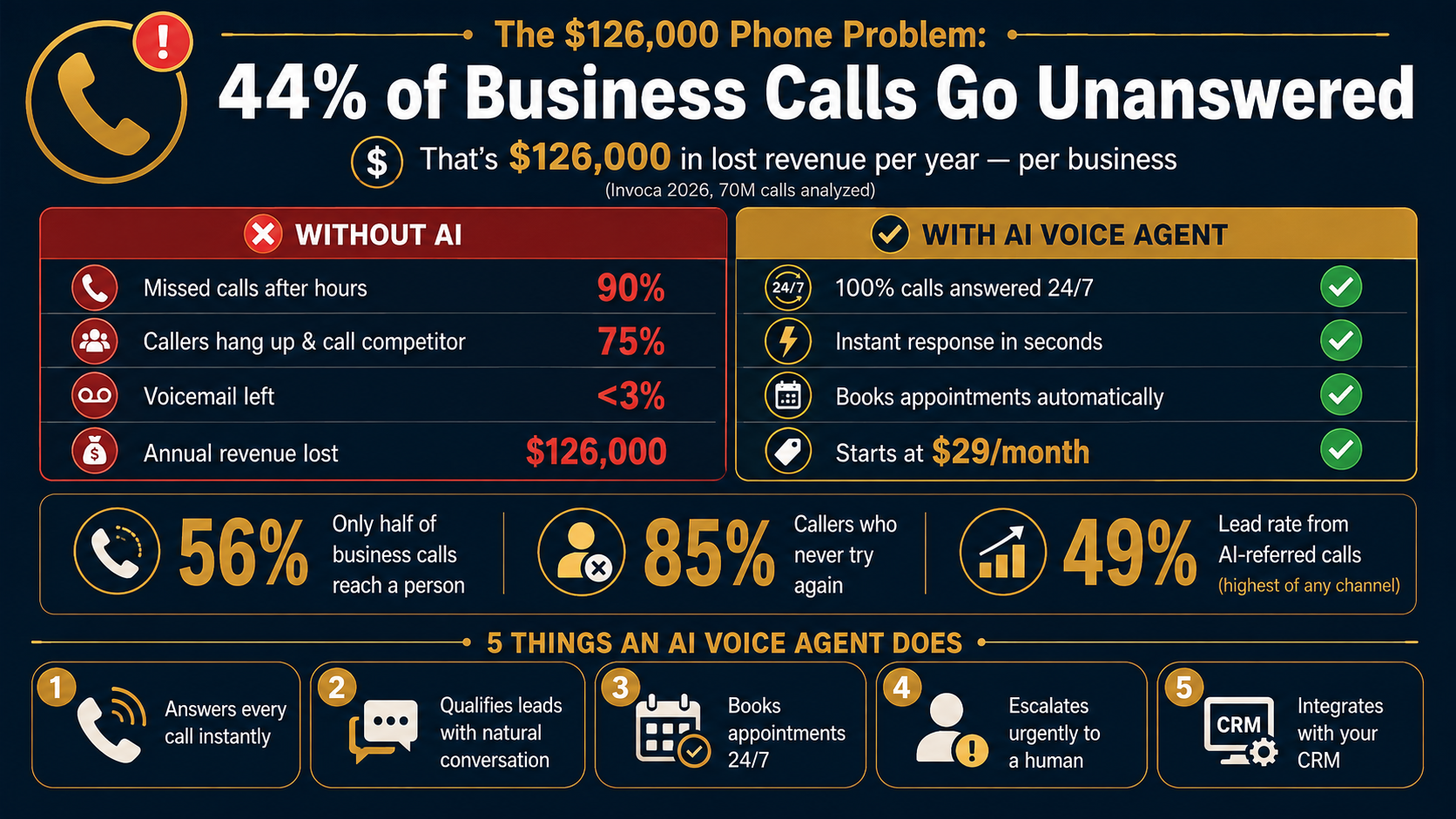
The $126,000 Phone Problem: What New Data on 70 Million Calls Reveals About Your Biggest AI Opportunity
AI voice agents handle the proactive outreach calls your team never has time for — automatically.
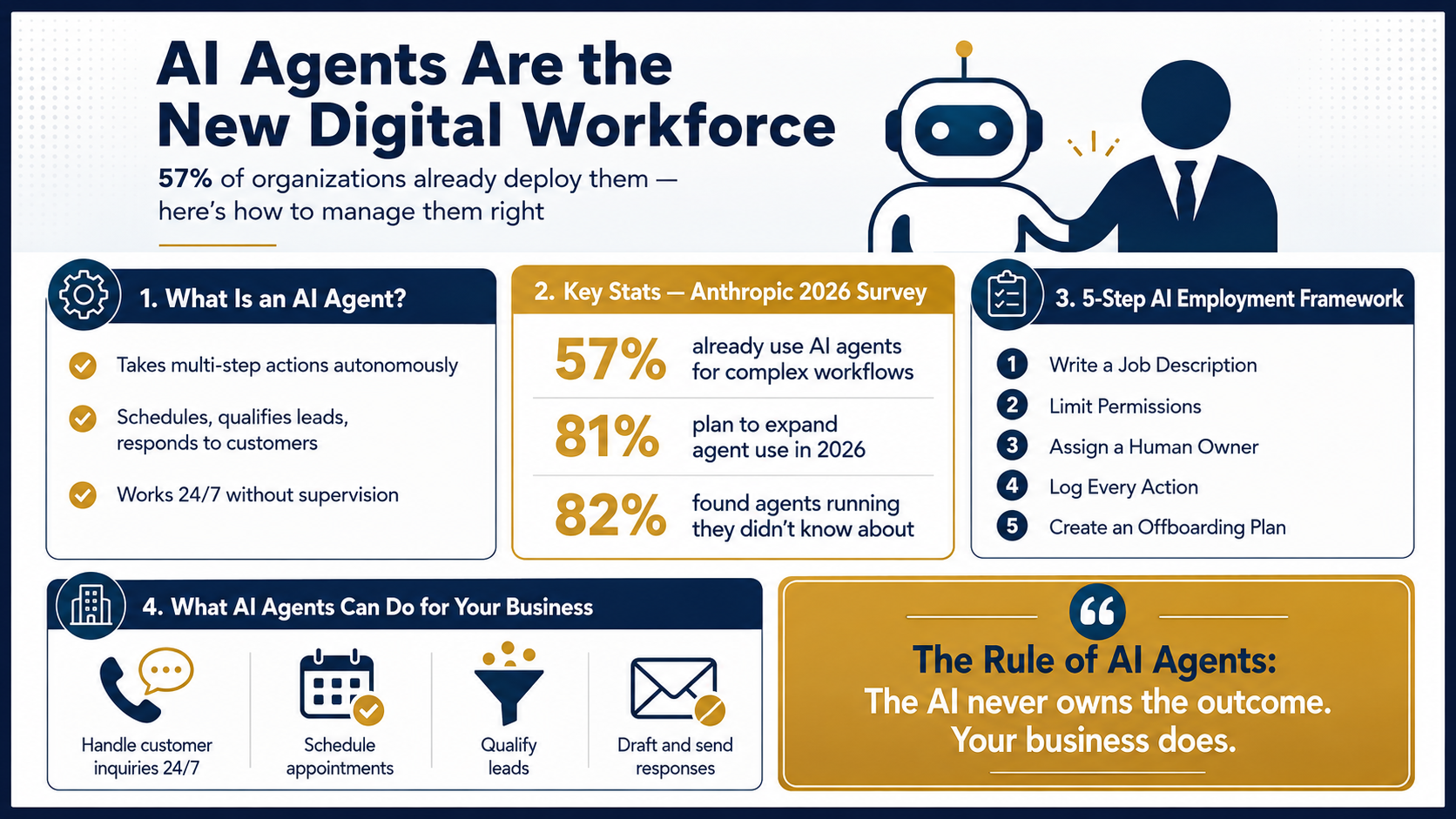
Your First AI Employee: What Small Business Owners Need to Know About AI Agents
AI agents are what run the retention workflows that keep customers engaged at scale.
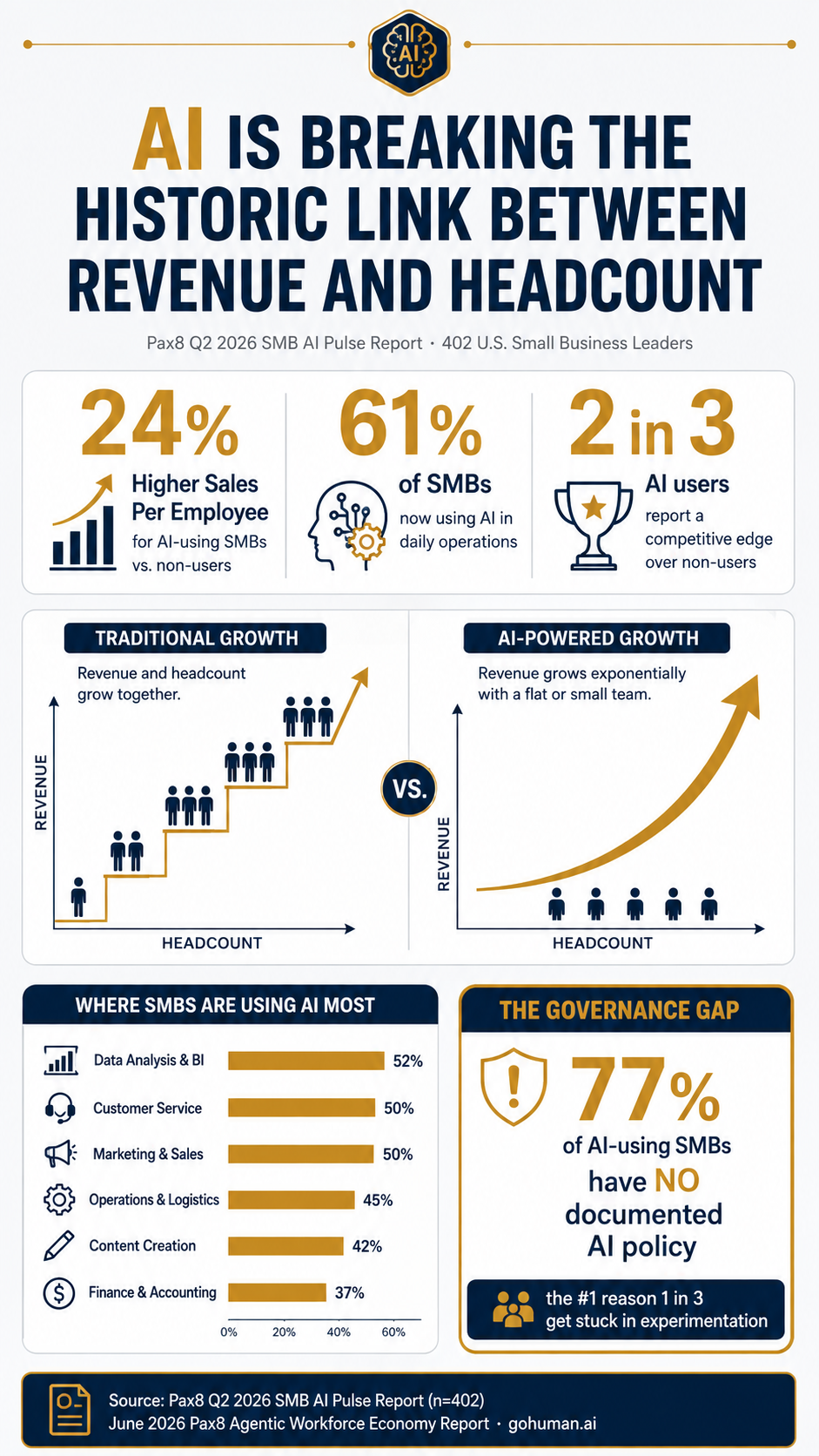
The End of Hire-to-Grow: New Data Shows AI-Using SMBs Generate 24% More Revenue Per Employee
Plugging the retention leak is the most direct path to the revenue-per-employee gains the data describes.
Want to identify and plug your business's retention leak with AI workflows that run automatically — and measure the dollar impact?