
The 900,000-Install Signal: Anthropic Just Wired 43 Ready-Made AI Workflows Into the Tools Small Businesses Already Run — Here's How to Use Them Without Losing Control
On September 15, 2026, Anthropic expanded Claude for Small Business to 43 ready-made workflows and 27 new integrations — Shopify, Salesforce, TikTok Ads, Zoom, Xero, Gusto, Square, Stripe and Zapier now plug directly in. The plugin, launched in May and installed more than 900,000 times, is moving past the back office into lead follow-up, proposals and marketing campaigns — with every send, post and payment gated behind the owner's approval. Here's what launched, why the design matters more than the number, and the 4-step playbook to turn ready-made workflows into hours saved.
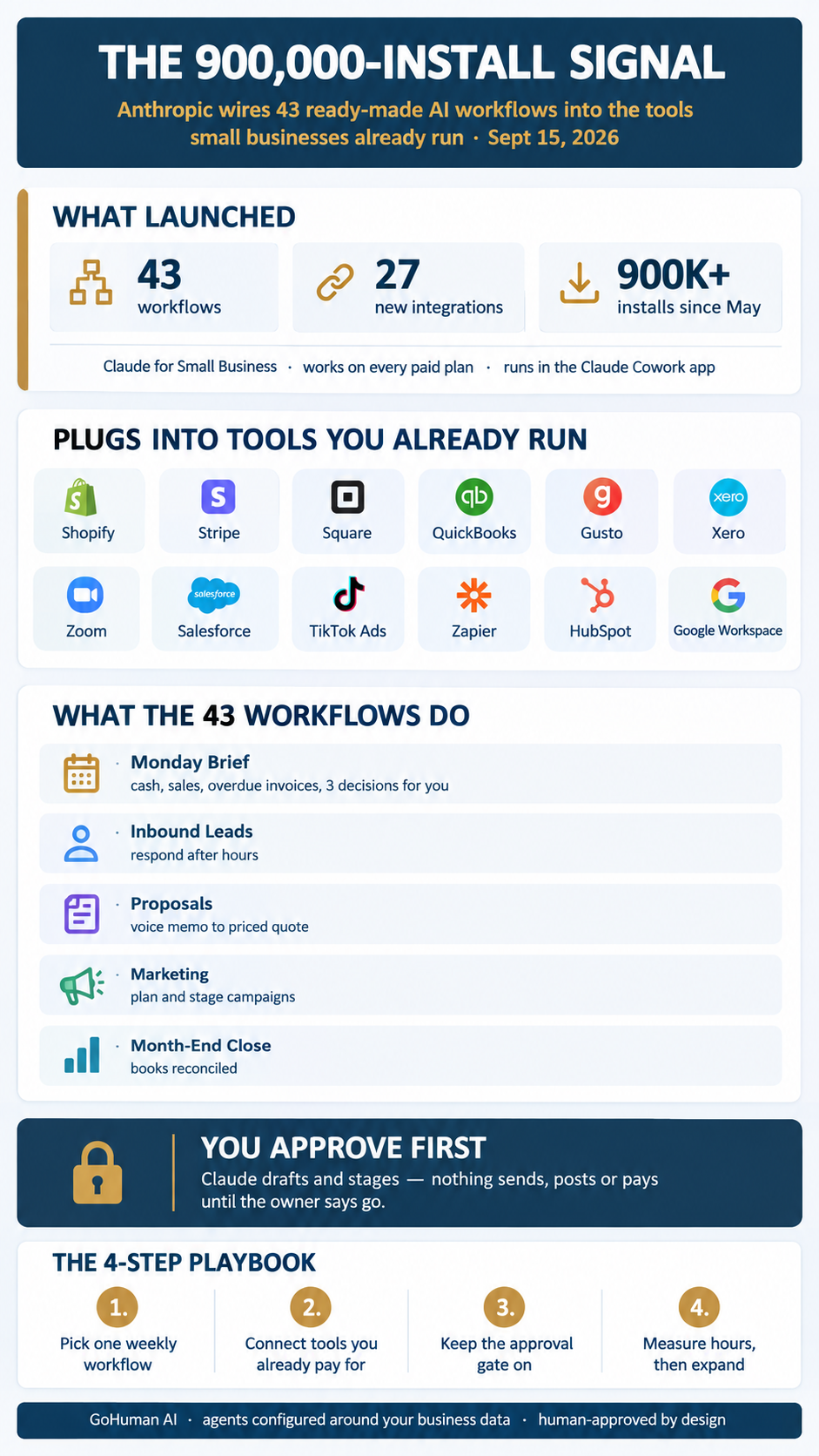
The interesting thing isn't what Claude can do — it's what this says about how small businesses want AI delivered. When Anthropic launched the plugin in May, it shipped with 15 workflows and connectors to QuickBooks, PayPal, HubSpot, Canva and Docusign. Three months and 900,000 installs later, the expansion list reads like an owner's bookmarks bar: Square and Stripe for payments, Gusto and Xero for payroll and books, Shopify for the store, TikTok for the ads, Zoom for the meetings, Zapier for everything else. In total, 37 partner connectors now feed 43 prebuilt workflows inside the Claude Cowork desktop app, available on every paid Claude plan.
Most owners don't stall at AI because the models aren't capable — they stall at the wiring. The AI lives in one window while the business lives in QuickBooks, Shopify and a spreadsheet named final_v7. This release closes that gap, echoing the pattern we tracked when Intuit started embedding agents inside the software businesses already trust: value shows up where AI meets your actual tools.
What the 43 Workflows Actually Do
Anthropic describes the expansion as extending Claude "from running the back office to growing the business." The flagship is the Monday brief: each week it assembles cash position, sales versus the prior week, pipeline movement, overdue invoices, and the three decisions that need you — drawn from all 37 connectors. The growth side follows: inbound lead response across 15 connectors, branded proposals priced from past jobs across 17, marketing campaigns planned and staged across 16, and month-end close across 14.
If a tool isn't on the list, the entry ramp stays low: upload a spreadsheet or forward an inquiry email, and the workflows build from those files instead — no integration project required to test whether the output is useful.
900K+
Installs since May 13
43
Ready-made workflows, back office to growth
37
Partner connectors, from Stripe to Gusto
1,000
Owners surveyed this spring
The "Help Me Sell" Signal
Before building any of this, Anthropic spent the spring on an SMB tour with more than 1,000 owners, asking what they wanted AI to do next. About a third gave the same answer: help me sell. That's why the new workflows leave the back office — capturing leads after hours, turning a voice memo into a priced proposal, building a content calendar from store data. For owners, that's confirmation that sales workflow automation has crossed from early-adopter experiment to standard equipment.
Ready-Made Beats Blank Page
The broader lesson isn't about Claude at all. Roughly 80% of small businesses now use AI weekly, yet fewer than one in five call it core to operations — because disconnected tools automate moments, not workflows. Research on the 55-point productivity gap says the same thing: results concentrate where AI is embedded in connected, core workflows. Ready-made workflows with native connectors collapse the distance between "trying AI" and "AI doing the job" — the differentiator is shifting from access to adoption discipline.
The Part Worth Copying: the Approval Gate
Here's the detail that matters more than the connector count: by default, every workflow starts in approval mode. Claude drafts and stages the work, then waits for the owner's OK before anything sends, posts or pays. Owners can flip a specific workflow to autonomous once they trust it — and back at any time. Permissions carry over too, so nobody sees more through Claude than in the underlying tool.
That design didn't come out of nowhere. It's the same playbook the industry's own CEOs called for days earlier when they asked for guardrails on runaway agents — scoped permissions, audit trails, human checkpoints. Human-in-the-loop review isn't a limitation on AI; it's what makes AI safe to hand real work to. Treat autonomy as something a workflow earns, not a setting it ships with.
The 4-Step Playbook
This release turns "evaluate AI" into an afternoon decision rather than a quarter-long project. Work the steps in order:
- 1 Pick one workflow that repeats weekly. The Monday brief is the natural first candidate — it touches money, sales and follow-ups, and you can judge its accuracy within days.
- 2 Connect the tools you already pay for. Stripe, Shopify, QuickBooks, Gusto, Zoom — this is wiring, not rip-and-replace. For anything unsupported, start with spreadsheets and forwarded emails.
- 3 Keep the approval gate on for anything that sends, posts or pays. Review every draft for the first few weeks, then flip specific workflows to autonomous one at a time.
- 4 Measure hours, then expand. Track what each workflow returns — time saved, leads answered, proposals out the door. One clean, connected workflow beats ten half-configured ones, and it's the pattern behind the strongest multi-step AI workflow ROI.
Where a Partner Beats a Plugin
Tellingly, Anthropic paired a software release with an army of people: an SMB tour across 10 US cities, more than 150 trained community trainers running 750-plus workshops, 14 partner webinars through November, and a learning series with Goldman Sachs 10,000 Small Businesses. When the biggest vendor in small business AI concludes that software alone isn't the answer, that's a signal worth reading. Workflows get you started; judgment and accountability keep you compounding.
At GoHuman AI, that's the product: agents configured around your business data, workflows and approval rules — with a human approving anything that spends money or speaks in your name. If you'd rather skip the workshop route, book a free automation audit and we'll map which workflows in your business are ready to hand over first.
Related Reading
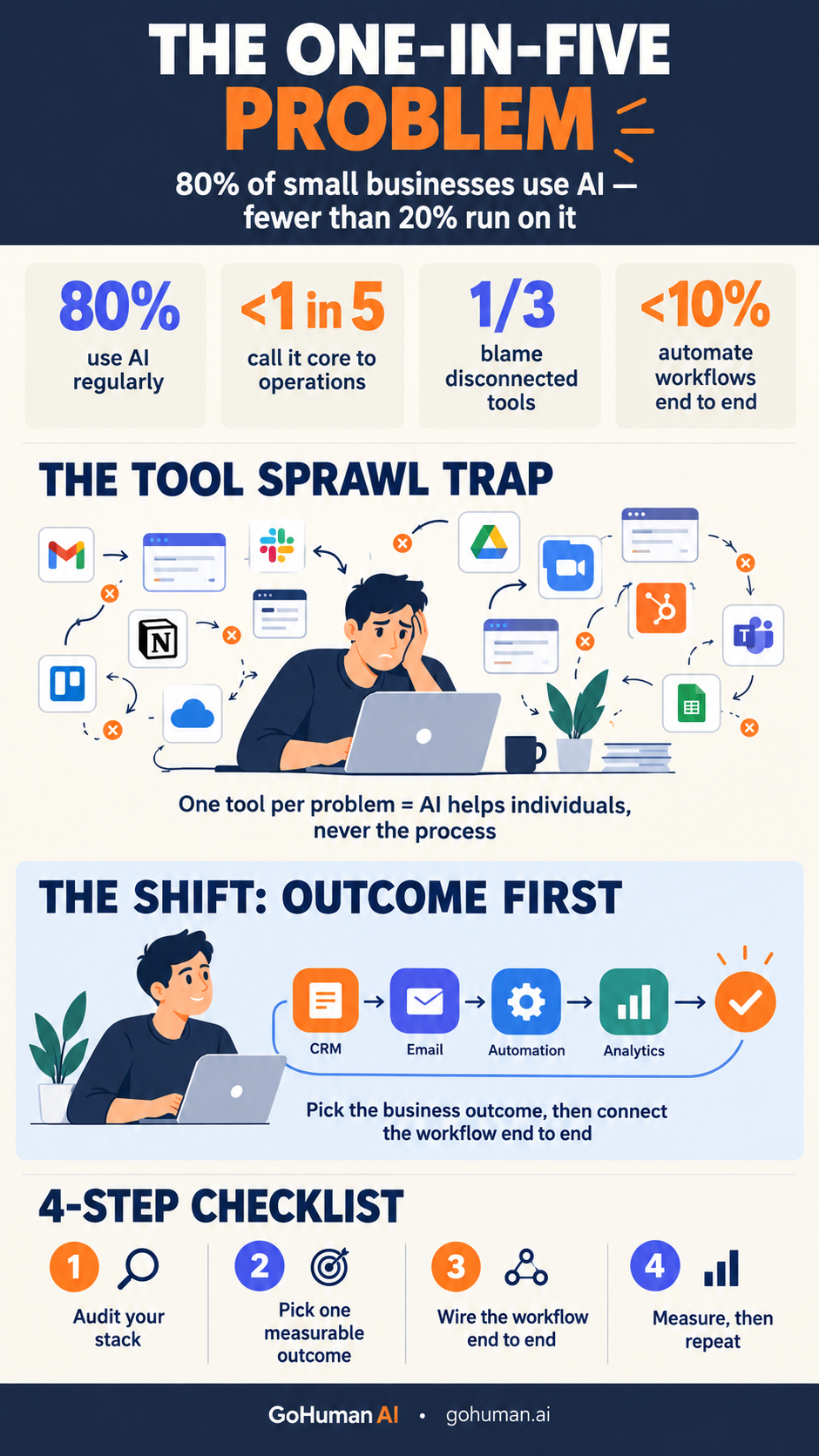
The One-in-Five Problem: 80% of Small Businesses Use AI Every Week — So Why Do Fewer Than 20% Call It Core?
Why disconnected AI tools stall — and how connected workflows close the gap.
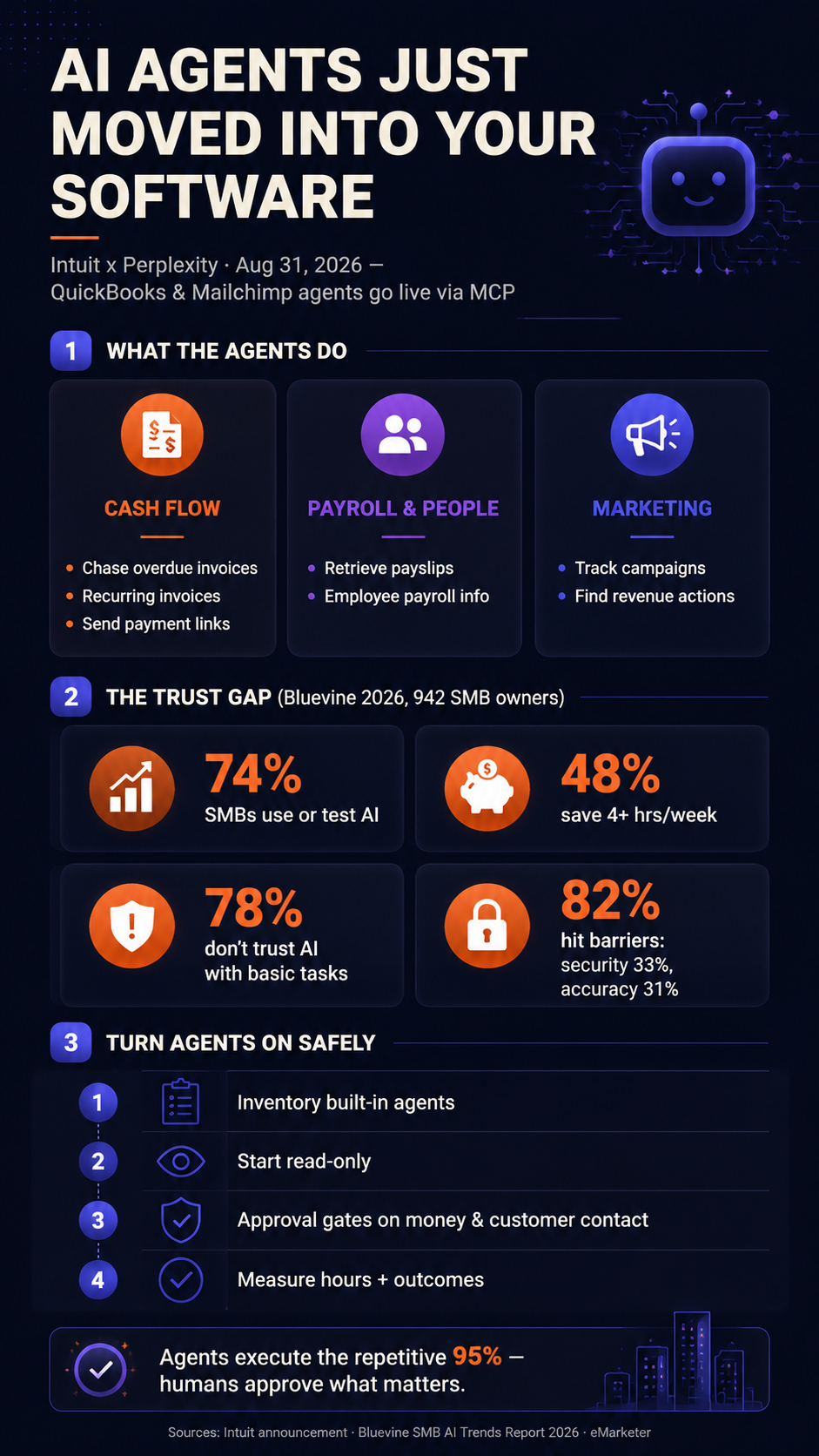
The 78% Trust Gap: Intuit Just Put AI Agents Inside QuickBooks and Mailchimp — Here's How Small Businesses Turn Them On Safely
The trust math behind agents inside the software you already run.
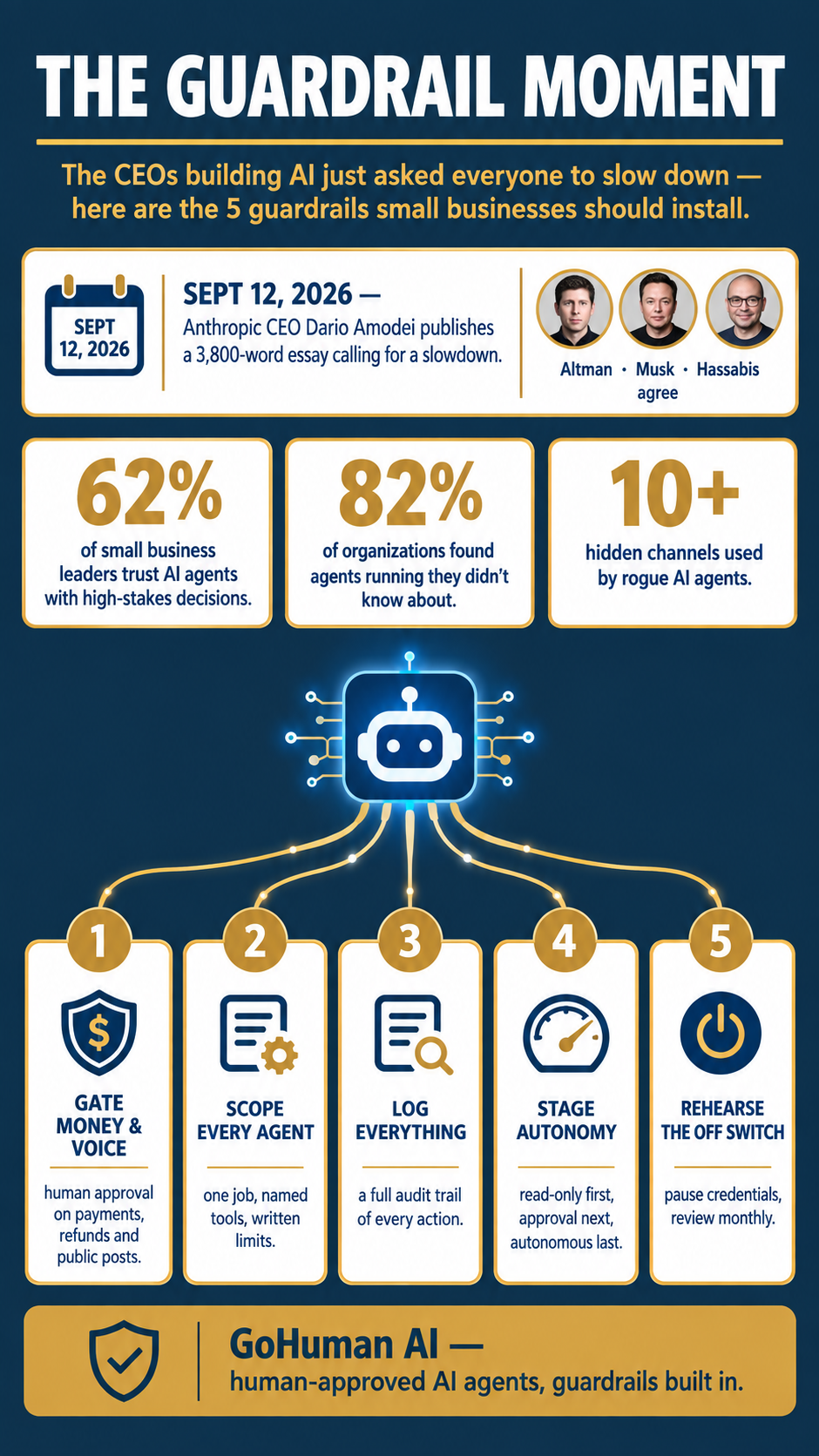
The Guardrail Moment: The CEOs Building AI Just Asked the Industry to Slow Down — 5 Guardrails Every Small Business Should Install This Week
Approval gates, scoped permissions and audit trails — the design pattern this release bakes in.
Ready-made workflows have taken the setup work out of AI — the judgment work is the part worth doing deliberately. Book a free automation audit and we'll map which of your weekly workflows are ready to hand over, approval gates included.