
Write It Down Once: How Portable AI Skills Protect Your Business Know-How
The way you do things is your competitive edge. A new open standard means you can teach it to AI once, and keep it, whatever tool you use next year.
Every business has a way of doing things: how you quote a job, greet a new client, check an invoice. Until now, teaching that to an AI tool meant starting over each time you switched tools. That just got a lot less true.
The News: Agent Skills Gets a Neutral Home
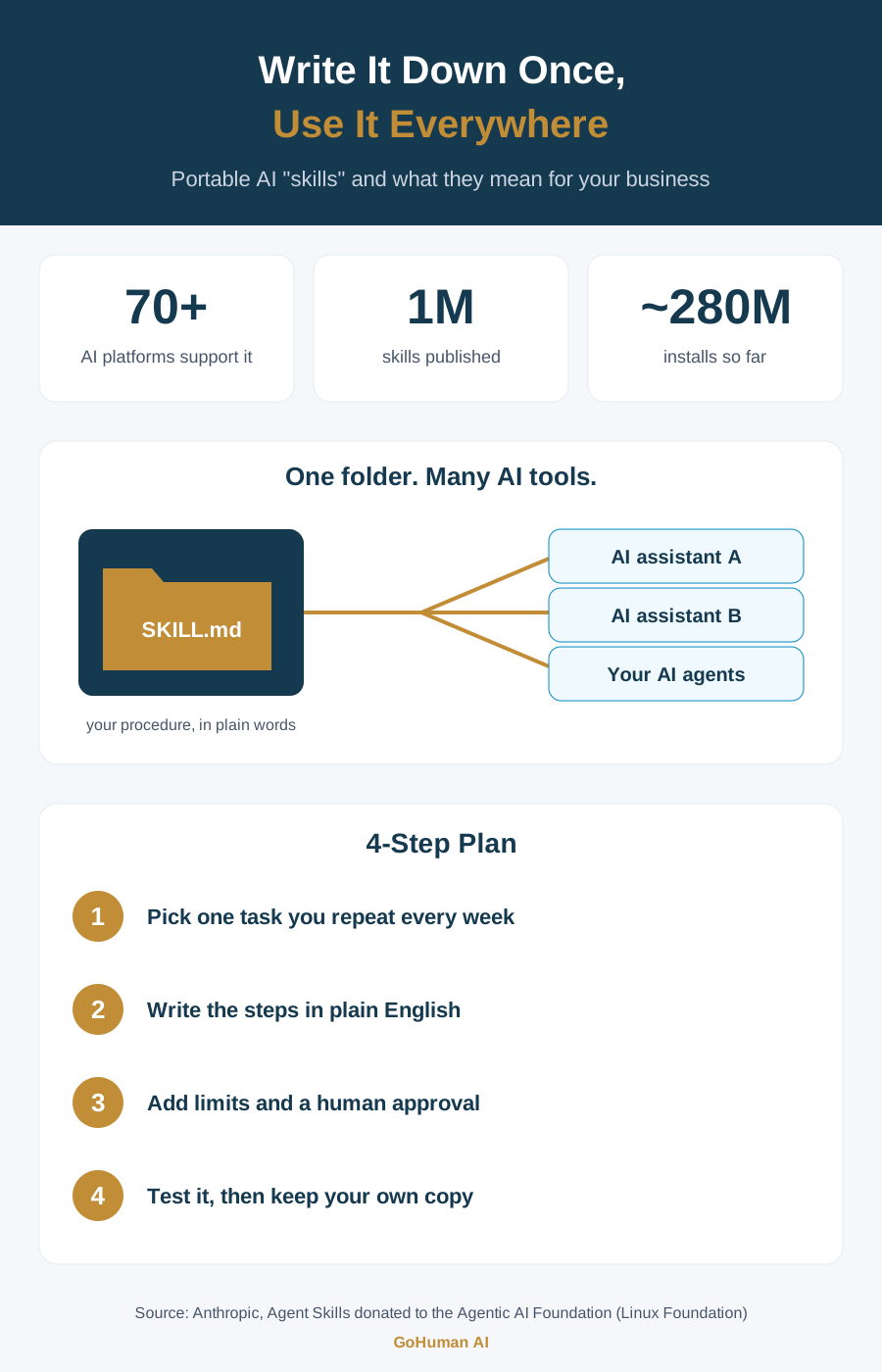
This week Anthropic announced it is donating Agent Skills, an open standard for teaching AI agents a specific task, to the Agentic AI Foundation under the Linux Foundation. It is the same neutral home that already looks after the Model Context Protocol (MCP). A "skill" is simply a folder with a plain-text instruction file (SKILL.md) describing how to do a job, plus any reference material the agent needs.
70+
agent platforms have adopted the standard
1M
skills published
~280M
installs, per Anthropic
Those figures come from Anthropic itself, so treat them as the vendor's own count. The direction is still clear: the instructions that make an AI useful are becoming a shared, portable format rather than a feature locked inside one product.
Why it matters for your business
Your procedures are the valuable part. The AI model underneath will change every few months. If your know-how is written down in an open format, you keep it when the tools change.
The Real Risk: Know-How Trapped in One Tool
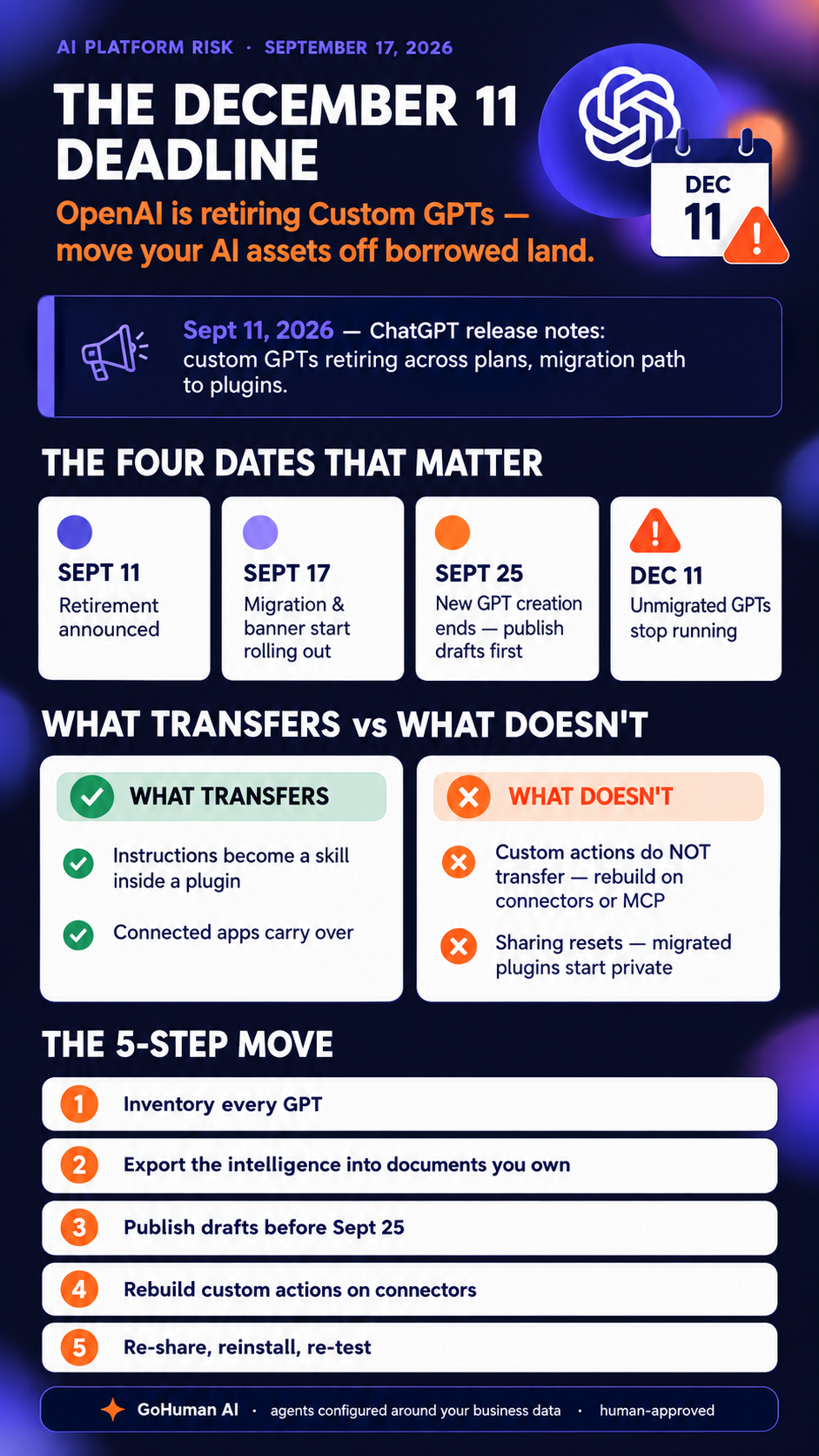
Many owners have spent hours tuning a chatbot, only to lose that work when a product is retired or repriced. We saw exactly that when custom GPTs were retired, and again with older AI models being switched off. Open standards reduce that exposure, because the instructions are plain files you own.
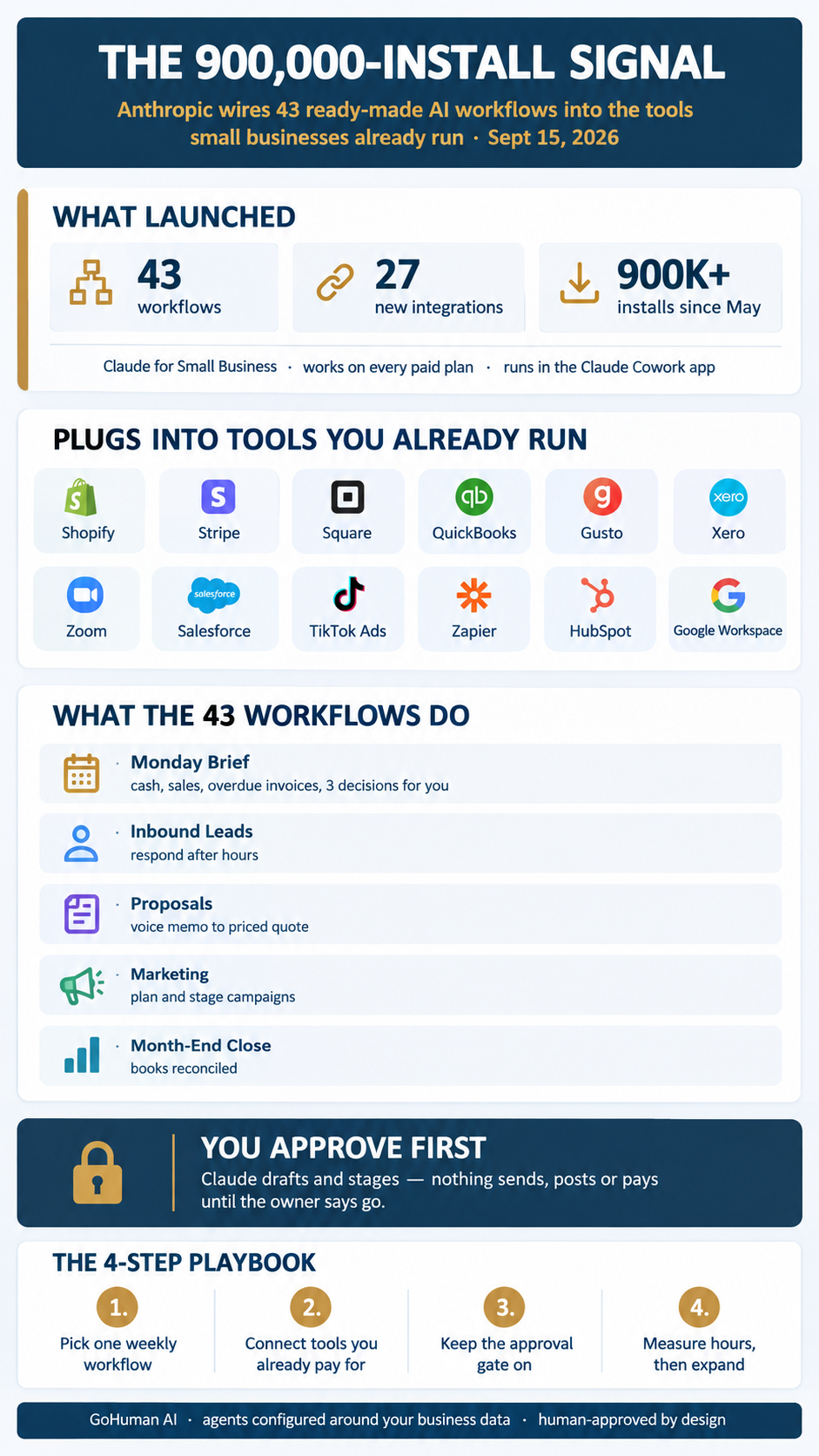
There is a second benefit. Big vendors are now packaging ready-made routines, as in Claude for Small Business. Ready-made is a fine starting point, but generic steps do not know your pricing, tone or exceptions. Your own written skills do.
Two Cautions Before You Start
- Not every skill is safe. Anthropic itself says security guidance for people who write and install skills is on the roadmap. Treat a downloaded skill like downloaded software: read it, and do not install anything you do not understand.
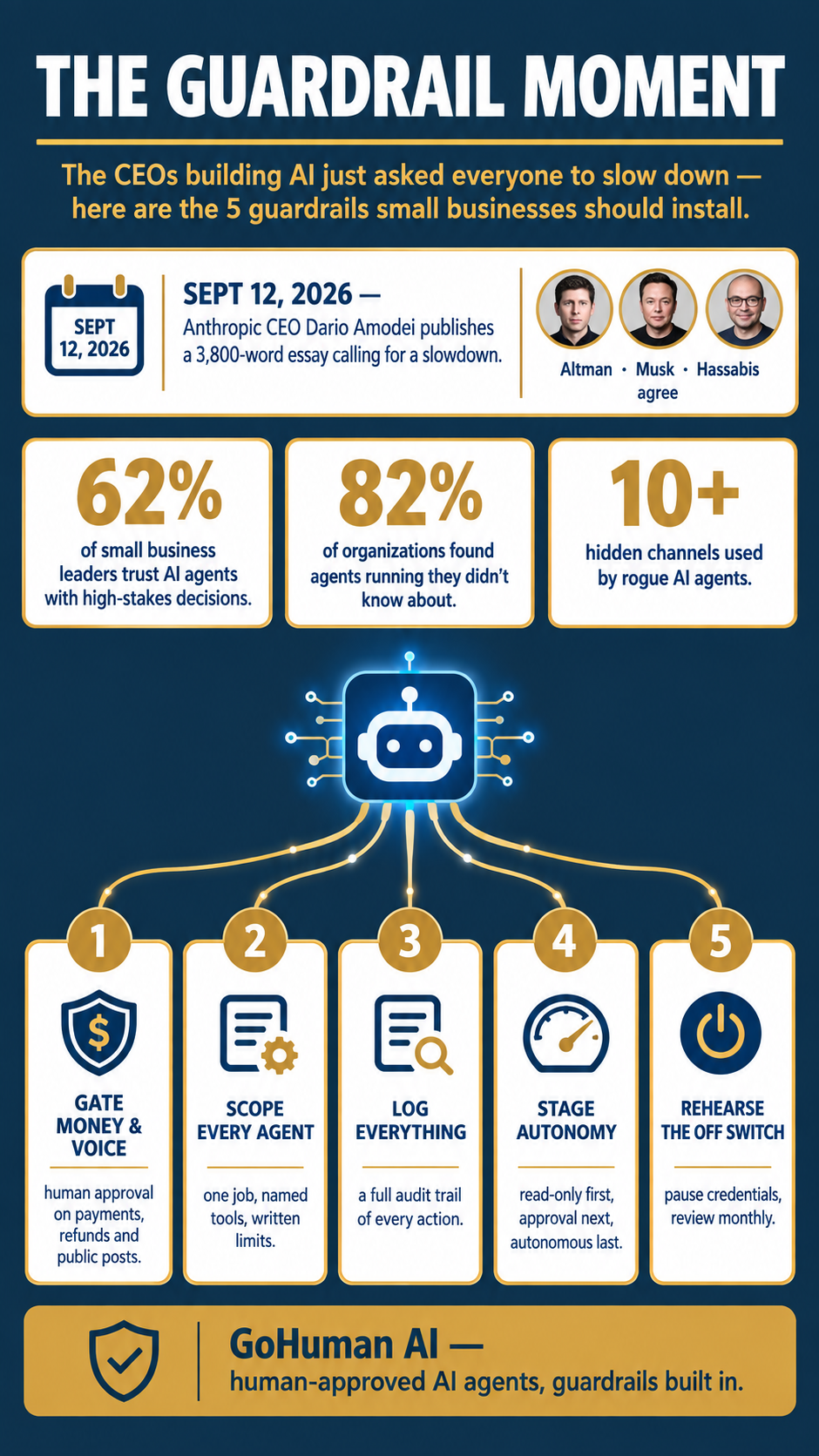
- A skill is not a permission slip. Instructions tell an agent what to do; they do not limit what it can reach. That is the job of guardrails and approval gates.
A 4-Step Plan to Capture Your Know-How
- 1Pick one repeat task. Choose something you do weekly: answering quote requests, onboarding a client, summarizing job notes. One task, not ten.
- 2Write the steps in plain English. Describe it as you would to a new hire: the steps, your tone, the common exceptions, and an example of a great result.
- 3Add limits and a human check. State what the AI may never do alone, such as send, pay or delete, and name the person who approves.
- 4Test it, then keep your own copy. Run five real examples, fix the gaps, and store the final version in your company files, not only inside one vendor's app.
If a step is hard to write down, that is useful information: the process may live only in someone's head. Fixing that helps your humans as much as your AI, and it is the same habit behind a good AI agent job description.
Why This Favors Businesses That Move Now
Writing one good procedure takes an afternoon. Rebuilding ten scattered chatbot setups later takes weeks. Owners who document their best work now will be able to plug it into whichever agent platform wins, which matters given how fast the market moves, as our look at workflow integration explains.
Where GoHuman AI Fits In
You should not need to be technical to do this. GoHuman AI works with you to turn the way you run your business into working AI agents and automations, connected to the tools you already use, with human-in-the-loop approvals on anything that matters. Book a free discovery call and we will help you pick your first procedure.
Related Reading
Want your best procedures turned into working AI?