
The December 11 Deadline: OpenAI Is Retiring Custom GPTs — Here's How Small Businesses Move Their AI Assets Off Borrowed Land
On September 11, OpenAI added a quiet line to its ChatGPT release notes: custom GPTs — the tailored AI helpers millions of businesses built — are being retired across ChatGPT plans, replaced by a migration path to plugins. The migration tool starts appearing today, new GPT creation ends September 25, and on December 11 the ones that haven't moved stop running. If your business built a quote bot, an FAQ bot or a training assistant on a custom GPT, that assistant is living on borrowed time. Here's what transfers, what doesn't, and the 5-step playbook to move your AI assets onto land you own before the deadline.
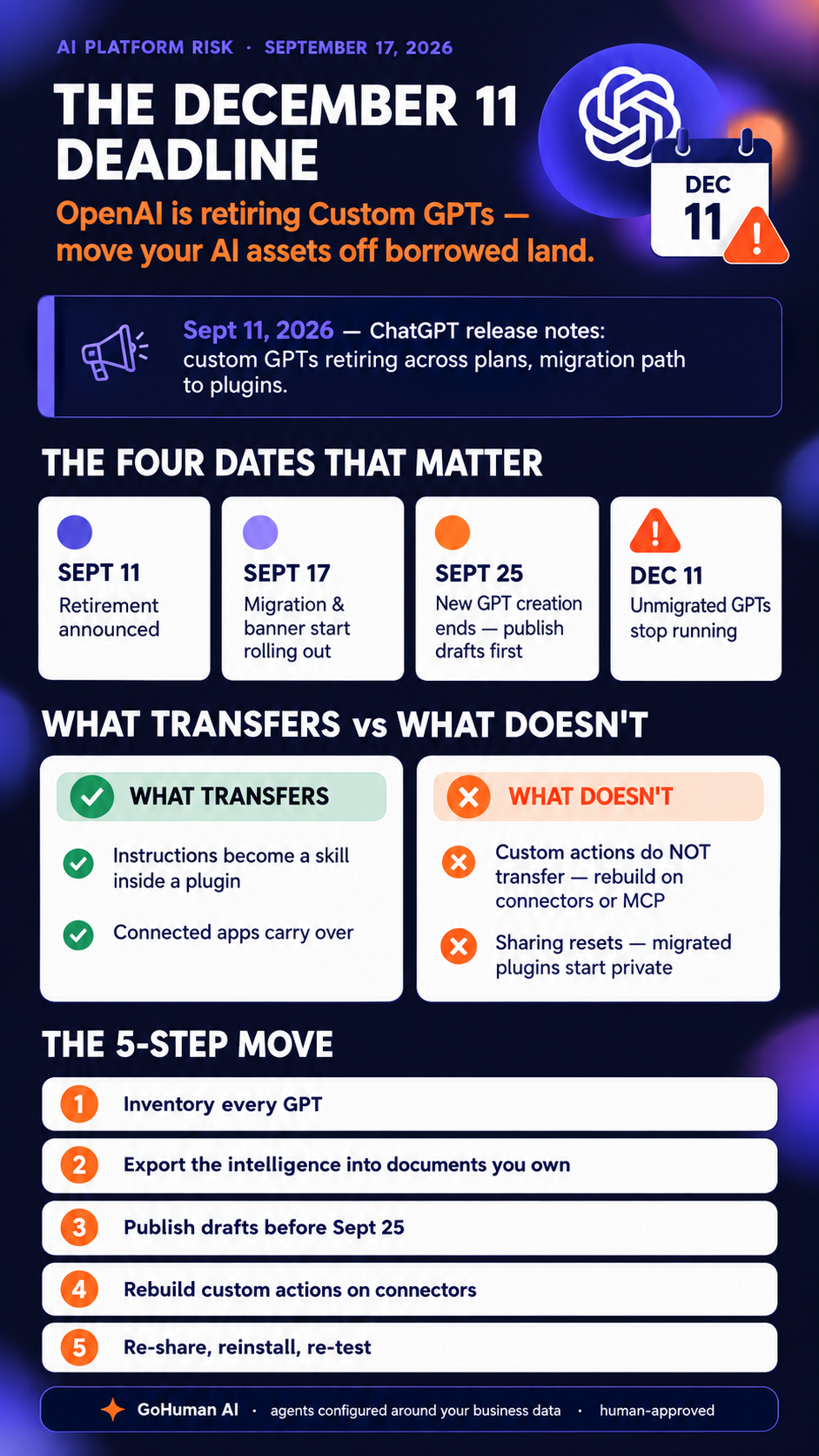
On September 11, 2026, OpenAI added a line to its ChatGPT release notes that most small business owners haven't read yet: the company is planning to retire custom GPTs across ChatGPT plans and will provide a migration path to plugins. Enterprise admins received a notice the same day. Nothing switches off overnight — but the clock is now running on one of the most popular ways small businesses customized AI, and the deadline is closer than it looks.
Custom GPTs were the first taste of “AI employees” for many owners: a quote-writing bot trained on your price list, an FAQ assistant loaded with your policies, an onboarding helper that knew your processes. The instructions, knowledge files and brand voice that make those helpers useful are business assets — and this announcement is the industry's clearest lesson yet about what happens to assets parked on someone else's platform.
The Four Dates That Matter
OpenAI's retirement timeline is staged, which means the work you do each week has different value at each step. The migration experience and an in-app banner start appearing September 17 — Enterprise workspaces first, with other plans expected to follow. On September 25, creation of new custom GPTs ends in the affected flow, and draft GPTs that were never published cannot be migrated — so anything worth keeping has to be published before then. On December 11, custom GPTs stop running and leave the GPT directory. OpenAI has published no retirement date for personal plans yet, but the direction is unmistakable: plan against the announced dates, not against hope.
Sept 11
Retirement announced in ChatGPT release notes
Sept 17
Migration option and banner begin rolling out
Sept 25
New GPT creation ends — publish drafts first
Dec 11
Unmigrated GPTs stop running
What Transfers — and What Gets Left Behind
The migration itself is mostly mechanical. When a GPT moves, its instructions become a skill inside a plugin, and any connected apps come across with it — the same idea as a GPT, folded into ChatGPT's wider plugin layer. But three details trip up unprepared owners. Custom actions do not transfer: any API integration you wired into a GPT has to be rebuilt on a supported connector or a custom MCP server, and OpenAI advises allowing extra time for GPTs that use them. Migrated plugins start private: if your team shared a GPT, someone has to re-share the replacement and each person has to install it. And a migrated GPT becomes read-only — even its creator can't delete it — so treat the migration as a one-way door and test the result before you step through. If you rely on a GPT someone else built, ask its creator what their plan is; an old GPT link may point to their replacement, but that won't automatically give your team access.
Why This Matters Well Beyond ChatGPT
It's tempting to file this as a ChatGPT housekeeping story. It's bigger. Every business that built AI systems inside a platform just watched the platform change its mind — and learned exactly what that feels like from the tenant's side. The instructions, knowledge files and workflows that made your GPT useful were the real asset all along; the GPT was just the room they happened to live in. When the room is remodeled, whatever isn't written down walks out the door.
This is the same platform-shift pattern we've tracked all year. The agents now arriving inside the accounting and marketing software you already pay for are convenient precisely because someone else maintains the plumbing — but convenience and control are different purchases. And the difference compounds: teams that keep their AI working materials in portable, well-organized form can adopt new tools in days, while teams whose intelligence is trapped in one tool's format start every platform change from zero. That's the quiet edge behind why most AI-using businesses stall at tool-sprawl — and it's an edge this deadline will sort visibly.
The 5-Step Move
For most small businesses, the whole migration is an afternoon of work — provided you do the steps in order and finish the first two before September 25.
- 1 Inventory every GPT. List each GPT your business uses — who built it, what job it does, who relies on it, and whether it uses custom actions. Include GPTs you didn't build but depend on; their creators face the same deadline you do.
- 2 Export the intelligence into documents you own. Copy the instructions, knowledge files, prompt patterns and brand-voice notes into plain documents in your own storage. This is the step that pays off beyond December 11: assets you hold can move into ChatGPT, Claude, Gemini or whatever comes next.
- 3 Publish drafts before September 25. Unpublished draft GPTs can't be migrated. Publishing doesn't require public sharing — flip the switch, run the migration, and keep the plugin private from there.
- 4 Rebuild custom actions on connectors. API integrations are the one part that doesn't transfer. Decide for each one whether to rebuild it on a supported connector or a custom MCP server — and this is the moment to ask whether it should be rebuilt at all. Often a governed agent wired into your actual systems is the sturdier home, with approval gates and audit trails built in.
- 5 Re-share, reinstall and re-test. Migrated plugins start private. Re-share the replacement with your team, have each person install it, and test the real workflows — the quote, the FAQ, the onboarding script — before December 11, while the original GPT still runs as your fallback.
Build on Land You Own
The deeper takeaway isn't about ChatGPT at all. Your AI tools are temporary; your business intelligence is permanent — and the businesses that come out of this migration strongest are the ones that decide, once and deliberately, where their intelligence lives. Keep the knowledge in your data, your documented processes and your owned files. Choose AI tools that read from that foundation rather than swallowing it. Write down the rules for how AI behaves in your business, the way we outlined in the one-page shadow-AI policy — and hold those rules in a place no platform update can reach.
At GoHuman AI, that principle is the product: agents are configured around your business data, workflows and approval rules — and the configuration lives with your business, not inside a vendor feature that can sunset out from under you. Agents handle the watch-and-draft work, and a human approves anything that spends money or speaks in your name. If the December 11 deadline just put one of your AI helpers on notice, book a free automation audit and we'll map what you've built, what's portable, and where a governed agent makes the stronger home.
Related Reading
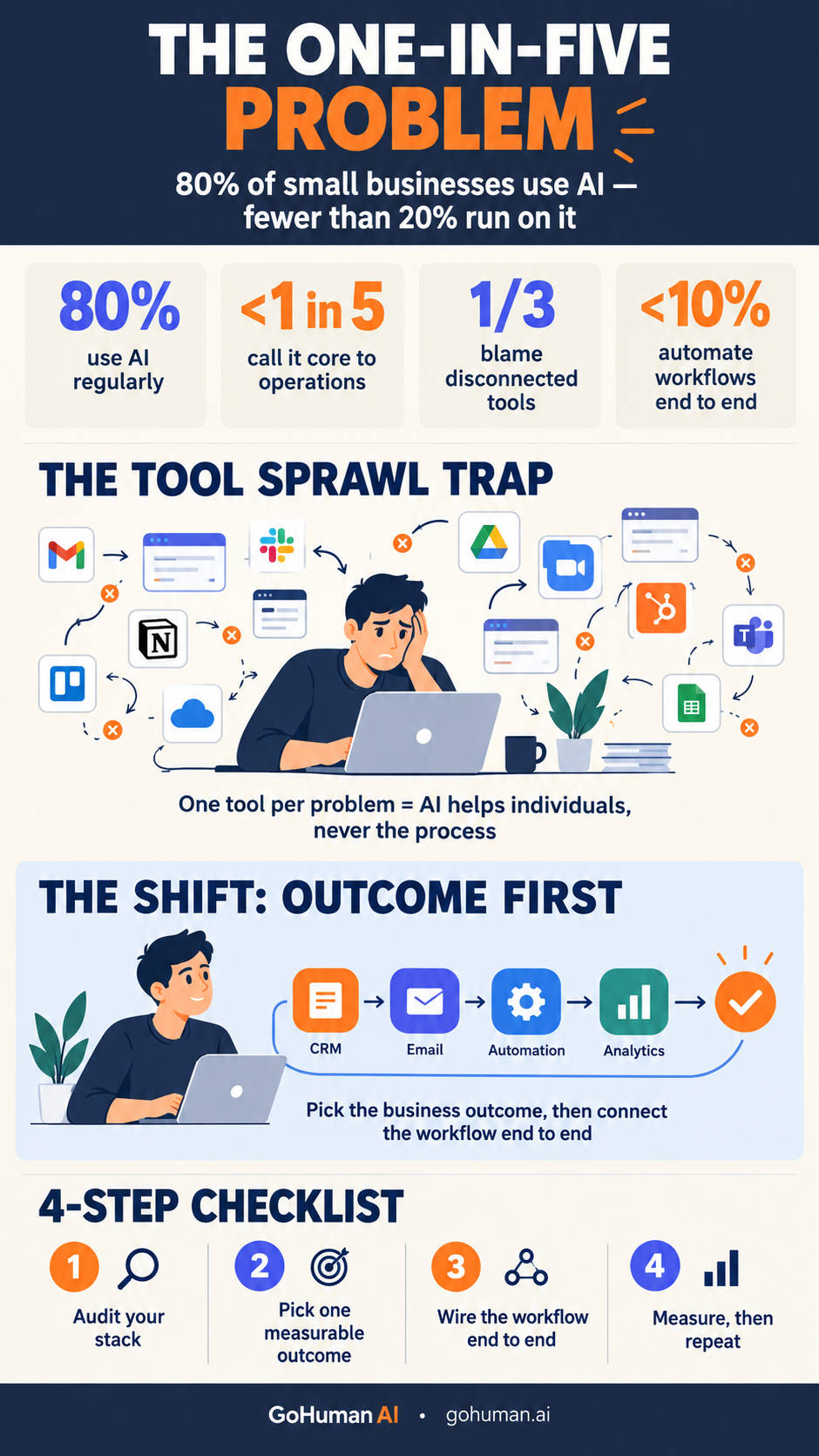
The One-in-Five Problem: 80% of Small Businesses Use AI Every Week — So Why Do Fewer Than 20% Call It Core?
Why disconnected tools stall — and the 4-step checklist to go from AI user to AI-run business.
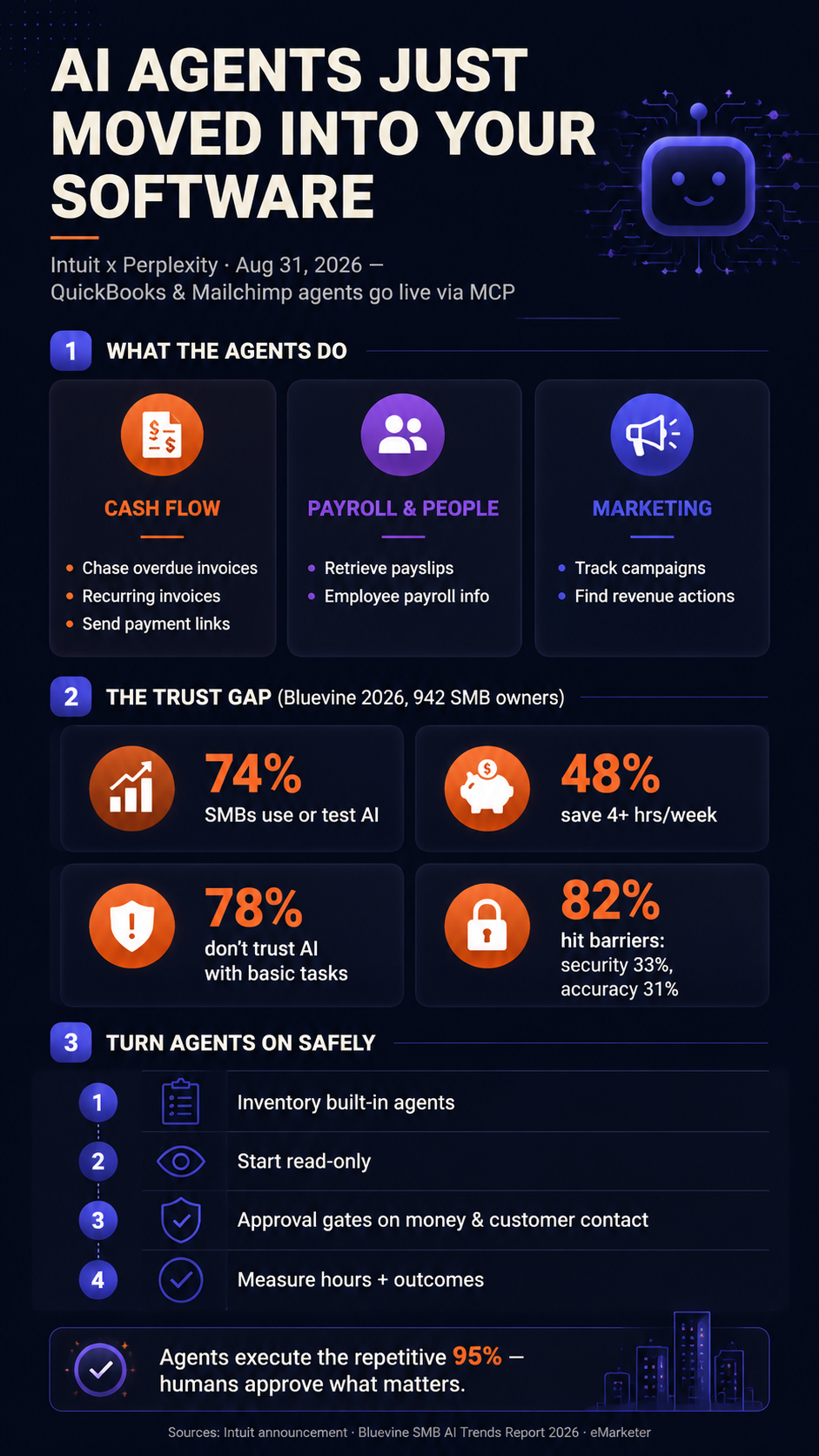
The 78% Trust Gap: Intuit Just Put AI Agents Inside QuickBooks and Mailchimp
The convenience half of the platform story — agents where your data already lives.
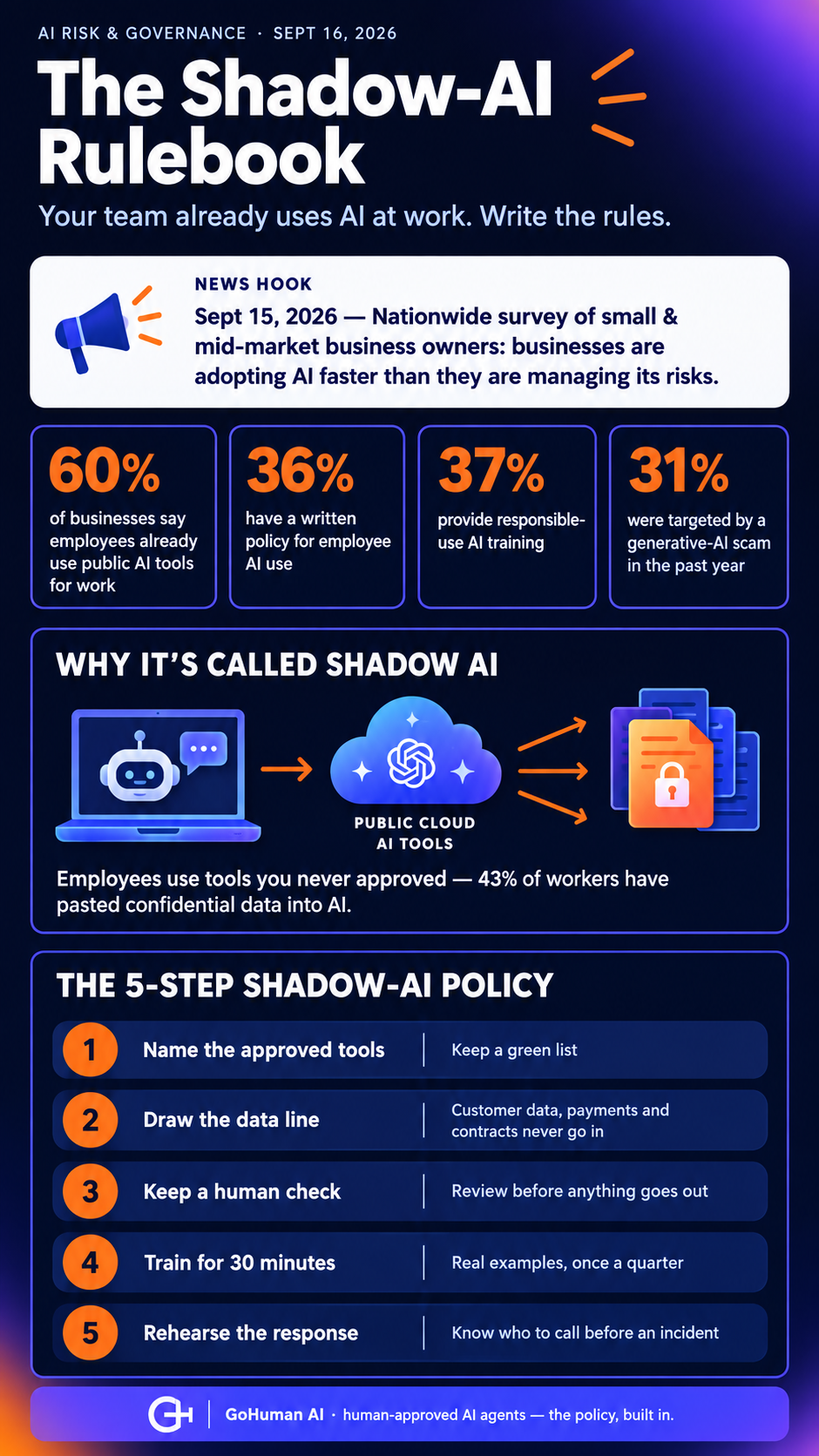
The Shadow-AI Rulebook: 6 in 10 Businesses Have Employees Using AI at Work — Only 36% Have Written the Rules
The one-page policy that governs how AI behaves in your business — on any platform.
December 11 is a hard stop for unmigrated GPTs, and the export work is worth doing even if yours survive. Book a free automation audit and we'll map your AI assets, flag what doesn't transfer, and show where governed agents make the sturdier home.