
The AI Model Behind Your Tools Is Being Retired: A 4-Step Check Before January 14
OpenAI will switch off four widely used models in January. If an AI tool in your business quietly depends on one, now is the time to find out.
Most small businesses never choose an AI model. A chatbot, an email assistant or an invoice tool was set up once and has worked ever since. But the engine inside can be switched off by its maker, and that just got a date.
The News: A January 14 Shutdown
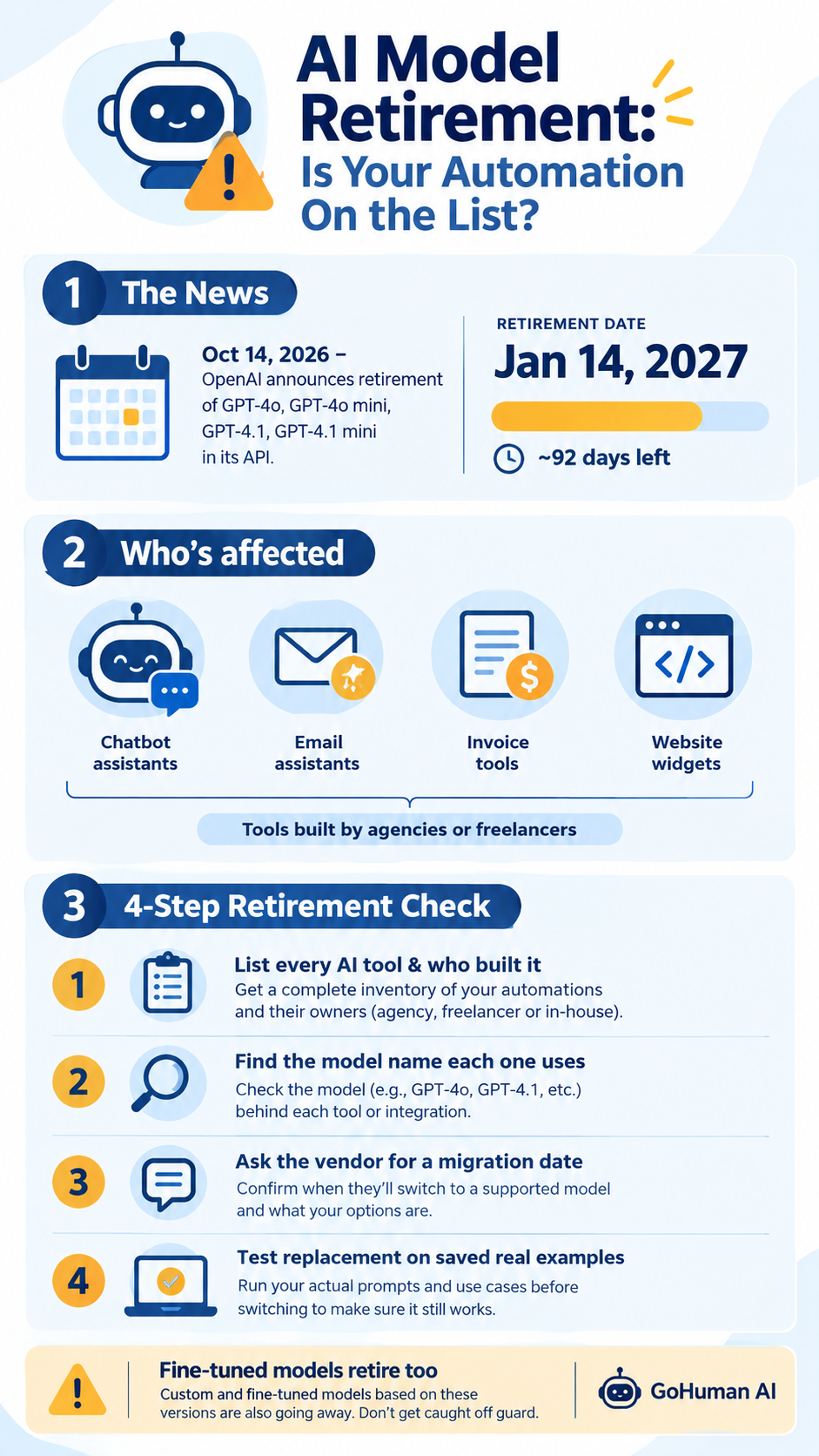
On October 14, 2026, OpenAI announced it will retire GPT-4o, GPT-4o mini, GPT-4.1 and GPT-4.1 mini from its API on January 14, 2027. Fine-tuned versions follow their base model's schedule. OpenAI recommends GPT-6 Luna as the replacement, though trade coverage notes it handles tool calls differently, and that it may not support fine-tuning at all. Reports describe the notice period as roughly 92 days.
4
models being retired from the API
~92
days of notice from the announcement
Jan 14
2027, the shutdown date
Good to know
This affects the developer API, not the ChatGPT app you type into. Details come from secondary reports, so confirm exact dates with OpenAI or your vendor.
Why a Small Business Should Care
If you pay a freelancer, agency or app to run AI for you, there is a good chance one of these models sits underneath. When a model disappears, the tool may fail outright, or worse, be quietly moved to a replacement that words things differently, formats data differently or follows instructions less reliably. A customer-facing bot that changes tone overnight is a brand problem, not just a technical one.
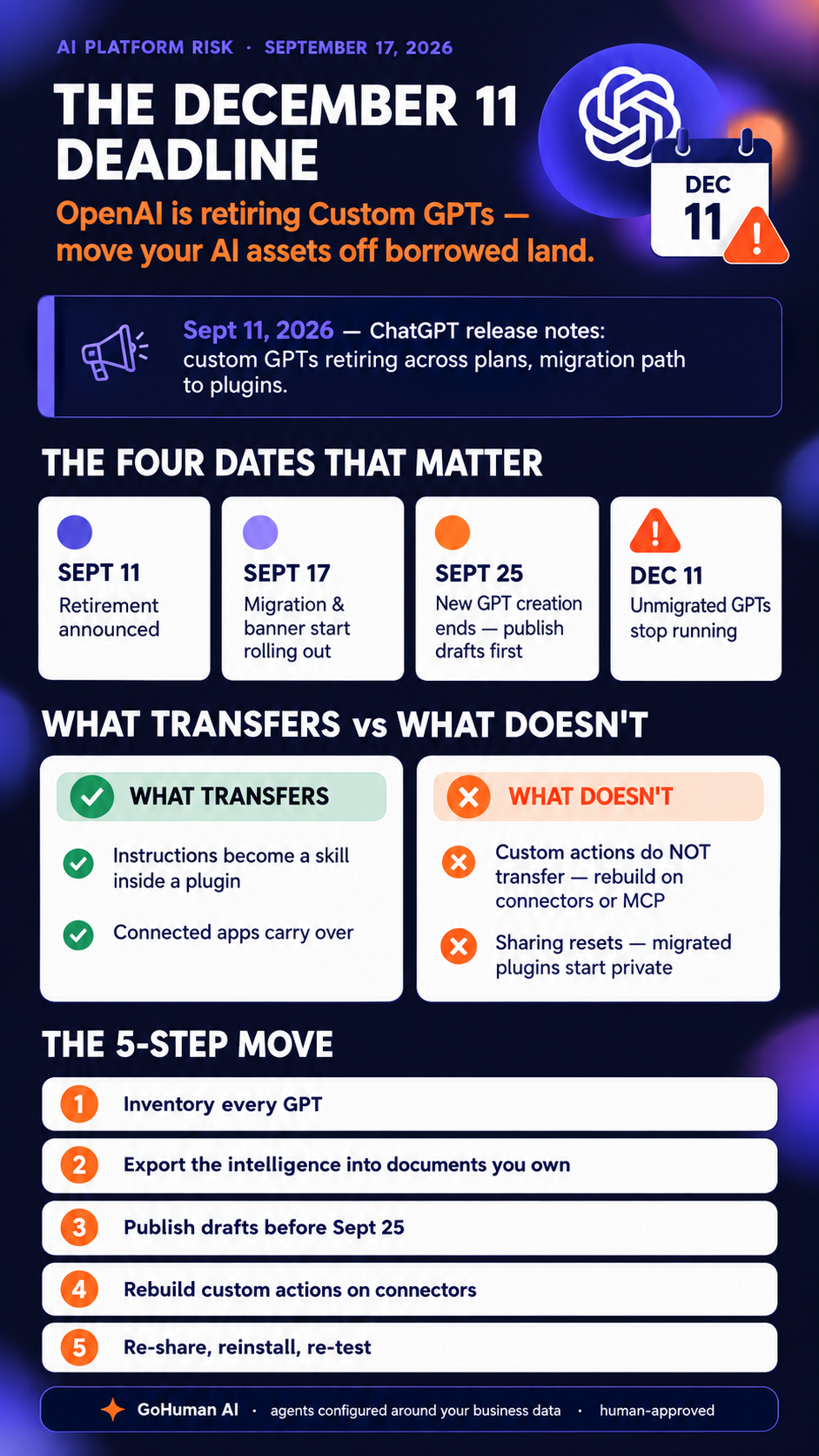
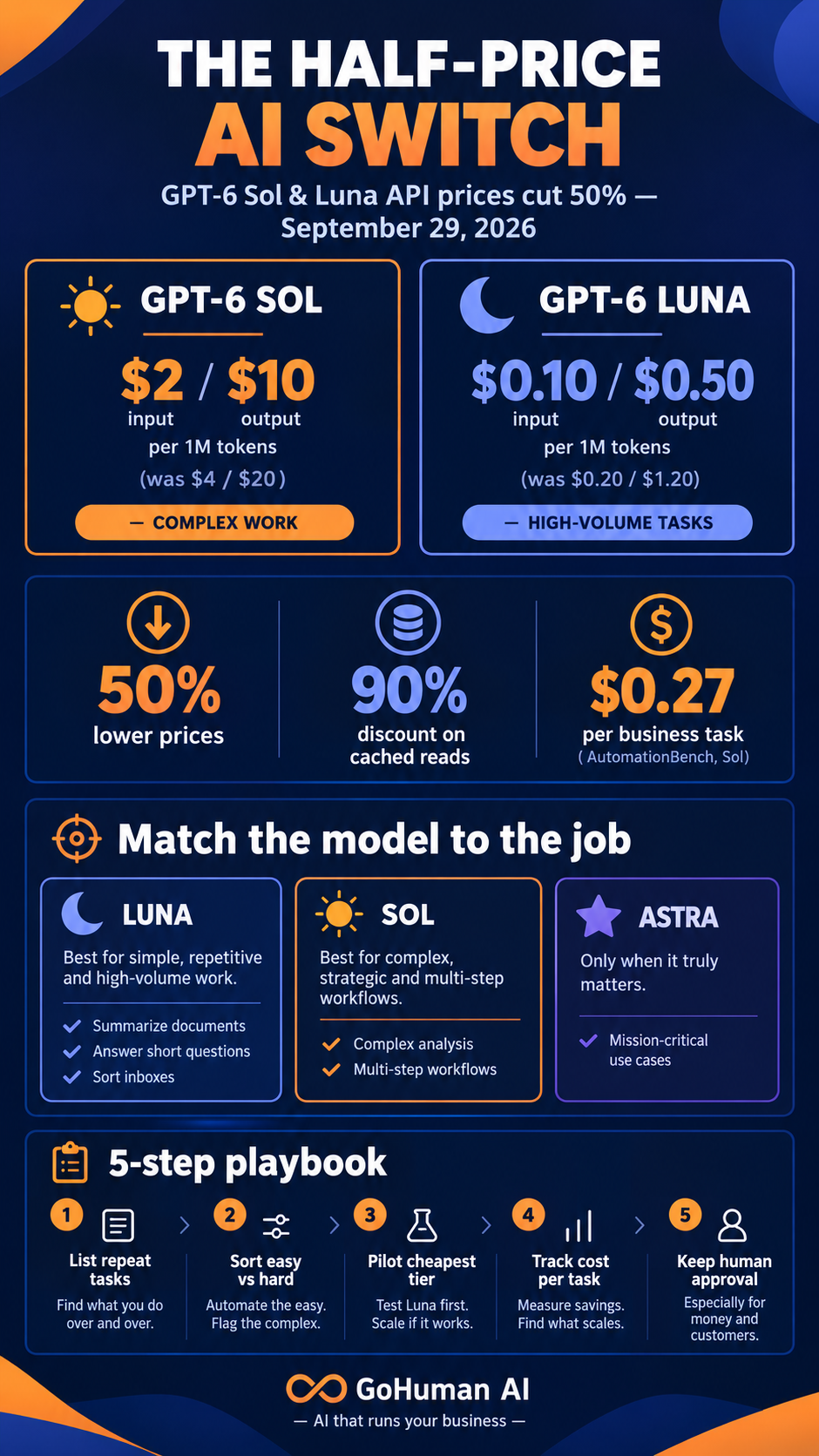
This is the same platform risk we covered when custom GPTs were retired: you rent the engine, so someone else sets the schedule. It is also a reminder that cheaper, newer models keep arriving, as we saw in the recent model price cuts.
A 4-Step Retirement Check
- 1List every AI tool and who built it. Include chatbots, email helpers, form routers and anything a contractor set up. One line each.
- 2Find the model name each one uses. If you built it, check the settings. If someone else did, ask them for the exact model name in writing.
- 3Ask for a migration date. Who switches it, when, and what happens if it is not done by January 14?
- 4Test before switching. Save 10 to 20 real examples (customer questions, invoices, emails) and compare old and new outputs. Have a person approve the results, as in an agent's written job description.
Mistakes to Avoid
- Assuming the vendor will handle it. Some will, some will not. Ask.
- Swapping the model name and calling it done. Behavior can change even when the tool still runs.
- Ignoring custom-trained versions. Fine-tuned models retire with their base model and may need rebuilding.
- Waiting for December. Holiday season is a poor time to debug a customer-facing bot.
Where GoHuman AI Fits In
Retirement dates are far less stressful when one team owns the whole stack. With GoHuman AI's unified AI tech stack, model updates, testing and fallbacks are handled for you, and our human in the loop approach keeps a person approving what matters. Want a quick audit of what you run today? Book a free discovery call.
Related Reading
Know what your AI runs on.